
Bluetooth wire less technology provides numerous advantages to hearing aid users. Mobile phone calls, television, and music can be streamed to both ears simultaneously. This provides the hearing aid user with a clean signal without the interference of background noise. Smartphone apps can be used to adjust volume, change programs, and manage other hearing aid features as determined by the manufacturer. As technology has developed, applications of Bluetooth in hearing technology have become more sophisticated and flexible.
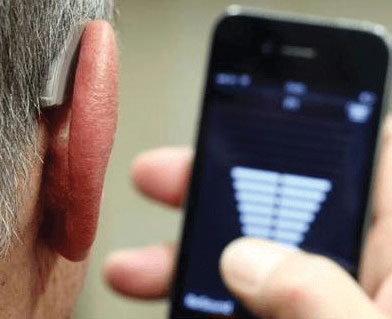 New advancements in Bluetooth technologies are making it easier to communicate on the phone for those who wear hearing aids.
When Bluetooth technology was initially incorporated into hearing aids, the most efficient way to directly stream from external sources was to use an intermediate streamer, such as Phonak’s ComPilot or Signia’s easyTek. A streamer receives input via Bluetooth from an audio device, such as a Smart Phone or Remote Microphone, and transmits that signal to the user’s hearing aids via an antenna that is typically worn around the neck. Streamers are highly flexible, with the ability to connect to multiple Bluetooth devices and accessories. They typically have remote control capabilities as well as a built-in microphone to pick up the user’s voice, allowing for hands-free phone calls. However, the streamer itself is considered an accessory and must be purchased separately, adding to the overall cost of the hearing aids. Furthermore, some users find that an intermediate neck-loop can be cumbersome or difficult to use. Now, with new direct streaming technology, hearing aid users can take advantage of Bluetooth without the need for any additional accessories!
In 2014, GN ReSound launched the first Direct to-iPhone hearing aid. Since then, major manufacturers Starkey, Widex, Oticon, and Signia have followed suit with their own Direct-to-iPhone products. Without the need for any additional accessories, audio can be streamed directly from an iPhone, iPad, or iPod Touch to both of the user’s hearing aids simultaneously. In addition, manufacturers have developed iPhone apps compatible with these products that allow the iPhone to act as a remote control. The user can make simple adjustments (volume) or advanced adjustments (noise filtering, enhancement of bass and/or treble) through the app. These apps give the user access to a wide range of adjustments that go beyond what the hearing aid buttons themselves can do. This provides a more individualized listening experience in various environments.

Flexibility of Direct-to iPhone products depends on the manufacturer. When it comes to wireless connectivity, GN ReSound currently has the most versatile products. They offer Direct to-iPhone technology in a variety of hearing aid styles, including behind the-ear, custom in-the ear, and even super-power products, other manufacturers offer this technology in behind-the ear devices. With GN ReSound’s Phone Clip accessory, Direct-to-iPhone products can even be connected to non-Apple Smart Phones for hands-free phone calls. Many of the other manufacturers do not have a compatible accessory for pairing Direct-to-iPhone hearing aids with non-Apple products. Your audiologist will keep you informed as new options for phone connectivity become available. non-Apple products. Your audiologist will keep you informed as new options for phone connectivity become available.
Phonak recently released a “direct-to any-phone” product, a behind-the-ear hearing aid that can pair with any Bluetooth-compatible phone, regardless of the manufacturer. It is completely hands-free: pressing the button on the hearing aid initiates or ends calls and the hearing aid microphone picks up the user’s voice and transmits it to the phone. At this time, phone calls will stream to one ear at a time, and only call audio can be streamed, so this may not be the best option if you are hoping to stream music or other media through your hearing aids as well.