
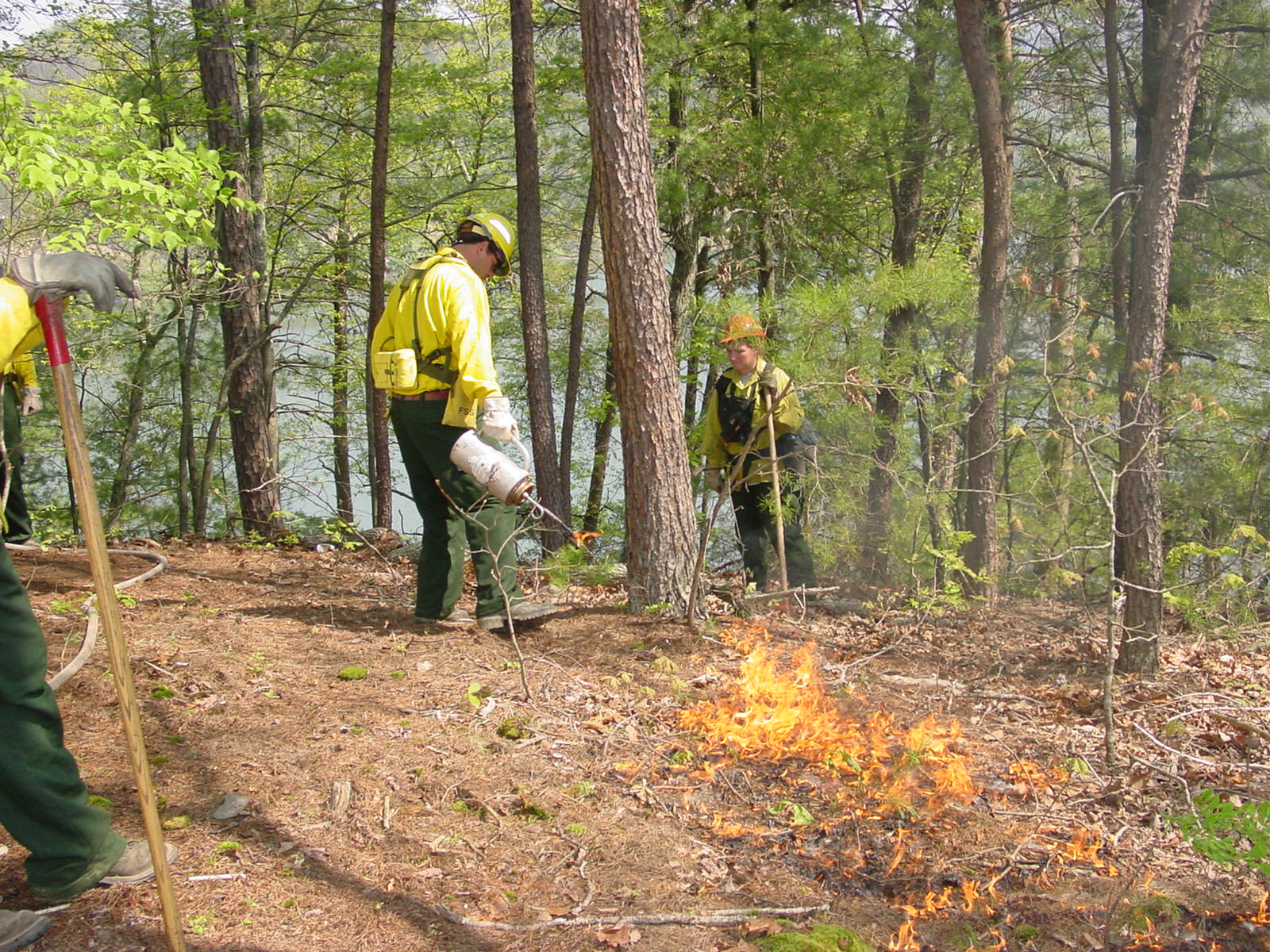
 Cherokee National Forest rangers use a fire torch to light controlled fire during the prescribed fire season in the Cherokee in this file photo.
2016 SIGNIFICANT AREA WILDFIRES
› Chattahoochee National Forest: The Rough Ridge fire, started by lightning in mid-October, burned close to 30,000 acres in the Cohutta Wilderness area of North Georgia.› Cherokee National Forest: Several fires combined to cover more than 1,000 acres in Polk and Monroe counties in Tennessee during November.› Hamilton County: Three wildfires along Waldens Ridge burned more than 2,000 combined acres and contributed to a smoke blanket that enveloped Chattanooga on certain November days.› Dade County, Ga.: The Fox Mountain, Tatum Gulf and Sulfur Springs fires combined to burn more than 4,000 acres.› Whitfield County, Ga.: The Rocky Face fire covered roughly 600 acres.› Other: By the middle of November, dozens of fires burned across counties in southeast Tennessee. These were the counties most-affected on Nov. 16:Bledsoe County: Four fires, 2,047 acresHamilton County: Four fires, 1,847 acresMarion County: Five fires, 1,025 acresSequatchie County: Five fires, 1,056 acresSource: Tennessee Division of Forestry, newspaper archives
More fire is on its way to area forests just months after rain extinguished the last embers of a historic and costly wildfire season.
Authorities will have more say in where it starts and how it spreads this time.
Officials with the Cherokee and Chattahoochee National Forests plan to continue their annual prescribed burn programs in the coming weeks, even after they watched fires started by lightning or arson burn through thousands of wooded acres in the latter half of 2016.
“We’ll do it cautiously to start with,” said Jeff Gardner, Conasauga district manager of the Chattahoochee National Forest. “We’re looking at starting off with a smaller burn size, at least at first. We’re still in a drought, but the severity has dropped.”