
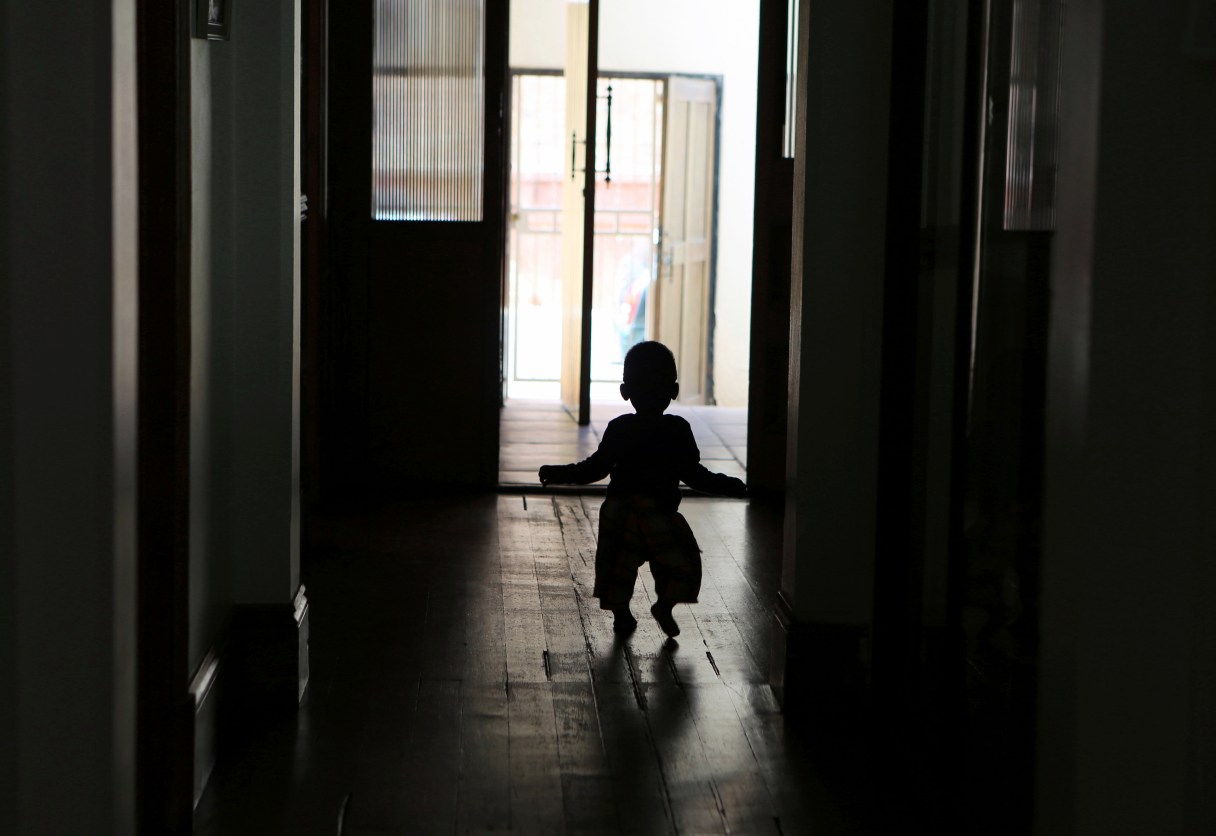
JOHANNESBURG (AP) – Outside an old house in a battered Johannesburg neighborhood, a hatch door slams shut and an alarm signals the arrival of an abandoned baby. A new infant is joining the ranks of toddlers being raised in the center.
In this periodic ritual, Francinah Phago, manager of the Door of Hope sanctuary in Berea, washes her hands and prepares to receive another baby deposited in the small cubicle by a parent or someone else who doesn’t want to be identified. The new arrival is fed and washed and documents for the baby are prepared.
The Door of Hope was started in South Africa 17 years ago to provide a safe place for babies abandoned by their mothers. Sixty-four babies were taken in by the center in 2016 and 28 adopted. The rest are cared for and eventually go to orphanages, said the organization, which receives funding from the government’s social welfare department and private donations. Door of Hope has taken in more than 1,500 infants over nearly two decades, 12 percent of whom were left in the wall hatch at the house.
The “baby bin” was started by South African Baptist pastor Cheryl Allen, and now her son, Richard, is chief executive at Door of Hope. Most of the abandoned babies do not come through the hatch, but are brought in by police and hospitals where mothers give birth and then slip away without the child, he said. Some babies suffer from fetal alcohol syndrome and require special care.
Similar “baby bin” centers in Europe and Asia have been criticized on the grounds that they encourage parents to give up the responsibility of child care and children will not know their biological parents. Defenders say it is better than the possibility of late abortions or the dumping of children in unsafe places.