
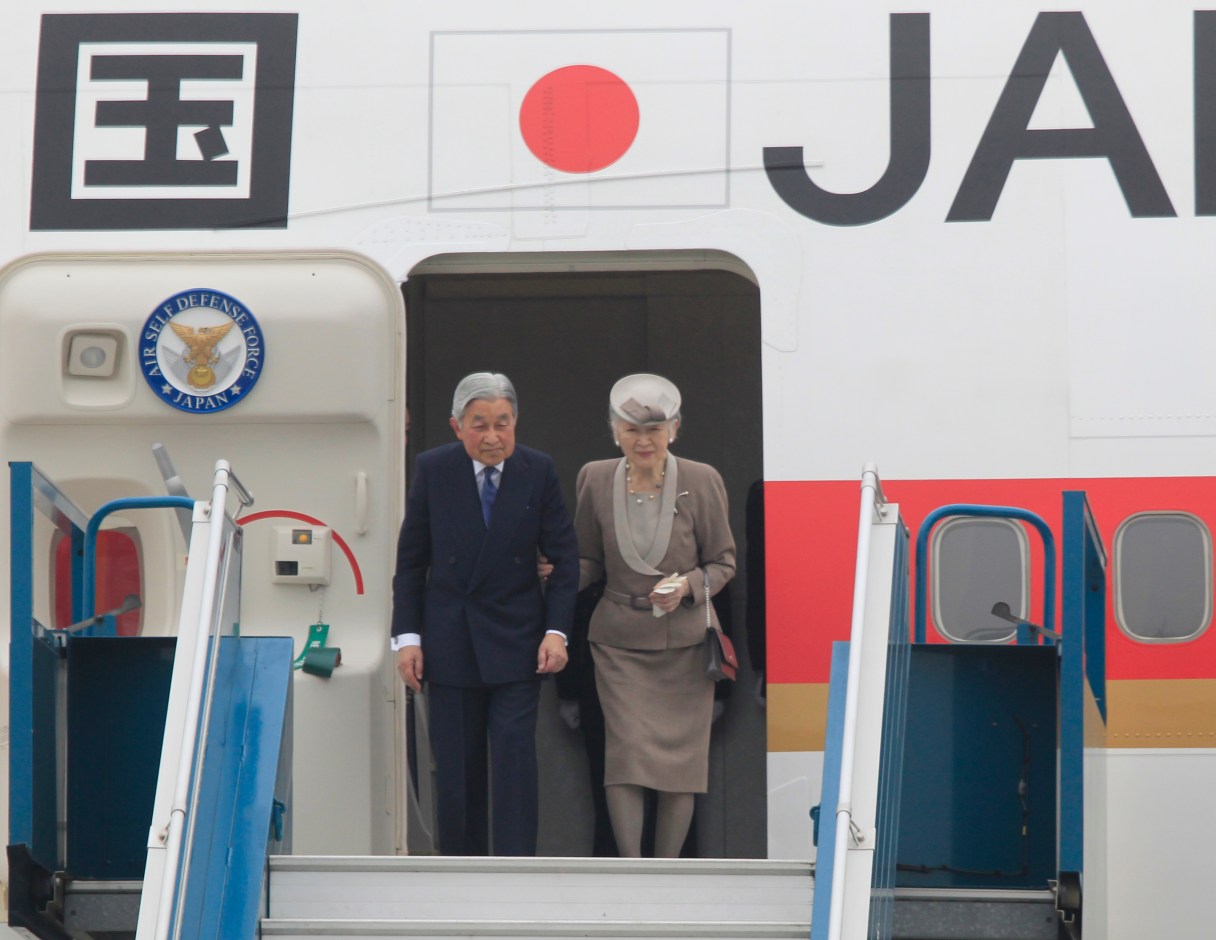
HANOI, Vietnam (AP) – Japanese Emperor Akihito and Empress Michiko arrived in Vietnam on Tuesday for a visit to promote goodwill and soothe some of the wounds of World War II by meeting with the abandoned wives of former Japanese soldiers.
The 83-year-old Akihito, the first-ever Japanese emperor to visit Vietnam, will be given a red carpet welcome by Vietnamese President Tran Dai Quang on Wednesday.
During their six-day visit, the imperial couple is scheduled to meet with a dozen surviving widows and families members of Japanese war veterans. The wives and their families used to face discrimination because the women had married Japanese men.
Japanese troops invaded Vietnam in 1940 and remained there until Japan surrendered to the allies in 1945, but some 700 Japanese soldiers, most of them married to Vietnamese women, stayed in Vietnam after revolutionary leader Ho Chi Minh declared independence from French colonial rule shortly after that.
The Japanese soldiers provided Ho Chi Minh’s Viet Minh with their military expertise to fight the French. By the time the Viet Minh defeated the colonial forces in 1954, placing the North under Communist rule, about half of the Japanese soldiers died from fighting or illness and the first group of 71 had to leave without being able to bring their families in 1954. The rest had to leave in 1960, but this time with their families because Japan was on the other side of the Cold War.