
Friday, October 30, 2026Oct 30

This story is free to read.

STEM School students showcase prototypes of their invention to keep cyclists safe

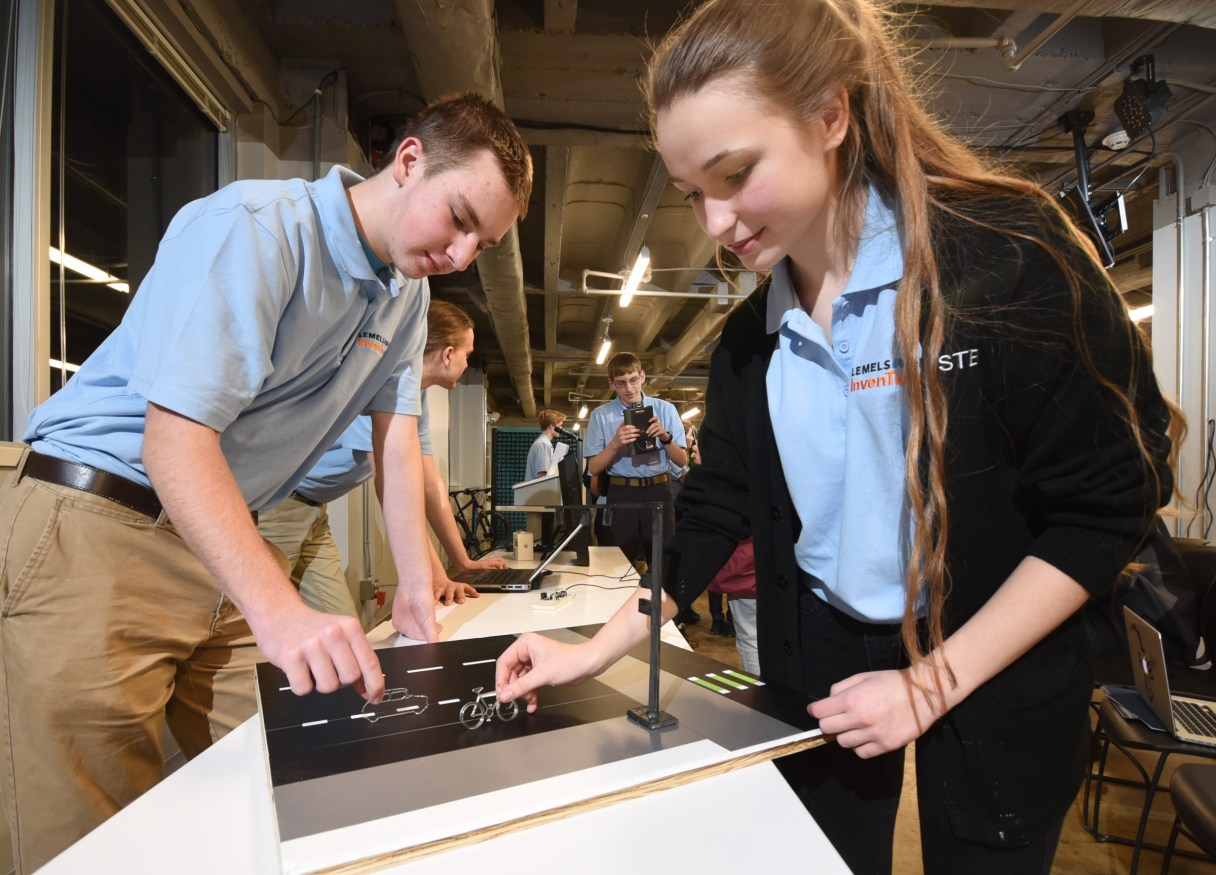
STEM School Chattanooga students Ethan Rosenow, left, and Sophia Burlaka demonstrate vehicle and bike positions where an automatic bike detection sensor may someday help motorists of the presence of a bike in motion at downtown intersections. The students have narrowed their research and tests to an ultra sound sensor and infrared heat detection. "For costs and ease of programming, I think the high frequency sound sensor might be the choice," Grayson Pitts, one of the dozen students at Monday's presentation at the Edney Building.
STEM School Chattanooga students Ethan Rosenow, left, and Sophia Burlaka demonstrate vehicle and bike positions where an automatic bike detection sensor may someday help motorists of the presence of a bike in motion at downtown intersections. The students have narrowed their research and tests to an ultra sound sensor and infrared heat detection. "For costs and ease of programming, I think the high frequency sound sensor might be the choice," Grayson Pitts, one of the dozen students at Monday's presentation at the Edney Building. STEM School Chattanooga students Ethan Rosenow, left, and Sophia Burlaka demonstrate vehicle and bike positions where an automatic bike detection sensor may someday help motorists of the presence of a bike in motion at downtown intersections. The students have narrowed their research and tests to an ultra sound sensor and infrared heat detection. "For costs and ease of programming, I think the high frequency sound sensor might be the choice," Grayson Pitts, one of the dozen students at Monday's presentation at the Edney Building.

Students from the STEM School Chattanooga demonstrated how thermal and ultrasonic sensors can be used to detect bicyclists approaching intersections during a community forum Monday night.

The sensors are just one component of the students’ invention, which they are in the process of prototyping thanks to a $10,000 grant through Lemelson- MIT’s 2016-2017 InvenTeams program. The invention will use a crosswalk-like sign to notify cars at stoplights and intersections that cyclists are approaching in protected bike lanes.
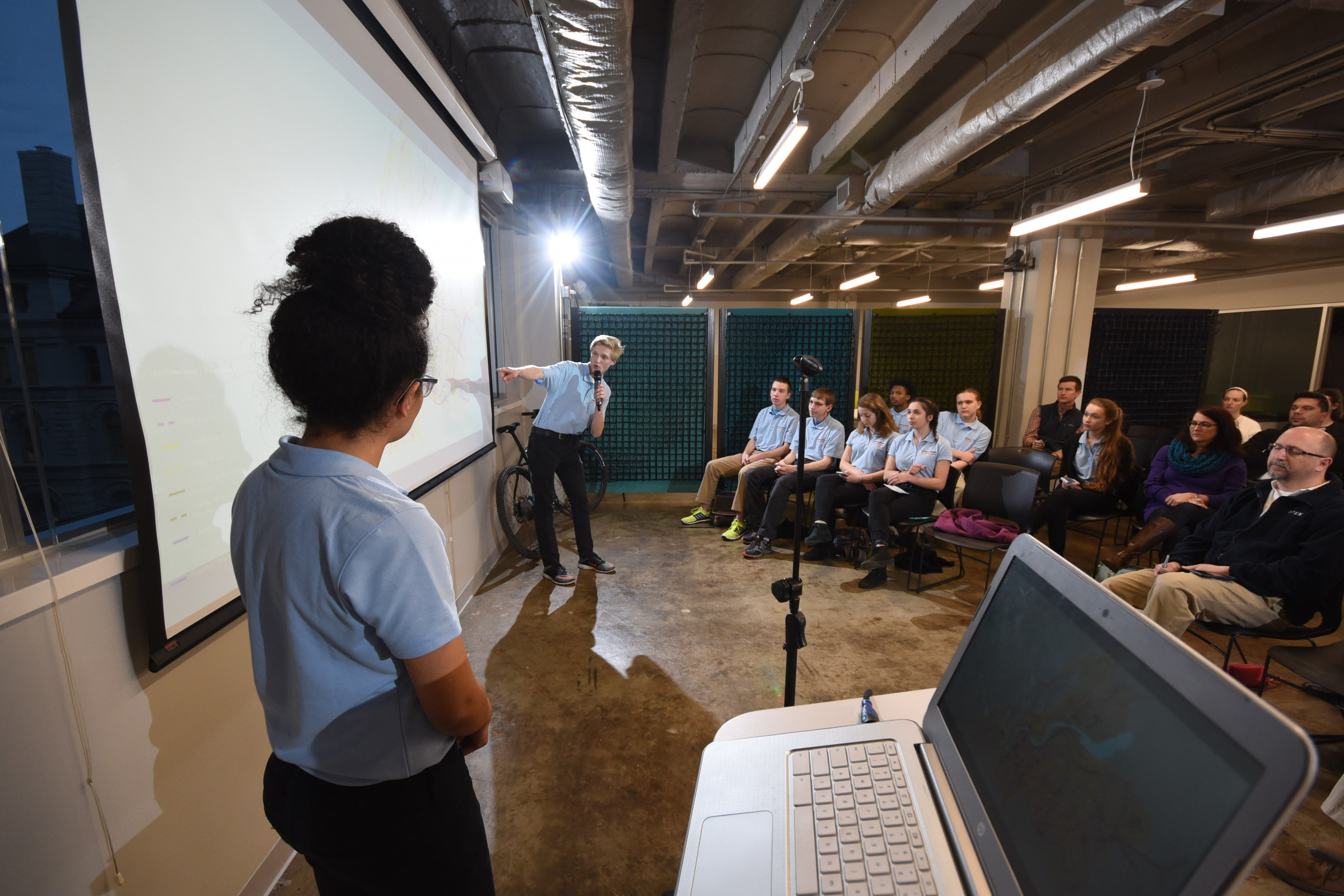
photo STEM School Chattanooga students make a presention of their traffic detector invention that will help alert motorist of the presence of a bike at downtown intersections.
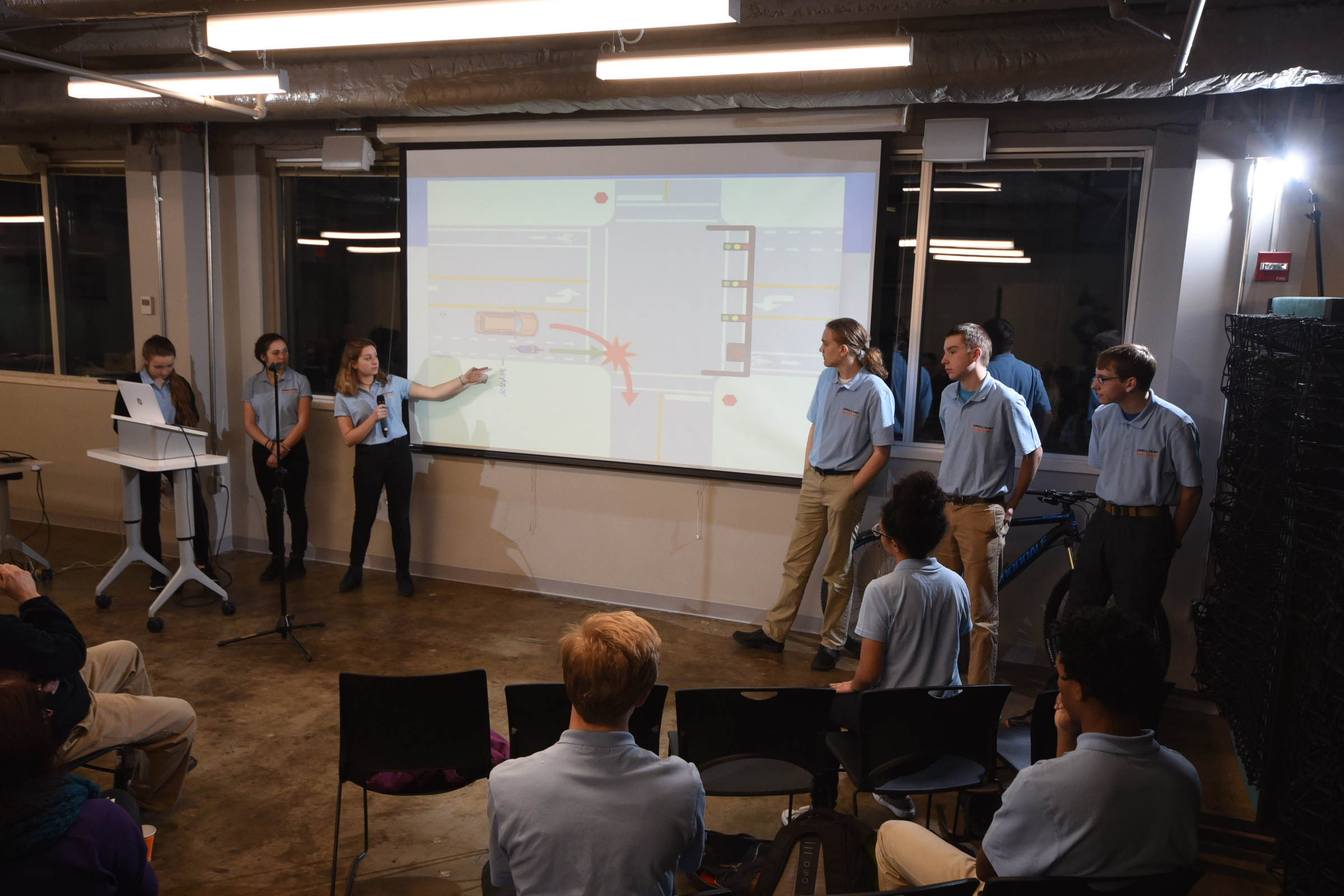
photo STEM School Chattanooga student Alyssa Malo explains the usage of a warning signal to make motorists award of the presence of a bike in traffic Monday night at the Edney Building presentation.

Will Crutchfield, a member of the STEM School’s team, noted how the invention does more than make the roads safer for cyclists and cars, as it will also track the number of bicycles that pass through an intersection.

“The analytics alone will be extremely valuable,” he added, as they will be posted online and can inform city planning.

The team of nine students from the STEM School presented the prototypes they’ve developed and their plans for the completed invention at the Edney Building in Chattanooga’s Innovation District, and received questions and suggestions from an audience of about 30.