
Wednesday, November 11, 2026Nov 11

Bat-friendly tequila, research play role in species recovery

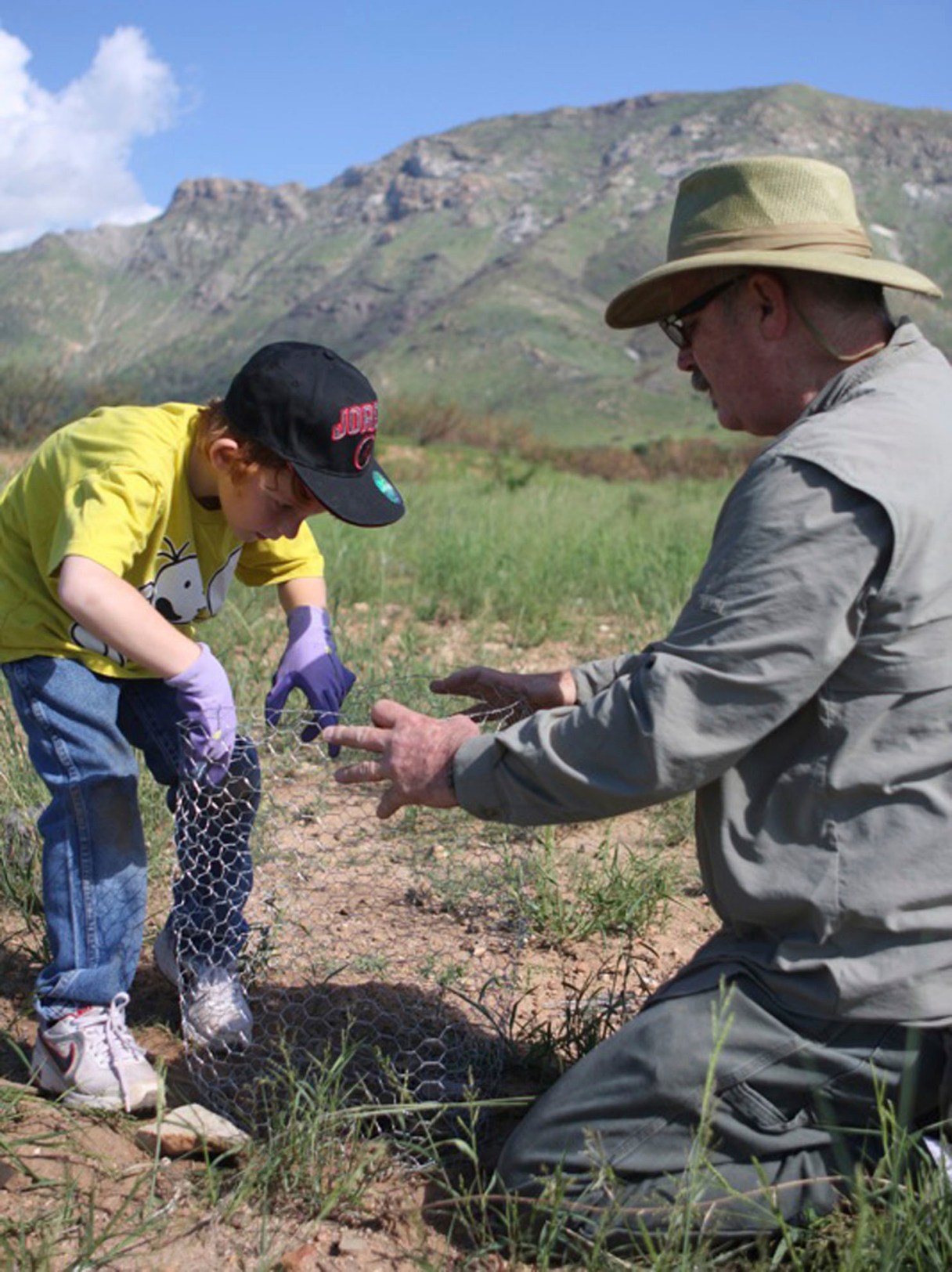
FILE- In this Aug. 20, 2011, file photo, Bob Scott and his grandson, Chase Archer put the final touches on a chicken wire cage to protect a newly planted agave plant from being eaten by deer in Sierra Vista, Ariz. After the construction of the border wall resulted in the death of thousands of agave plants, there was concern among many at the Coronado National Memorial for the lesser long-nosed bat species, which use agave nectar as food. However, wildlife officials say it might be time for a toast now that a once-rare bat important to the pollination of plants used to produce tequila is making a comeback. (Jacob Peterson/Sierra Vista Herald via AP, File)
FILE- In this Aug. 20, 2011, file photo, Bob Scott and his grandson, Chase Archer put the final touches on a chicken wire cage to protect a newly planted agave plant from being eaten by deer in Sierra Vista, Ariz. After the construction of the border wall resulted in the death of thousands of agave plants, there was concern among many at the Coronado National Memorial for the lesser long-nosed bat species, which use agave nectar as food. However, wildlife officials say it might be time for a toast now that a once-rare bat important to the pollination of plants used to produce tequila is making a comeback. (Jacob Peterson/Sierra Vista Herald via AP, File) FILE- In this Aug. 20, 2011, file photo, Bob Scott and his grandson, Chase Archer put the final touches on a chicken wire cage to protect a newly planted agave plant from being eaten by deer in Sierra Vista, Ariz. After the construction of the border wall resulted in the death of thousands of agave plants, there was concern among many at the Coronado National Memorial for the lesser long-nosed bat species, which use agave nectar as food. However, wildlife officials say it might be time for a toast now that a once-rare bat important to the pollination of plants used to produce tequila is making a comeback. (Jacob Peterson/Sierra Vista Herald via AP, File)

ALBUQUERQUE, N.M. (AP) – Wildlife officials say it might be time for a toast now that a once-rare bat important to the pollination of plants used to produce tequila is making a comeback.

The U.S. Fish and Wildlife Service on Thursday proposed removing the lesser long-nosed bat from the endangered species list. Mexico delisted the bat in 2015, and if approved in the U.S., this would be the first bat ever removed from the nation’s list of threatened and endangered species.

Federal officials said it has taken 30 years of conservation efforts by biologists and volunteers in Mexico and the U.S. as well as tequila producers in Mexico to rebuild a healthy population.

There were once thought to be fewer than 1,000 lesser long-nosed bats in 14 known roosts throughout the region. Now, there are about 200,000 of the nectar-feeding animals and dozens of roost sites.

Jim deVos, assistant director of wildlife management at the Arizona Game and Fish Department, called the proposed delisting a great achievement.