
Friday, November 6, 2026Nov 6

This story is free to read.

Scientists watch growing Antarctic crack but aren’t alarmed

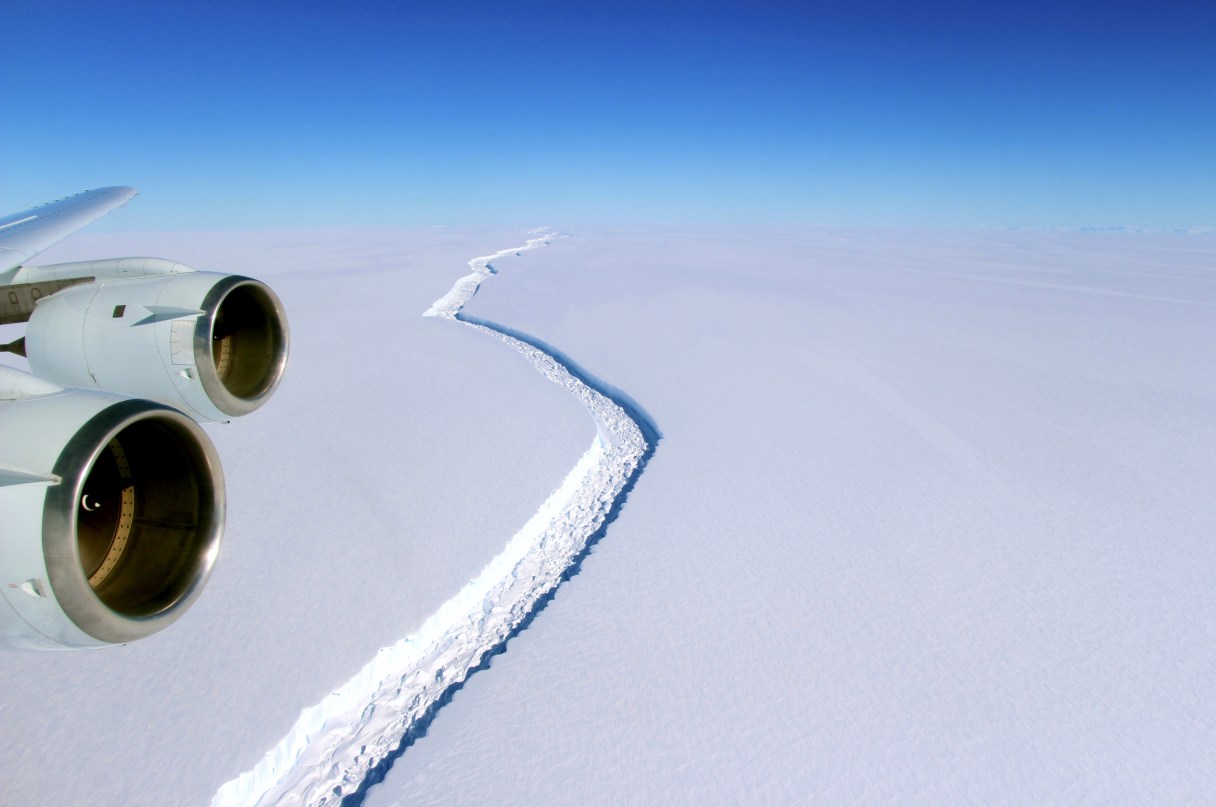
This Nov. 10, 2016 aerial photo released by NASA, shows a rift in the Antarctic Peninsula's Larsen C ice shelf. According to NASA, IceBridge scientists measured the Larsen C fracture to be about 70 miles long, more than 300 feet wide and about a third of a mile deep. (John Sonntag/NASA via AP)
This Nov. 10, 2016 aerial photo released by NASA, shows a rift in the Antarctic Peninsula's Larsen C ice shelf. According to NASA, IceBridge scientists measured the Larsen C fracture to be about 70 miles long, more than 300 feet wide and about a third of a mile deep. (John Sonntag/NASA via AP) This Nov. 10, 2016 aerial photo released by NASA, shows a rift in the Antarctic Peninsula's Larsen C ice shelf. According to NASA, IceBridge scientists measured the Larsen C fracture to be about 70 miles long, more than 300 feet wide and about a third of a mile deep. (John Sonntag/NASA via AP)

WASHINGTON (AP) – Scientists are watching, but not alarmed by, a growing crack at the edge of a key floating ice shelf in Antarctica.

New images show the long-watched crack in the Larsen C ice shelf grew 11 miles (18 kilometers) in the last few weeks. Another dozen more miles and a Delaware-sized iceberg could break off and float away. Large icebergs do periodically break off from Antarctica. The crack is now about 60 miles long (97 kilometers).

University of Colorado scientist Ted Scambos said the section could break off soon, likely in March. But he and other scientists say they don’t see signs that it would result in a catastrophic collapse of the entire shelf. That’s what happened in 2002 to the Larsen B shelf, allowing inland glaciers to shrink rapidly.