
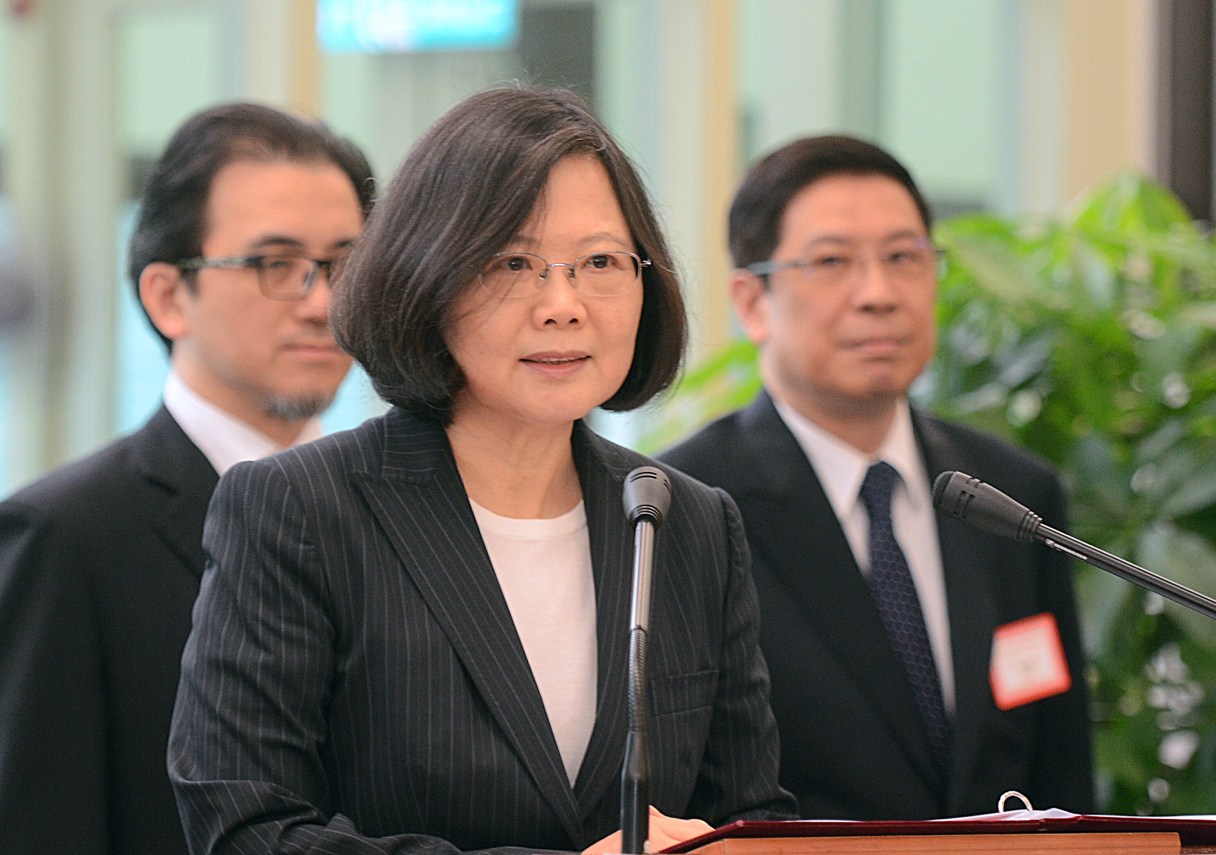
BEIJING (AP) – The Taiwanese leader’s trip to the Americas starting Saturday will be scrutinized by Beijing for signs that the incoming U.S. president’s team will risk its ire by further engaging with the self-ruled island China considers its territory.
President Tsai Ing-wen pledged to bolster Taiwan’s international profile as she set off on a trip to reinforce relations with diplomatic allies in Central America, a task that has taken on new urgency as Beijing ramps up efforts to diplomatically isolate Taipei.
Speaking to reporters before her departure, Tsai said the visits to Honduras, Nicaragua, Guatemala and El Salvador would “show the international society that Taiwan is a capable and responsible partner for cooperation.”
She will transit through Houston and San Francisco, stops that will irk Beijing, which has urged Washington to prevent Tsai from landing in the U.S. to “refrain from sending any wrong signal to the Taiwanese independence forces.”
Beijing regards the self-governing island as part of China and officials complained after President-elect Donald Trump last month breached diplomatic protocol by speaking by phone with the Taiwanese leader. Trump raised further concerns in Beijing when he questioned a U.S. policy that since 1979 has recognized Beijing as China’s government and maintains only unofficial relations with Taiwan.