
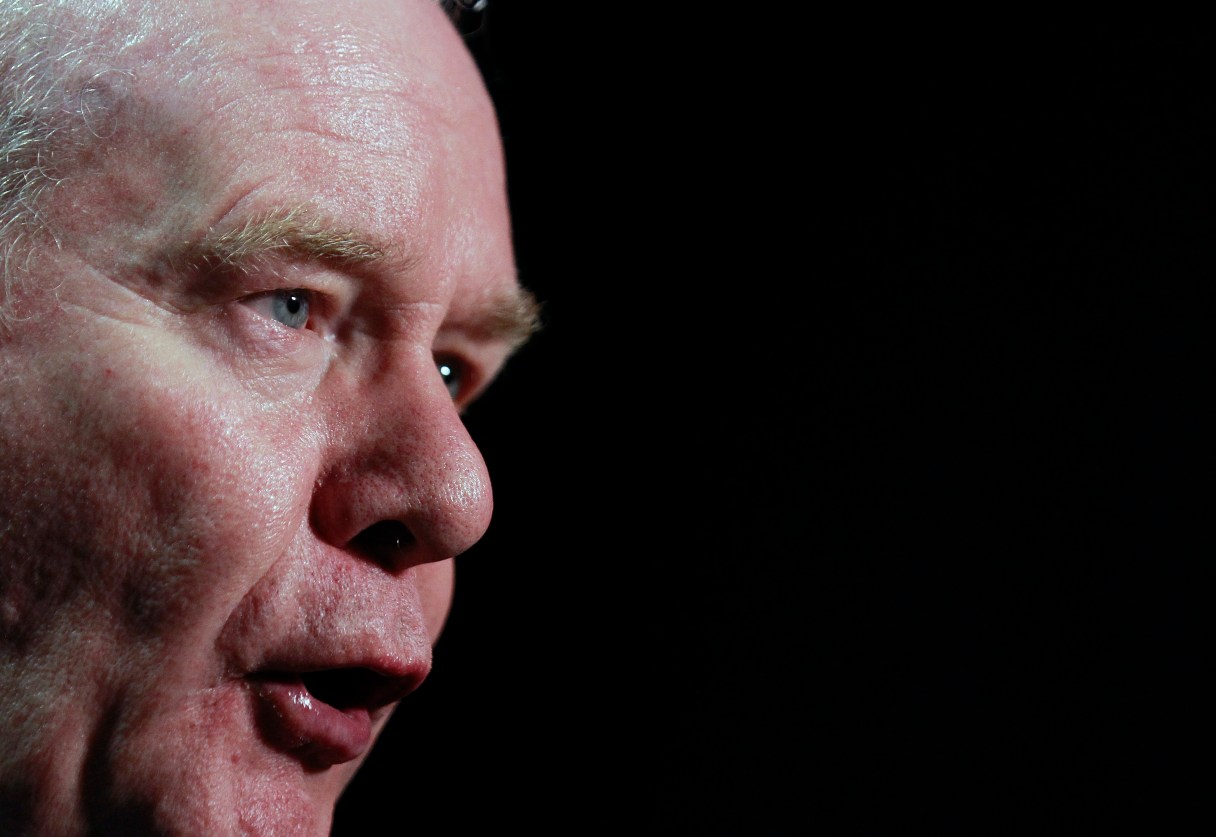
DUBLIN (AP) – Northern Ireland’s power-sharing government was plunged into crisis Monday as its senior Catholic leader quit in a showdown with his Protestant colleague that could unravel a central achievement of the region’s peace accord.
Deputy First Minister Martin McGuinness, the former Irish Republican Army commander who has helped to lead the unity government for nearly a decade, said he intends to trigger early elections in a challenge to his power-sharing partner, First Minister Arlene Foster .
In a copy of his resignation letter provided to The Associated Press, McGuinness accused Foster of ignoring “a public mood that is rightly outraged at the squandering of public money and allegations of misconduct and corruption.”
The government, formed under terms of Northern Ireland’s 1998 Good Friday peace accord, requires support from the Irish nationalist Sinn Fein party and Foster’s Democratic Unionists, who represent the British Protestant majority.
Their unlikely partnership has been credited with governing the long-disputed corner of the United Kingdom in relative harmony following the four decades of bloodshed that claimed 3,700 lives.