
ROME (AP) – Italian police have arrested two suspects, a brother-and-sister team, for trying to hack the personal email accounts of leading public figures, including reportedly those of former premier Matteo Renzi and European Central Bank chief Mario Draghi.
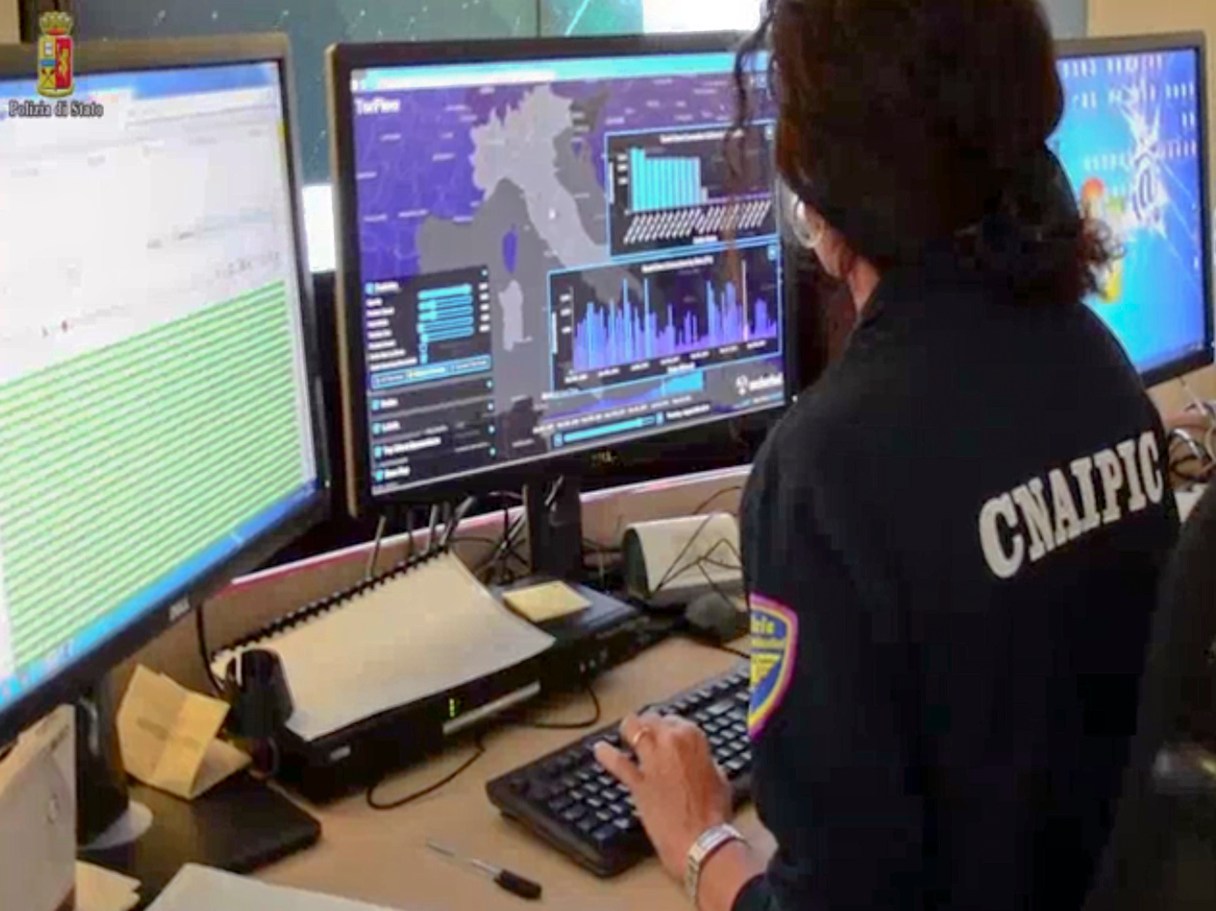
The police said Tuesday that, with the help of the FBI, they cracked a “cyberespionage headquarters” that for years had attempted to hack, sometimes successfully, into 18,000 accounts.
A nuclear engineer, 45, and his 49-year-old sister were arrested Monday in Rome. The pair live in London but also have official residency in the Italian capital, where they are allegedly well known in the world of high finance.
Italian news agency ANSA, citing documents from investigators seeking arrest warrants, identified the suspects as Giulio Occhionero and Francesca Maria Occhionero.
They reportedly tried to hack into Renzi’s personal email twice in June and into Draghi’s email account once in June and once in July. A person familiar with the matter said there was no indication any ECB account was successfully breached. The person spoke only on condition of anonymity due to the sensitive nature of the matter.
According to the documents seen by ANSA, the hacking attacks had also targeted former Italian economy minister Fabrizio Saccomanni, an Italian cardinal, two top officials of the Italian tax police squad as well as several Italian politicians from across the political spectrum.
In all, the suspects allegedly obtained some 18,000 usernames and nearly 1,800 passwords.
A LinkedIn profile and a now-defunct personal website in Giulio Occhionero’s name identify him as a quantitative analyst and computer expert with an interest in mathematics, finance, and options trading. The LinkedIn profile also identifies Occhionero as the co-founder of Westlands Securities SpA, described on the professional networking site as a banking start-up and private equity firm. A LinkedIn profile in the name of Occhionero’s sister, Francesca Maria, identifies her as the firm’s former managing director.
Contact information for the pair in London could not immediately be located. An email sent to Giulio Occhionero’s personal address was not immediately returned; a LinkedIn message left with Francesca Maria was also not returned.
Italian Postal Police Director Roberto Di Legami said the cyberspying operation came to investigators’ attention when someone sent them an email infected by what was “very complex malware technology.” The malware was able to infiltrate emails and other communications, as well as documents stored locally on computers.
Authorities said the hackers were able to access their victims’ networks for a long period of time, acquiring information remotely and removing “massive” amounts of content on the targeted computers.
Investigators are still analyzing “an enormous mound of sequestered material” in the United States, police said.
The suspects created numerous folders to divide up their targets. Among the more creatively named ones was a folder dubbed “Bros” that included persons who supposedly belong to a masonic lodge and another folder dubbed POBU – for politicians & business – in which various individuals from high-level politics and business were listed.
Investigators moved to have the suspects arrested because of the “concrete danger” they could flee abroad, police said.
___
Raphael Satter in Paris and David McHugh in Frankfurt, Germany, contributed to this report.
___
This story has been corrected to show the male suspect’s age is 45, not 44.