
Tuesday, November 3, 2026Nov 3

This story is free to read.

UK appeals for Belfast breakthrough to save power-sharing

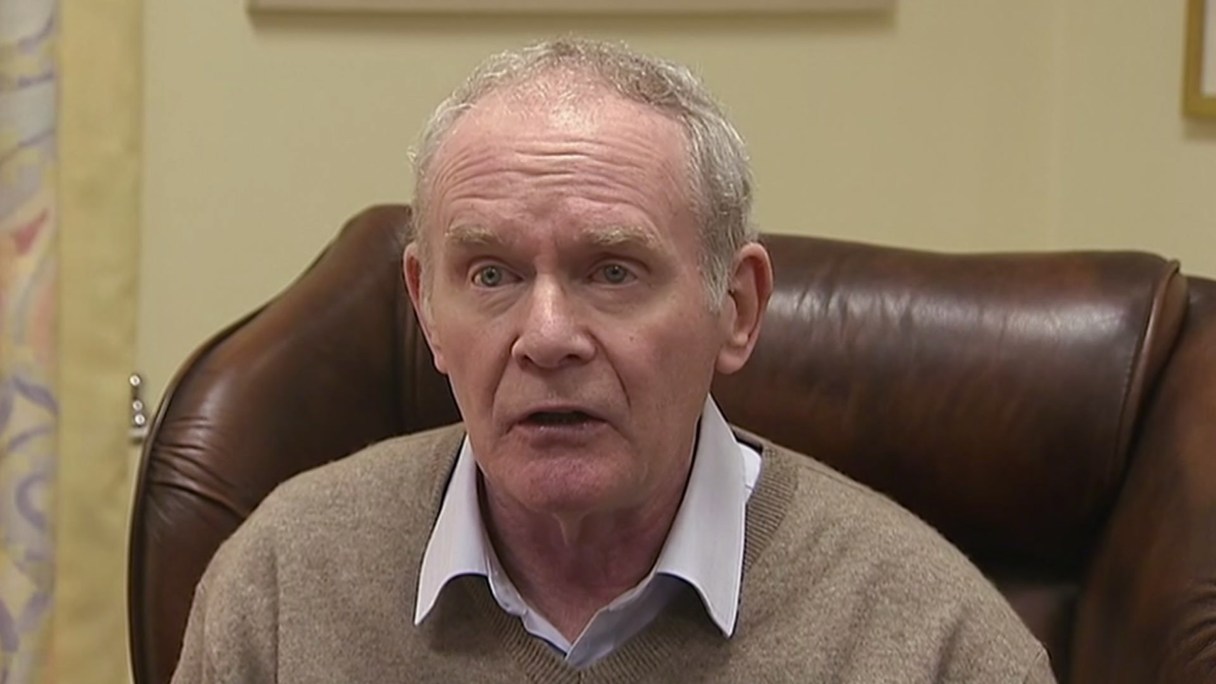
In this image taken from video, Deputy First Minister Martin McGuinness announces his resignation, Monday Jan. 9, 2017, with the declared intention to trigger early elections in the province. Northern Ireland's power-sharing government was plunged into crisis Monday as the senior Catholic leader McGuinness announced he was quitting in a showdown with his Protestant colleague First Minister Arlene Foster. (ITN via AP)
In this image taken from video, Deputy First Minister Martin McGuinness announces his resignation, Monday Jan. 9, 2017, with the declared intention to trigger early elections in the province. Northern Ireland's power-sharing government was plunged into crisis Monday as the senior Catholic leader McGuinness announced he was quitting in a showdown with his Protestant colleague First Minister Arlene Foster. (ITN via AP) In this image taken from video, Deputy First Minister Martin McGuinness announces his resignation, Monday Jan. 9, 2017, with the declared intention to trigger early elections in the province. Northern Ireland's power-sharing government was plunged into crisis Monday as the senior Catholic leader McGuinness announced he was quitting in a showdown with his Protestant colleague First Minister Arlene Foster. (ITN via AP)

LONDON (AP) – Britain’s minister for Northern Ireland has appealed to rival leaders to save their failing unity government and prevent a snap election that will do nothing to solve the political crisis.

Northern Ireland Secretary James Brokenshire told lawmakers Tuesday that the surprise resignation of the Belfast coalition’s senior Catholic politician means the British government in London will be legally obliged to dissolve the Northern Ireland Assembly – unless a Belfast breakthrough can be achieved within six days.

Brokenshire said: “The clock is ticking. If there is no resolution, an election is inevitable, despite the widely held view that this election may deepen divisions and threaten the continuity of the devolved institutions.”

Protestant and Catholic leaders have shared power – the central goal of Northern Ireland’s 1998 peace accord – since 2007.