
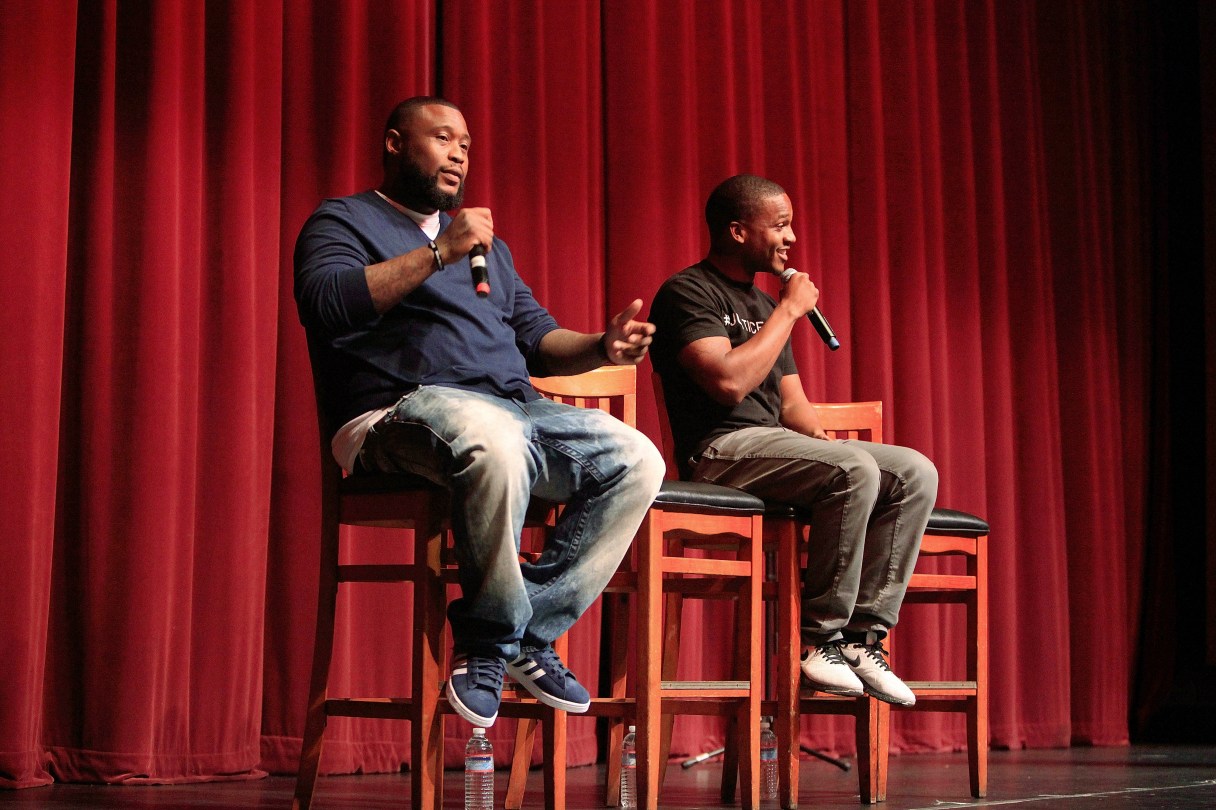
SAN DIEGO (AP) – A hip-hop musician and a community organizer have sued the city of San Diego for federal civil rights violations over being jailed on gang-related charges based on their rap lyrics and social media postings.
The lawsuit, filed late Tuesday in San Diego, says musician Brandon “Tiny Doo” Duncan and activist Aaron Harvey were jailed for seven months after their arrests in June 2014 under a California gang conspiracy law that critics say amounts to guilt by association. A judge dismissed charges two months after they were released.
The rarely used state law passed in 2000 says active gang members with knowledge of a gang’s criminal activities can be prosecuted for crimes others commit if they willfully benefited from, promoted or assisted in some way.
Prosecutors said the lyrics and social media postings promoted gang violence, created fear among rivals of San Diego’s Lincoln Park Blood gang and added legitimacy to the gang during a shooting spree in 2013.
The lawsuit alleges that police violated constitutional rights to free speech and against unreasonable search and seizure.