
Monday, November 16, 2026Nov 16

New prescription: Doctor offices that look like Apple stores

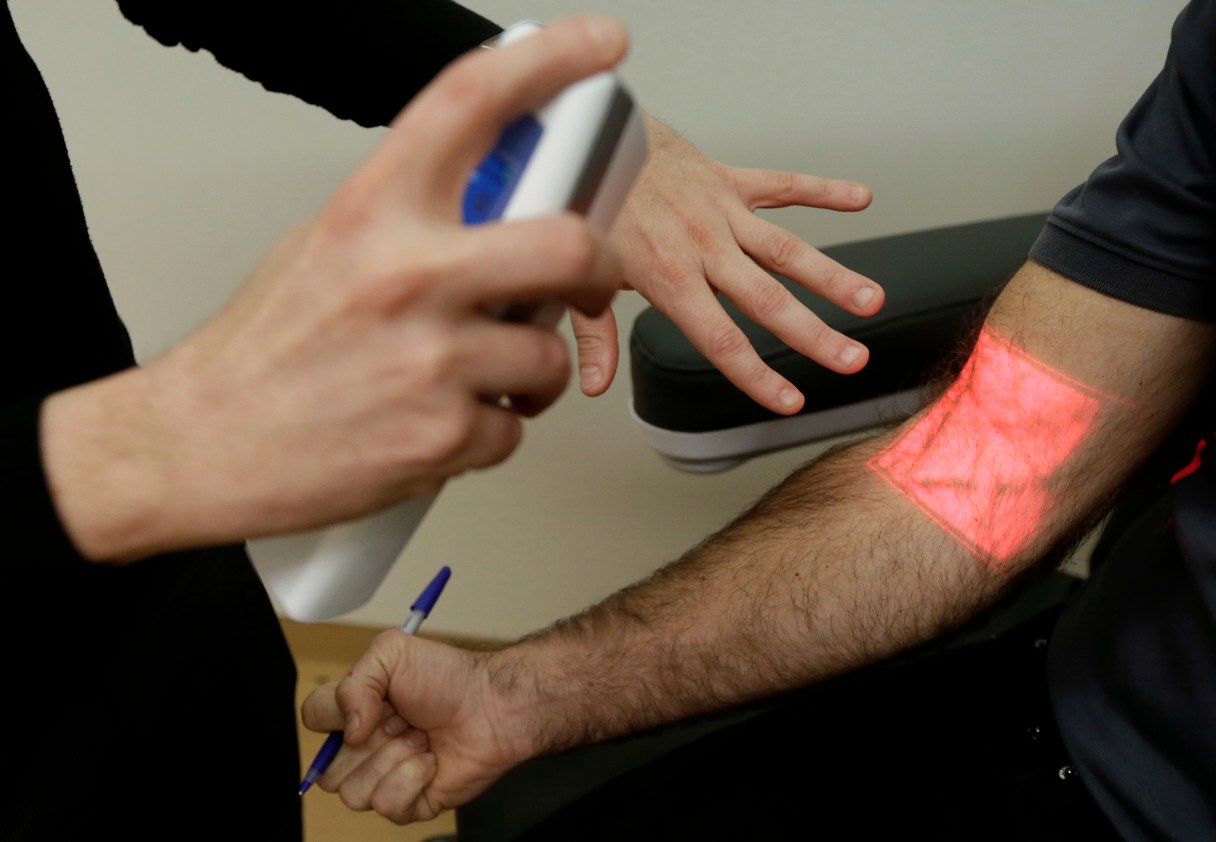
In this Jan. 10, 2017 photo, Adrian Aoun, founder and CEO of Forward, left, gives a demonstration of a vein illumination device that uses infrared light on an Associated Press reporter at a medical office in San Francisco. After a relative suffered a heart attack a few years ago, Silicon Valley entrepreneur Aoun got an up-close look at a health-care system that he diagnosed as an inefficient and outdated mess. Now, Aoun is ready to prescribe his remedy. It's called Forward, a health-management service that charges a $149 per month, roughly $1,800 a year, to tend to all of its patients' primary-care needs. (AP Photo/Jeff Chiu)

SAN FRANCISCO (AP) – After a relative suffered a heart attack a few years ago, Silicon Valley entrepreneur Adrian Aoun got an unsettling look at a health-care system that he diagnosed as an inefficient and outdated mess.

Now he believes he has a remedy. It’s called Forward, a health-management service that charges a $149 per month – roughly $1,800 a year – to tend to all of its patients’ primary-care needs. And not just with attentive doctoring, either; Forward plans to deploy body scanners, sensors, giant touch-screen monitors, infrared devices and other high-tech gizmos that could make a doctor’s appointment feel more like a trip to an Apple store.

“Doctors are super smart, but they are set up for failure in so many ways,” Aoun says. “We haven’t built the tools that they need to operate in modern life. No one wants to go to the doctor’s office today. We want to change that.”

NOT QUITE ALL-YOU-CAN-EAT

Forward will still refer patients to outside specialists when its primary-care doctors can’t deal with certain health problems; same goes for hospital admissions. And there are bound to be health insurance headaches that Forward isn’t attempting to address.