
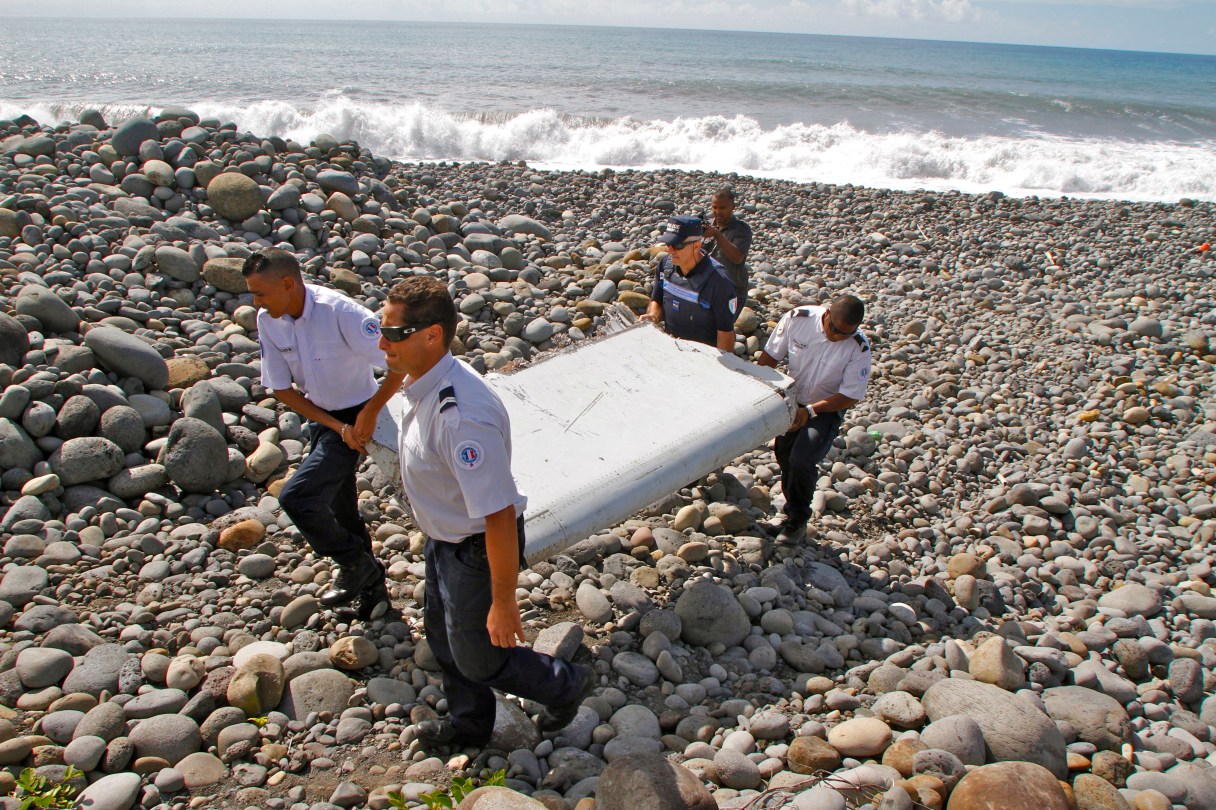
SYDNEY (AP) – Three nations shelled out around $160 million and years’ worth of work on the underwater search for missing Malaysia Airlines Flight 370. The result: No plane. The only tangible – and arguably most important – clues into what happened to the aircraft have come courtesy of ordinary citizens, who bore the costs themselves.
The deep-sea sonar search for the vanished Boeing 777 was suspended on Tuesday after officials conceded defeat following most expensive, complex aviation search in history.
But while search crews spent years trawling in futility through a remote patch of the Indian Ocean, people wandering along beaches thousands of kilometers (miles) away began spotting pieces of the plane that had washed ashore. Those pieces have provided crucial information to investigators and prompted some to question whether Malaysia, Australia and China – who funded the hunt for the underwater wreckage – missed key opportunities by failing to organize coastal searches for the remnants that drifted to distant shorelines.
“It would have been good to have been getting people looking for debris,” said David Griffin, an Australian government oceanographer who worked on an analysis of how the debris drifted in a bid to pinpoint where the plane crashed. “I think that was a job that fell between the cracks of whose responsibility it was.”
Since the plane vanished on a flight from Kuala Lumpur to Beijing on March 8, 2014, more than 20 pieces of debris confirmed or believed likely to have come from the aircraft have turned up on beaches along the east coast of Africa and on island nations including Madagascar. All of the parts have been found by local residents and tourists who stumbled upon them, and by an American amateur sleuth who launched his own hunt for debris after working with oceanographers to estimate where bits of the plane may have ended up.