
Friday, November 13, 2026Nov 13

Freeze-dried food and 1 bathroom: 6 simulate Mars in dome

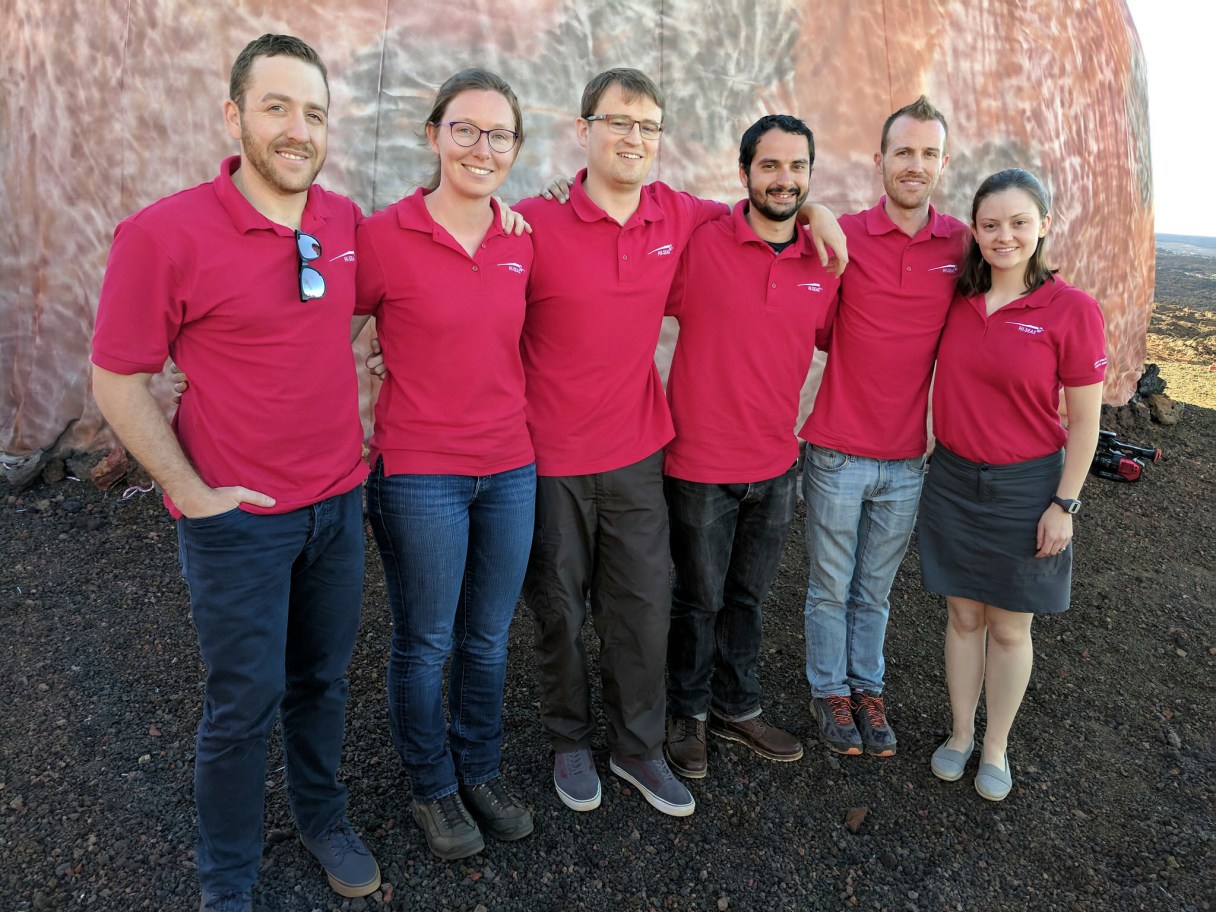
In this photo provided by the University of Hawaii, scientists Joshua Ehrlich, from left, Laura Lark, Sam Payler, Brian Ramos, Jay Bevington and Ansley Barnard, pose for a photo before they enter a geodesic dome called Hawaii Space Exploration Analog and Simulation, or HI-SEAS located 8,200 feet above sea level on Mauna Loa on the island of Hawaii, Thursday, Jan. 19, 2017. The four men and two women moved into their new simulated space home Thursday afternoon, as part of a human-behavior study that could help NASA as it draws up plans for sending astronauts on long missions to Mars. (University of Hawaii via AP)
In this photo provided by the University of Hawaii, scientists Joshua Ehrlich, from left, Laura Lark, Sam Payler, Brian Ramos, Jay Bevington and Ansley Barnard, pose for a photo before they enter a geodesic dome called Hawaii Space Exploration Analog and Simulation, or HI-SEAS located 8,200 feet above sea level on Mauna Loa on the island of Hawaii, Thursday, Jan. 19, 2017. The four men and two women moved into their new simulated space home Thursday afternoon, as part of a human-behavior study that could help NASA as it draws up plans for sending astronauts on long missions to Mars. (University of Hawaii via AP) In this photo provided by the University of Hawaii, scientists Joshua Ehrlich, from left, Laura Lark, Sam Payler, Brian Ramos, Jay Bevington and Ansley Barnard, pose for a photo before they enter a geodesic dome called Hawaii Space Exploration Analog and Simulation, or HI-SEAS located 8,200 feet above sea level on Mauna Loa on the island of Hawaii, Thursday, Jan. 19, 2017. The four men and two women moved into their new simulated space home Thursday afternoon, as part of a human-behavior study that could help NASA as it draws up plans for sending astronauts on long missions to Mars. (University of Hawaii via AP)

HONOLULU (AP) – Crammed into a dome with one bathroom, six scientists will spend eight months munching on mostly freeze-dried foods – with a rare treat of Spam – and have only their small sleeping quarters to retreat to for solace.

The simulated stay on Mars with a carefully selected crew of researchers embarked on a mission Thursday to gain insight into the psychological toll a similar real-life voyage would have on astronauts. It’s part of a NASA-funded human-behavior experiment that could help the space agency send humans to the red planet in the next 20 years.

The man-made dome that the four men and two women call home is outfitted with futuristic white walls and an elevated sleeping platform on the world’s largest active volcano in Hawaii. The vinyl-covered shelter spans 1,200 square feet, or about the size of a small, two-bedroom house.

A video released by the group shows the six scientists in matching red polo shirts arriving and entering the dome to farewell handshakes from program associates.

Except for the presence of the white van that brought the group, the scene was reminiscent of the red planet – the dome set in a barren, rock-strewn and reddish landscape with distant hills giving the feel of a windswept and forbidding environment.