
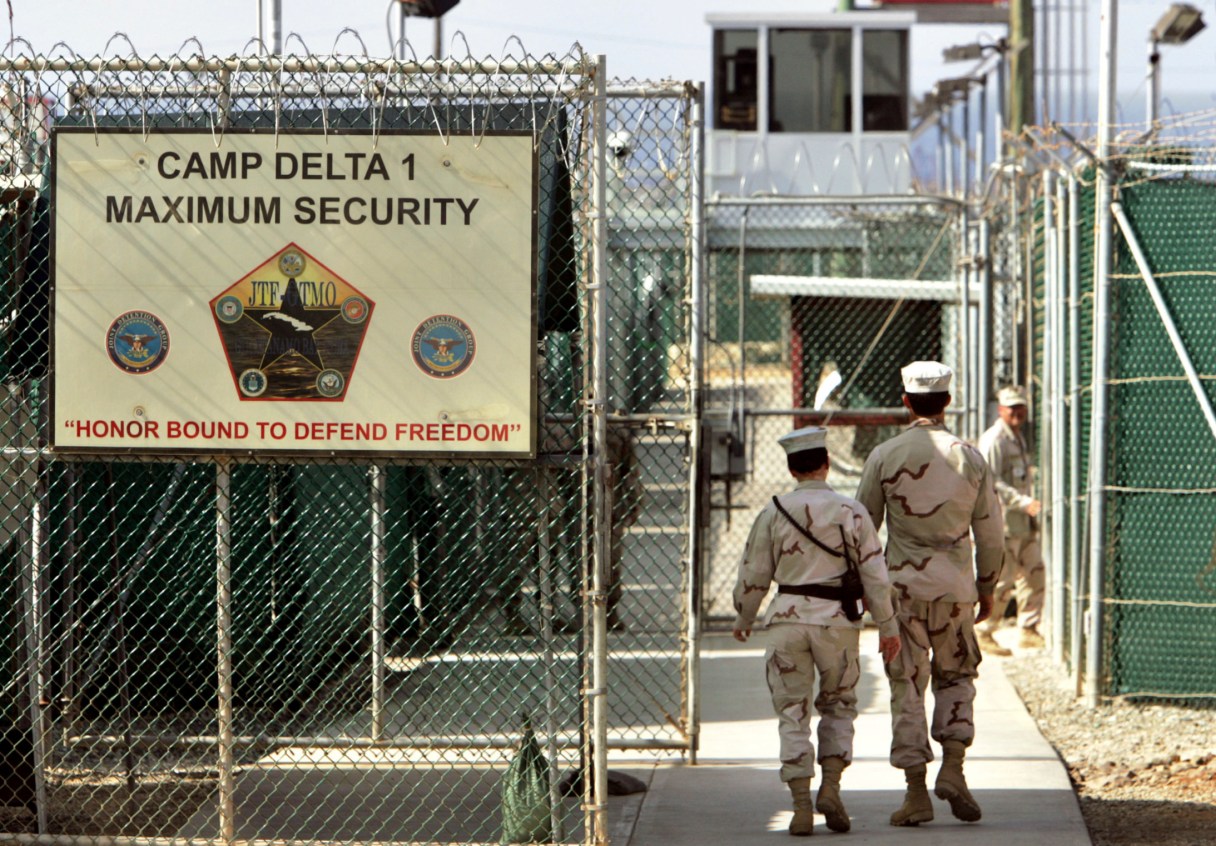
LONDON (AP) – It took more than a year’s worth of beatings, sleep deprivation, psychological abuse and threats to his family before former Guantanamo Bay detainee Moazzam Begg said he cracked and confessed to being a member of the al-Qaida terror network. The only problem, he said, was that it was a lie.
Chris Arendt, meanwhile, worked as a guard at the U.S. detention facility in Cuba and said he routinely saw what could be defined as torture, including prisoners being unnecessarily pepper-sprayed or taken for interrogations that never took place. Instead, the prisoners were left shackled for hours as a means of punishment.
During the year he spent at the U.S. detention facility in 2004, Arendt said it was clear that most of the detainees had relatively little valuable intelligence.
“I thought that if I confessed I would at least get access to the courts and my interrogations would stop being so adversarial,” the 48-year-old Begg said. Despite his confession in 2003, he was not released until 2005, along with three other British detainees. Like most Guantanamo detainees, he was never charged.
President Donald Trump is asking for recommendations on whether torture works, whether secret CIA black sites should be used again to interrogate suspects and whether the U.S. prison camp at Guantanamo Bay should not only stay open, but should accept future detainees, according to a draft executive order that signals sweeping changes to U.S. interrogation and detention policy. The Associated Press and other news organizations obtained a copy of the draft directive.