
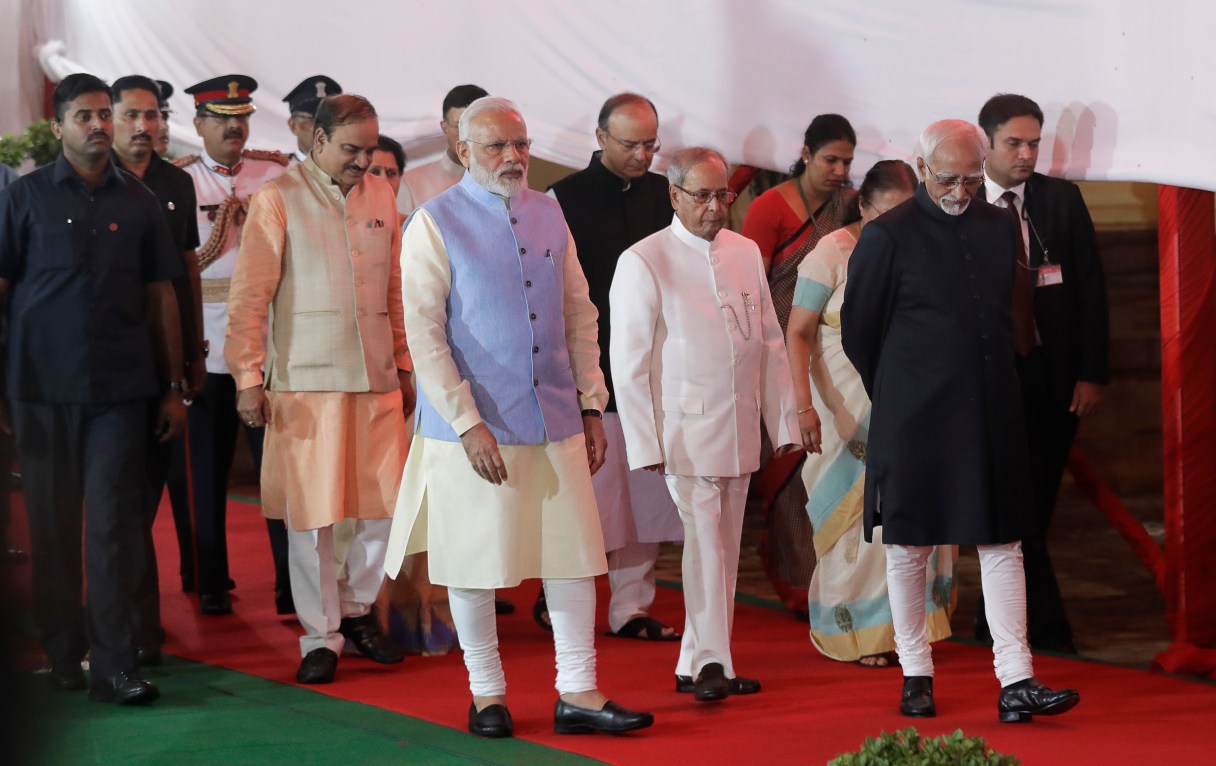
NEW DELHI (AP) – Shops and businesses reopened in India amid confusion Saturday, hours after the government introduced a new nationwide tax that will change the cost of nearly everything people buy, replacing a complicated mix of state and federal taxes.
Prime Minister Narendra Modi heralded the major overhaul of the taxation system – known as the Goods and Services Tax – at a midnight ceremony Friday in Parliament.
The main opposition Congress party and some other parties boycotted the ceremony, arguing that nearly 7 million traders needed more time to prepare for the new system, which requires them to file tax returns every month. The opposition, however, supported the new tax system.
“There is confusion right now,” said Manish Arora, a New Delhi pharmacy owner who was selling medicine to customers at the old prices. “My suppliers say they will be able to provide the pricing of medicines under the new system later Saturday.”
Balbir Singh, who manufactures television sets, said his clients in small towns and villages didn’t know much about the new system. “I expect my business to go down by 60-70 percent in the next two to three months before it picks up again,” he said.