
There are many facets to higher learning.
Knowledge. Preparation. Diligence.
There are others of course.
Competition. Hard work. Persistence.
It’s an easy overlap between the needs to be an elite scholar and the needs to be a scholarship athlete.
For student-athletes, college sports provide a chance to compete at the next level and to get some help with the rising cost of tuition.
There are also the benefits of being part of a team, which can greatly ease the transition to college life.
Rachel Hardin, the goalie on the Dalton State College soccer team, is quoted on the school’s website saying, “It means (so much) to be a part of a family and a part of something bigger than yourself. Go Roadrunners! Beep, Beep!!”
Hardin is one of the hundreds of DSC Roadrunners competing in an athletic program that is barely old enough to walk.
Started in earnest four years ago, Dalton State now offers 14 scholarship sports – seven men’s teams and seven women’s teams – that are growing in number and success each year.
The decision to add athletics for a smaller school such as DSC was viewed through two important prisms.
“Athletics are often referred to as the front porch of the college,” Dalton State athletic director Jon Jaudon said. “Athletics offers curb appeal. Nothing could have driven the interest Dalton State has garnered the last four years like athletics. Intercollegiate Athletics is woven into the fabric of our culture. It is very important at all levels.”
Jaudon speaks glowingly of the effort of both the athletes and the coaches for the Roadrunners.
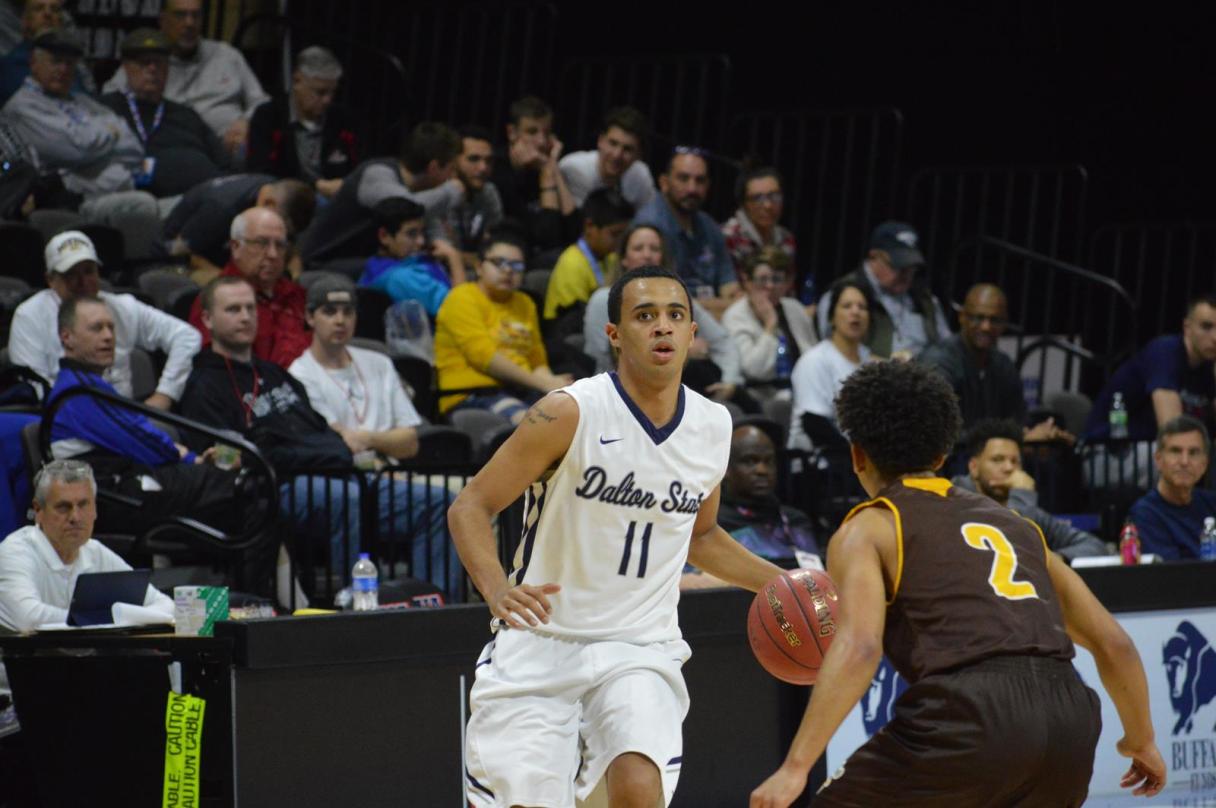
He says the men’s basketball program under coach Tony Ingle may be the university’s most popular now, but he noted that the competition for top Roadrunner sport will be intense moving forward.
“With basketball, there is history with it from the old days,” Jaudon says. “Coach Ingle also brings a local following and flare to the contests. We are also really good.”
“I predict soccer will overtake it one day. Dalton is a soccer-centric community. The interest in soccer is off the charts.”
Interest, attention and notoriety are part of the fiscal equation for colleges’ spending, from the relatively small amounts for schools similar to DSC all the way up to the monstrous millions spent on SEC teams and other schools competing in March Madness.
“Every place I’ve been to, finances are an issue,” Jaudon says.
Ingle has been at so many stops – he was on staff at BYU and has been a hugely successful coach at high school, junior college, NAIA, Division II and Division I – his perspective has been shaped from every angle.
He readily says the big television money for larger big schools helps create the growing budgets.
“We’re a state school and very affordable, and a lot of the NAIA (schools) are expensive private schools,” Ingle says. “So we have to be very wise with our dollars.”
Ingle’s team finished last season 29-5 and made it to the national Final Eight in the tournament. His program started with 11 scholarships four years ago, but now offers eight as the budget has been stretched to cover more sports.
He understands the sacrifice, knowing the variety allows Dalton State to reach more athletes and help them become student athletes.
“Every penny spent is worth it if helps a person be a better person, a better citizen, a better parent,” Ingle says. “When you invest in people, that’s the greatest investment you will ever make.”