
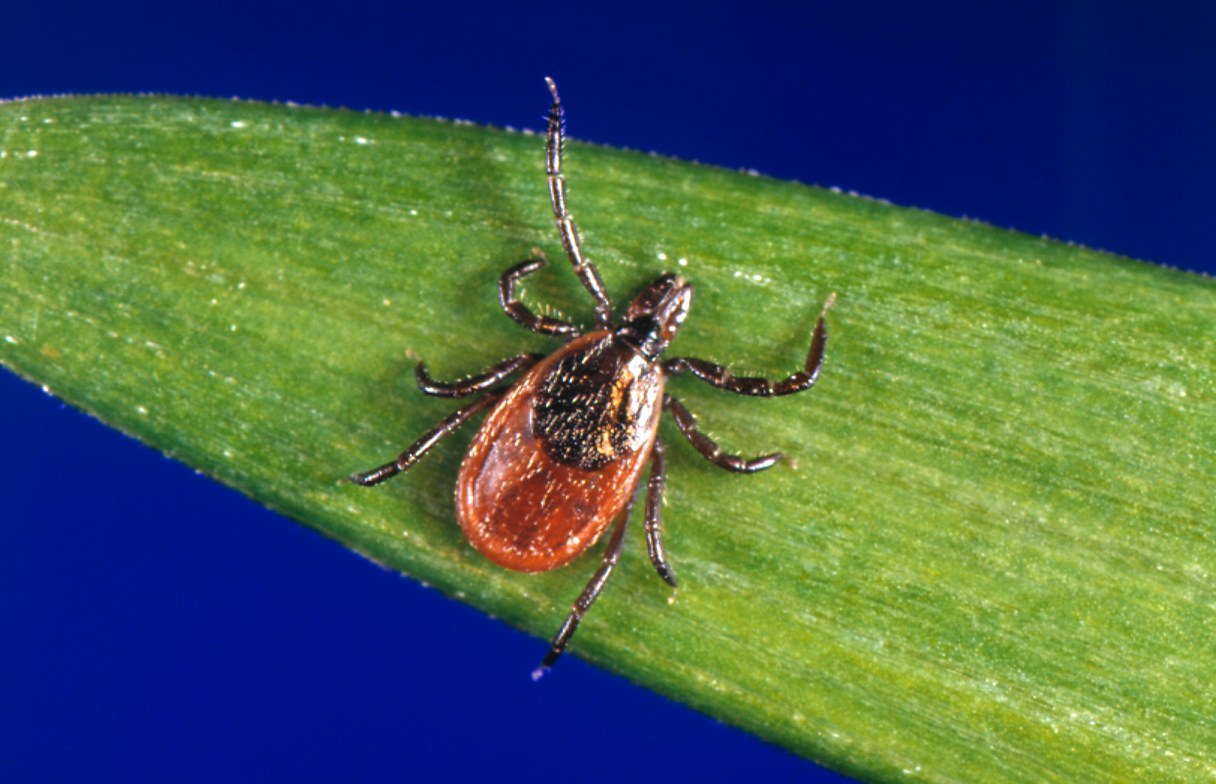
RED HOOK, N.Y. (AP) – Maybe it will take a village to fight Lyme disease. Or a bunch of them.
With a bumper crop of blacklegged ticks possible this season, researchers in a Lyme disease-plagued part of New York’s Hudson Valley are tackling tick problems across entire neighborhoods with fungal sprays and bait boxes. The $8.8 million, five-year project aims to find out if treating 24 neighborhoods in Dutchess County for ticks, also known as deer ticks, can significantly reduce cases of Lyme disease and other tick-borne illnesses.
“We want to do a better job and actually remove the threat from the neighborhoods, from the places where people are actually exposed to infected ticks,” said Richard Ostfeld, a disease ecologist with the Cary Institute of Ecosystem Studies in Millbrook, about 70 miles (110 kilometers) north of New York City.
Dutchess County is a patchwork of forests, rolling farmland and thick residential developments that has long been a hotbed of Lyme disease. Tick checks are a common end-of-day routine here, as are inspections for the red, target-shaped rashes associated with tick bites.
People spray on tick repellents, treat their clothes with insecticide and even spray their yards. But Ostfeld notes that spraying individual lawns has not proved effective in fighting Lyme disease.