
Monday, November 16, 2026Nov 16

House GOP defiant on health bill amid Senate uncertainty

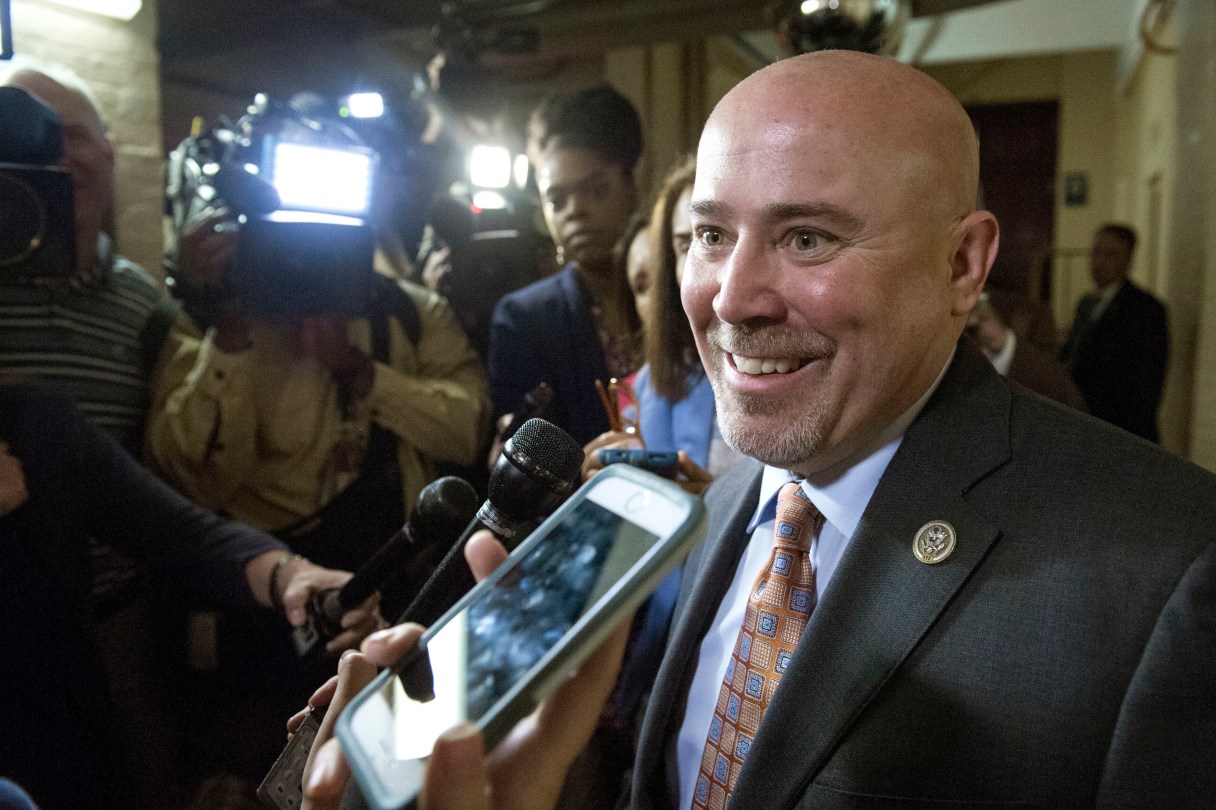
FILE- In this May 2, 2017 file photo, Rep. Tom MacArthur, R-N.J. speaks with reporters on Capitol Hill in Washington. Vulnerable House Republicans stood defiant about their support for an unpopular bill to repeal Obamacare as the effort languished in the Senate, leaving them to face angry voters with, perhaps, nothing to show for it. “I have no regrets. I am doing what I can as a member of Congress to solve problems. That’s why I came here. I didn’t come here to be potted plant,” said MacArthur who played a key role in negotiating the House bill that narrowly passed in early May. (AP Photo/Cliff Owen, File)

WASHINGTON (AP) – Vulnerable House Republicans stood defiant about their support for an unpopular bill to repeal Obamacare as the effort languished in the Senate, leaving them to face angry voters with, perhaps, nothing to show for it.

“I have no regrets. I am doing what I can as a member of Congress to solve problems. That’s why I came here. I didn’t come here to be potted plant,” said Rep. Tom MacArthur, R-N.J., who played a key role in negotiating the House bill that narrowly passed in early May.

Backing the measure was already politically risky for Republicans in competitive House districts, especially the 23 lawmakers from places where Hillary Clinton got more votes than President Donald Trump. The Congressional Budget Office said the House bill would eventually cause higher premiums for seniors and result in 23 million people losing coverage.

And only 22 percent of adults support the Republican health plan, according to a new Associated Press-NORC Center for Public Affairs Research survey.

Midterm elections typically take a toll on the party occupying the White House – Barack Obama’s Democrats lost 63 House seats in 2010 and majority control, George W. Bush’s Republicans lost 30 seats and their advantage in 2006.