
Monday, November 16, 2026Nov 16

Legal deal pulls money to teach tribal kids native language

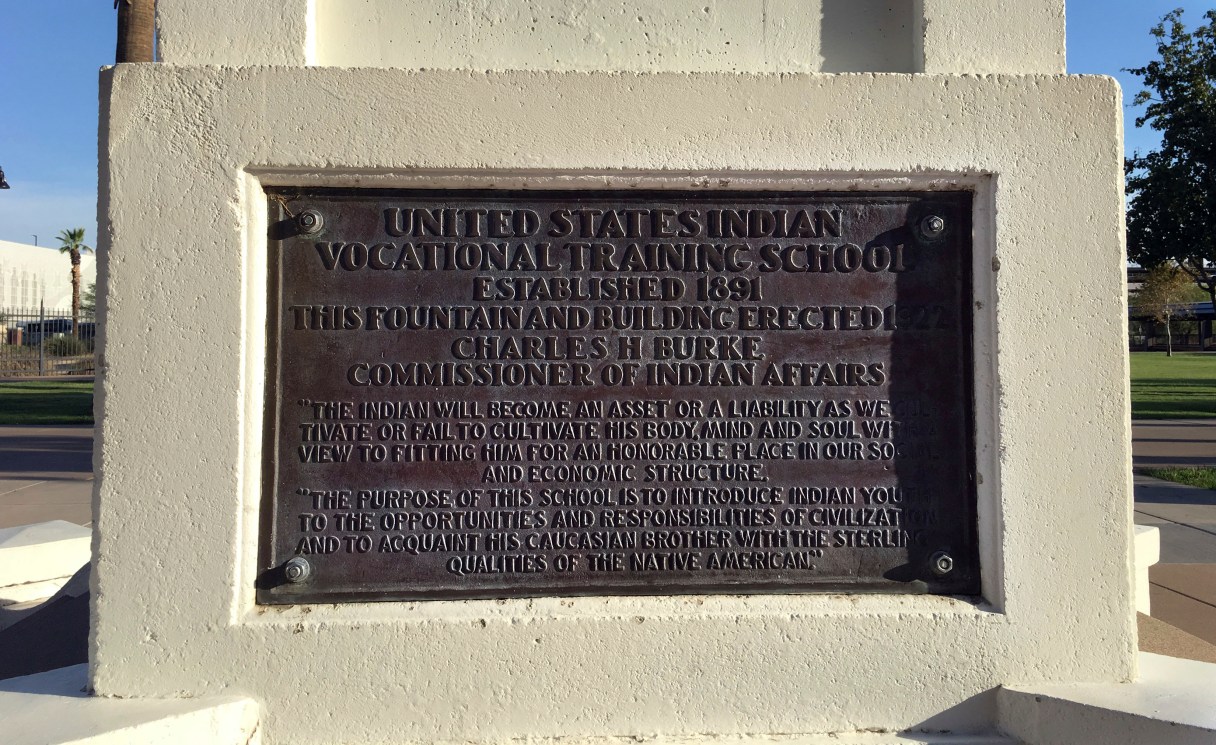
This Thursday, July 20, 2017 photo, shows a plaque at the Steele Indian School Park in Phoenix, Arizona, where the former Phoenix Indian School for Native American Children used to sit. The plot of land was traded between the federal government and a private developer who was supposed to make yearslong payments to an education fund for native children. But the developer stopped making payments in 2012, and now the government has come to an agreement with the developer that allows it to skirt much of what it owes to the education fund. (AP Photo/Astrid Galvan)

PHOENIX (AP) – New generations of children growing up in a tiny American Indian tribe in Arizona have lost a key way of learning to speak their native language, and it may not be coming back.

A private land developer stopped making payments five years ago that funded language development in Hopi schools and helped 18 other tribes in Arizona build schools, youth camps and educational facilities. The payments were required under a massive land swap with the United States.

The federal government reached a settlement this week with Barron Collier, a Florida-based company, that will allow the developer to pay just $29 million of the roughly $66.5 million it owed. The company also had to return a lot in Phoenix to the government.

The Hopi tribe is the only one in Arizona without casinos that help fund schools, so it relies solely on federal money for education and has less of a cushion than other tribes affected by the settlement.

The money from the land swap went into an education trust that helped the Hopi tribe pay for teacher training on the language program. It was put on hold when the developer’s payments stopped in 2012.