
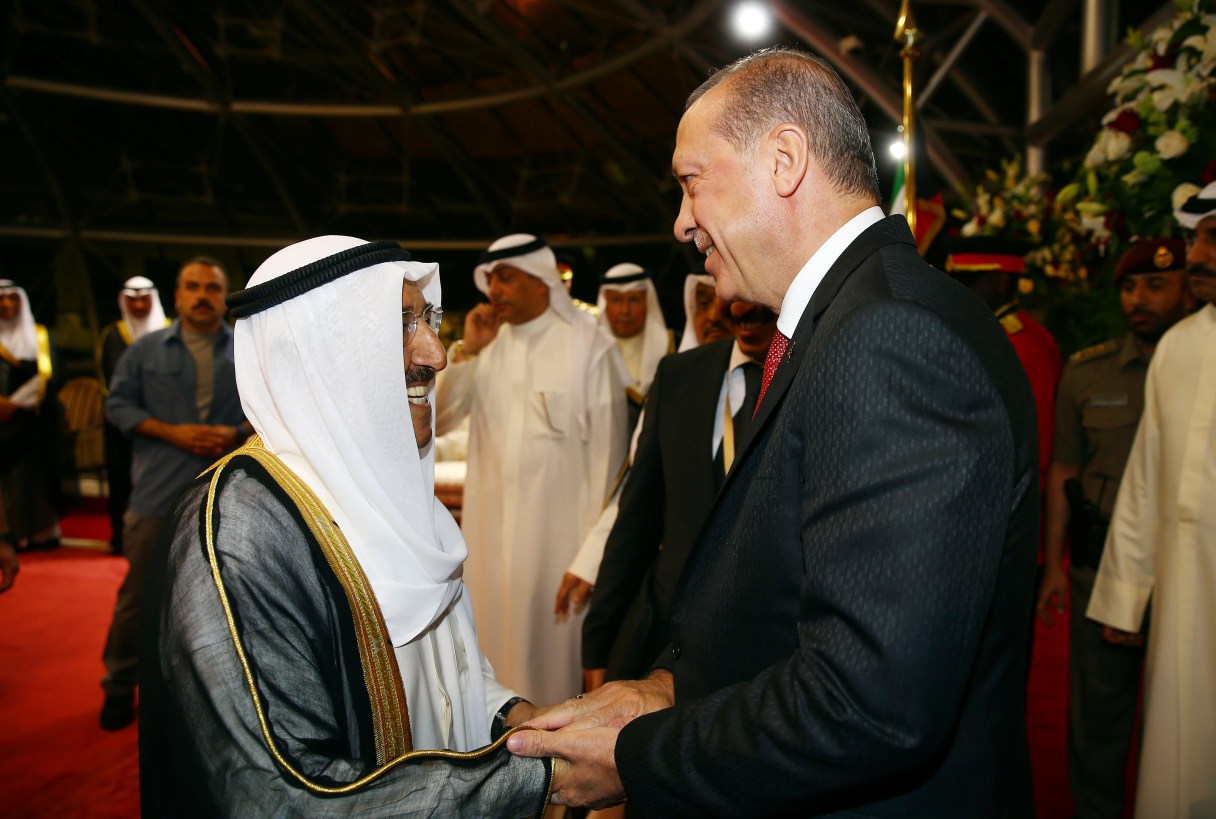
KUWAIT CITY (AP) – Turkey’s president waded into the diplomatic crisis gripping Qatar and four other Arab nations on Sunday, traveling to Saudi Arabia and Kuwait as part of a three-country Gulf tour aimed at helping break the impasse.
Recep Tayyip Erdogan is the fifth high-level visitor from outside the Gulf to try to resolve the dispute since it erupted on June 5. The top diplomats of Britain, France, Germany and the United States have all been through already, underscoring the depth of concern the crisis is causing well beyond the region.
Erdogan faces a tougher challenge in securing a breakthrough than Turkey’s NATO allies because of the increasingly warm ties, including the deployment of military forces, it has built with Qatar in recent years. While members of the anti-Qatar quartet have strong trade links with Turkey, its closeness to Qatar raises suspicions of its motives for them.
Saudi Arabia, the United Arab Emirates, Egypt and Bahrain cut ties and transport links with Qatar in early June, accusing it of supporting extremists. Qatar strongly denies the allegation and sees the dispute as politically motivated.
The quartet insisted Qatar accept a tough 13-point list of demands to end the rift, including shutting down news outlets including Al-Jazeera, cutting ties with Islamist groups such as the Muslim Brotherhood, limiting ties with Iran and expelling Turkish troops stationed in the country. Qatar refused, arguing that the demands were an effort to undermine its sovereignty.