
Monday, November 16, 2026Nov 16

Report: Brain disease seen in most former football players in study

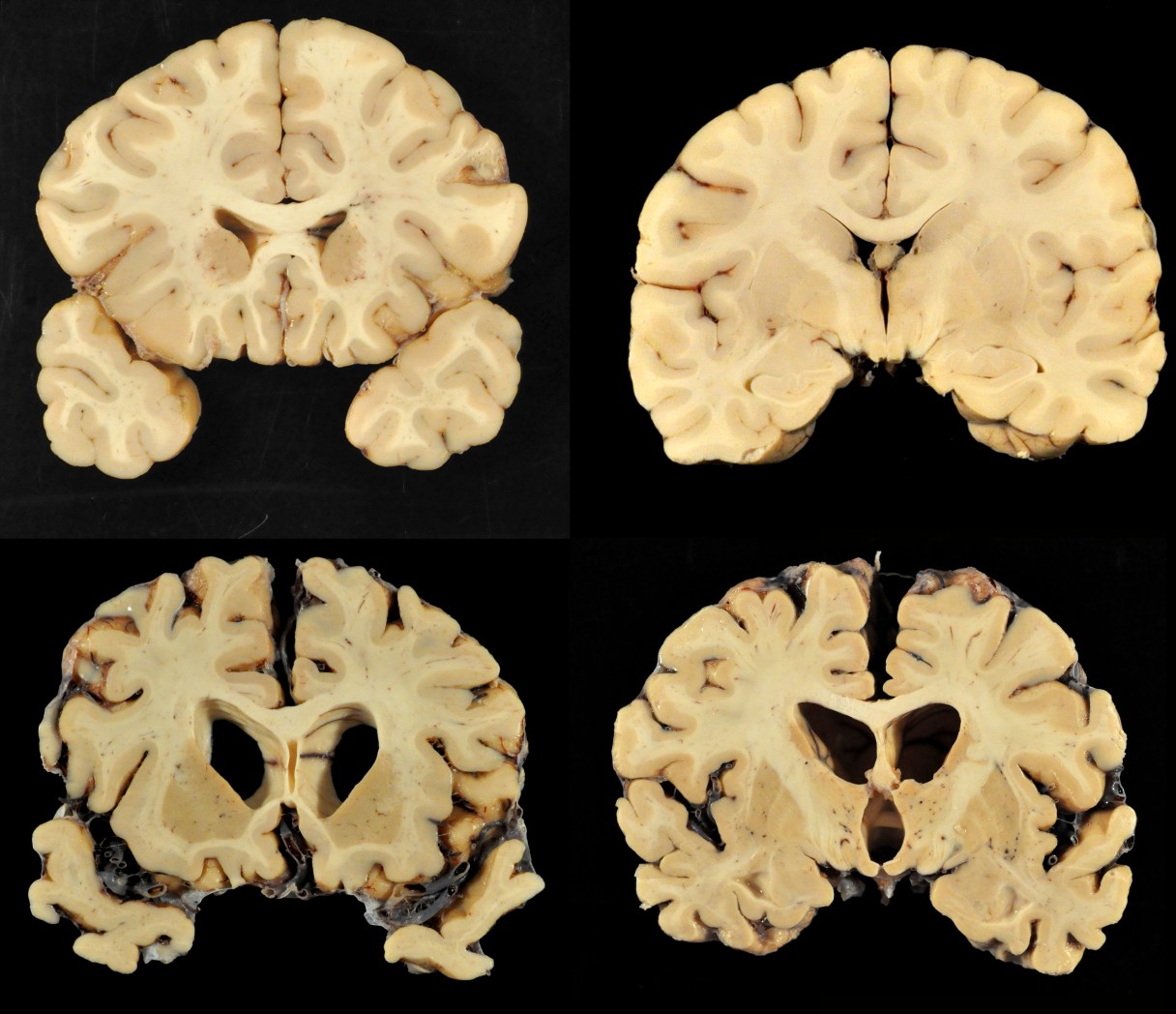
This combination of photos provided by Boston University shows sections from a normal brain, top, and from the brain of former University of Texas football player Greg Ploetz, bottom, in stage IV of chronic traumatic encephalopathy. According to a report released on Tuesday, July 25, 2017 by the Journal of the American Medical Association, research on 202 former football players found evidence of a brain disease linked to repeated head blows in nearly all of them, from athletes in the National Football League, college and even high school. (Dr. Ann McKee/BU via AP)

CHICAGO – Research on 202 former football players found evidence of a brain disease linked to repeated head blows in nearly all of them, from athletes in the National Football League, college and even high school.

It’s the largest update on chronic traumatic encephalopathy, or CTE, a debilitating brain disease that can cause a range of symptoms including memory loss.

The report doesn’t confirm that the condition is common in all football players; it reflects high occurrence in samples at a Boston brain bank that studies CTE. Many donors or their families contributed because of the players’ repeated concussions and troubling symptoms before they died.

“There are many questions that remain unanswered,” said lead author Dr. Ann McKee, a Boston University neuroscientist. “How common is this” in the general population and all football players?

“How many years of football is too many?” and “What is the genetic risk? Some players do not have evidence of this disease despite long playing years,” she noted.