
Thursday, November 12, 2026Nov 12

Senate health care debate could be suspenseful and raucous

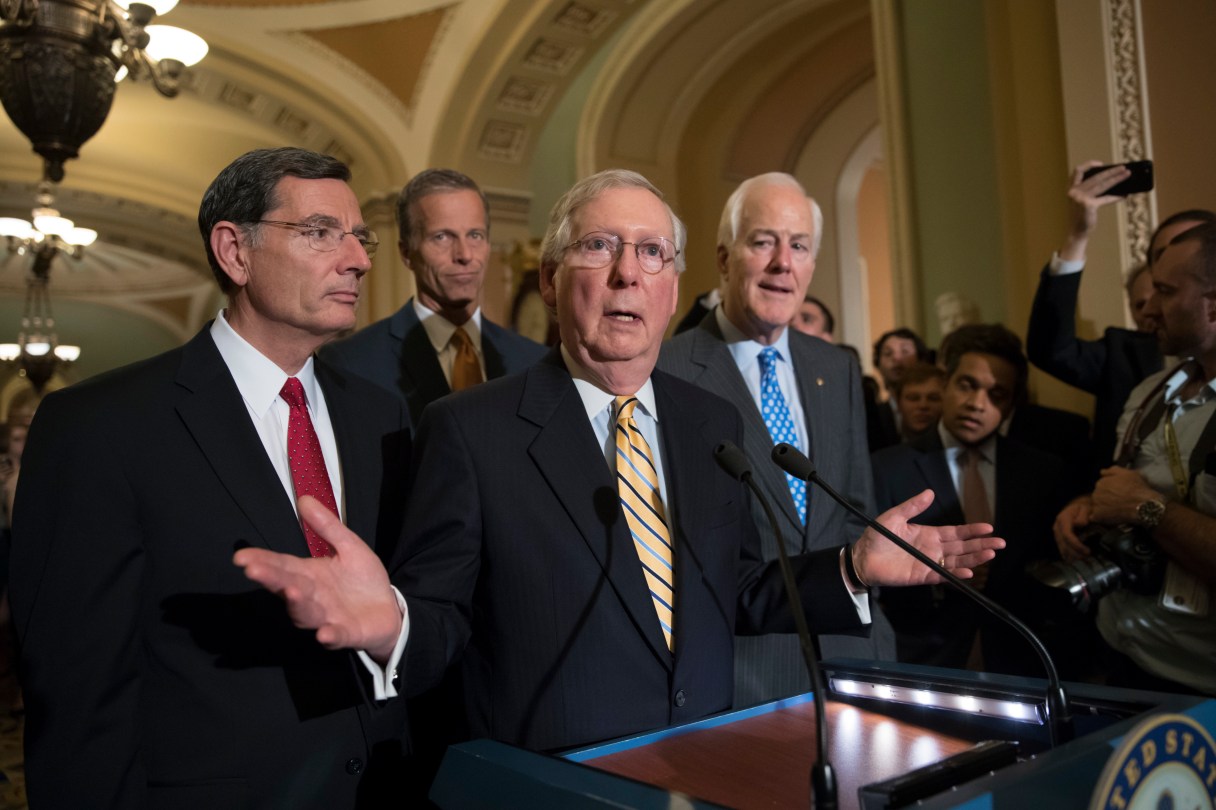
Senate Majority Leader Mitch McConnell of Ky., joined by, from left, Sen. John Barrasso, R-Wyo., Sen. John Thune, R-S.D., and Majority Whip John Cornyn, R-Texas, speak with reporters on Capitol Hill in Washington, Tuesday, July 25, 2017, after Vice President Mike Pence broke a 50-50 tie to start debating Republican legislation to tear down much of the Obama health care law. (AP Photo/J. Scott Applewhite)
Senate Majority Leader Mitch McConnell of Ky., joined by, from left, Sen. John Barrasso, R-Wyo., Sen. John Thune, R-S.D., and Majority Whip John Cornyn, R-Texas, speak with reporters on Capitol Hill in Washington, Tuesday, July 25, 2017, after Vice President Mike Pence broke a 50-50 tie to start debating Republican legislation to tear down much of the Obama health care law. (AP Photo/J. Scott Applewhite) Senate Majority Leader Mitch McConnell of Ky., joined by, from left, Sen. John Barrasso, R-Wyo., Sen. John Thune, R-S.D., and Majority Whip John Cornyn, R-Texas, speak with reporters on Capitol Hill in Washington, Tuesday, July 25, 2017, after Vice President Mike Pence broke a 50-50 tie to start debating Republican legislation to tear down much of the Obama health care law. (AP Photo/J. Scott Applewhite)

WASHINGTON – The Senate’s days-long debate on health care features a dynamic that’s relatively rare on Capitol Hill.

Genuine suspense.

Debate kicked off Tuesday without an obvious endgame. Several Republicans voted to start debate but said the bill will have to be changed for them to vote to actually pass the legislation later this week. The amendment process promises to be extensive and freewheeling. And victory for Republicans and President Donald Trump is not guaranteed.

The Senate has started off by taking up the House-passed bill – which doesn’t have enough support to pass the Senate – and it’ll take near-unanimity among Republicans for them to alter the measure. Right now, they’re deeply divided.

“We obviously don’t have consensus on where we ought to go,” said Sen. Ron Johnson, R-Wis. “No matter what we pass it’s not going to fix the whole problem.”