
Tuesday, November 3, 2026Nov 3

This story is free to read.

The Latest: Expert: Chicago, LA in range of North Korea ICBM

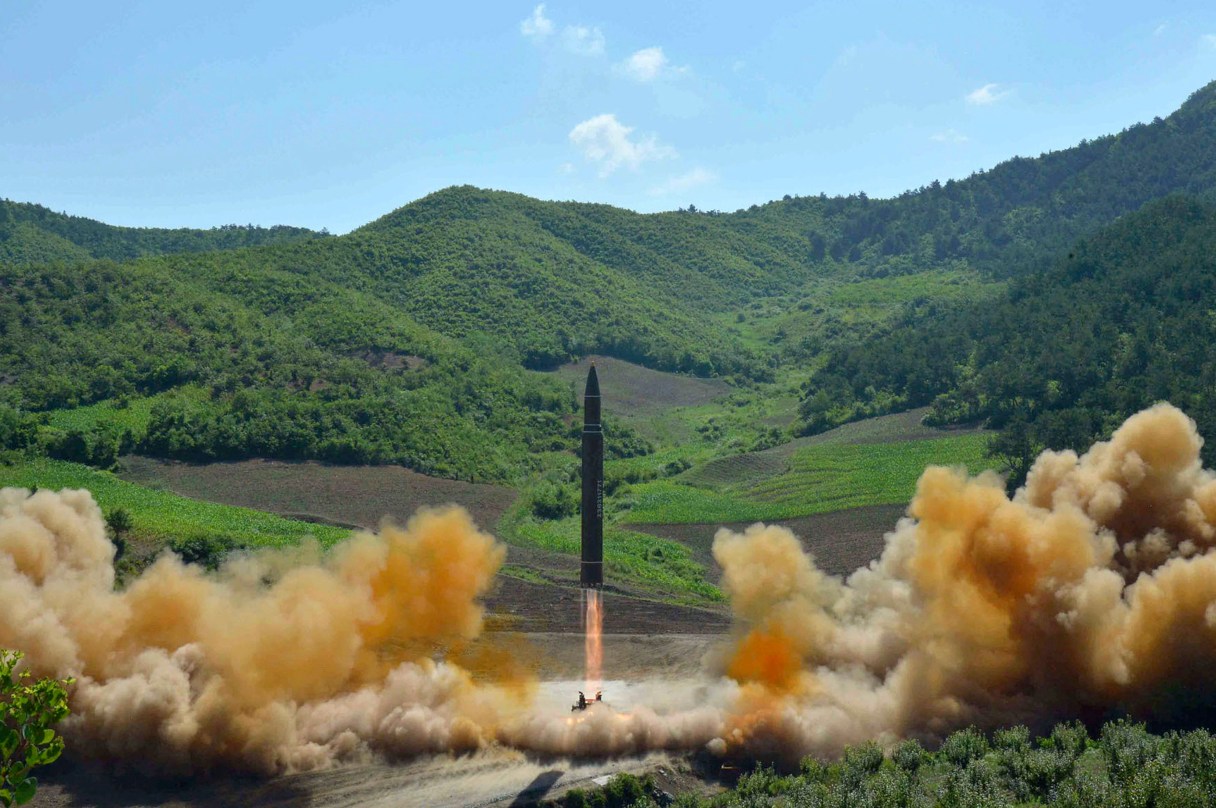
FILE- In this July 4, 2017 file photo, distributed by the North Korean government shows what was said to be the launch of a Hwasong-14 intercontinental ballistic missile in North Korea. North Korea fired a ballistic missile Friday night, July 28, which landed in the ocean off Japan, Japanese officials said. (Korean Central News Agency/Korea News Service via AP, File)
FILE- In this July 4, 2017 file photo, distributed by the North Korean government shows what was said to be the launch of a Hwasong-14 intercontinental ballistic missile in North Korea. North Korea fired a ballistic missile Friday night, July 28, which landed in the ocean off Japan, Japanese officials said. (Korean Central News Agency/Korea News Service via AP, File) FILE- In this July 4, 2017 file photo, distributed by the North Korean government shows what was said to be the launch of a Hwasong-14 intercontinental ballistic missile in North Korea. North Korea fired a ballistic missile Friday night, July 28, which landed in the ocean off Japan, Japanese officials said. (Korean Central News Agency/Korea News Service via AP, File)

PYONGYANG, North Korea (AP) – The Latest on North Korea’s launch of its second intercontinental ballistic missile (all times local):

3:20 a.m.

A private analyst who closely watches North Korea’s nuclear and ballistic missile programs says that if reports about the country’s second intercontinental ballistic missile launch are accurate, the projectile would be powerful enough to reach a wide swath of the United States.

North Korea launched the missile at a steep trajectory late Friday night. Japanese officials said it flew about five minutes longer than the North’s first ICBM, launched July 4.

David Wright, a physicist and co-director of the global security program at the Union of Concerned Scientists, said in Washington on Friday that if reports of the missile’s maximum altitude and flight time are correct, it would have a theoretical range of at least 10,400 kilometers (about 6,500 miles). That means it could have reached Los Angeles, Denver and Chicago.