
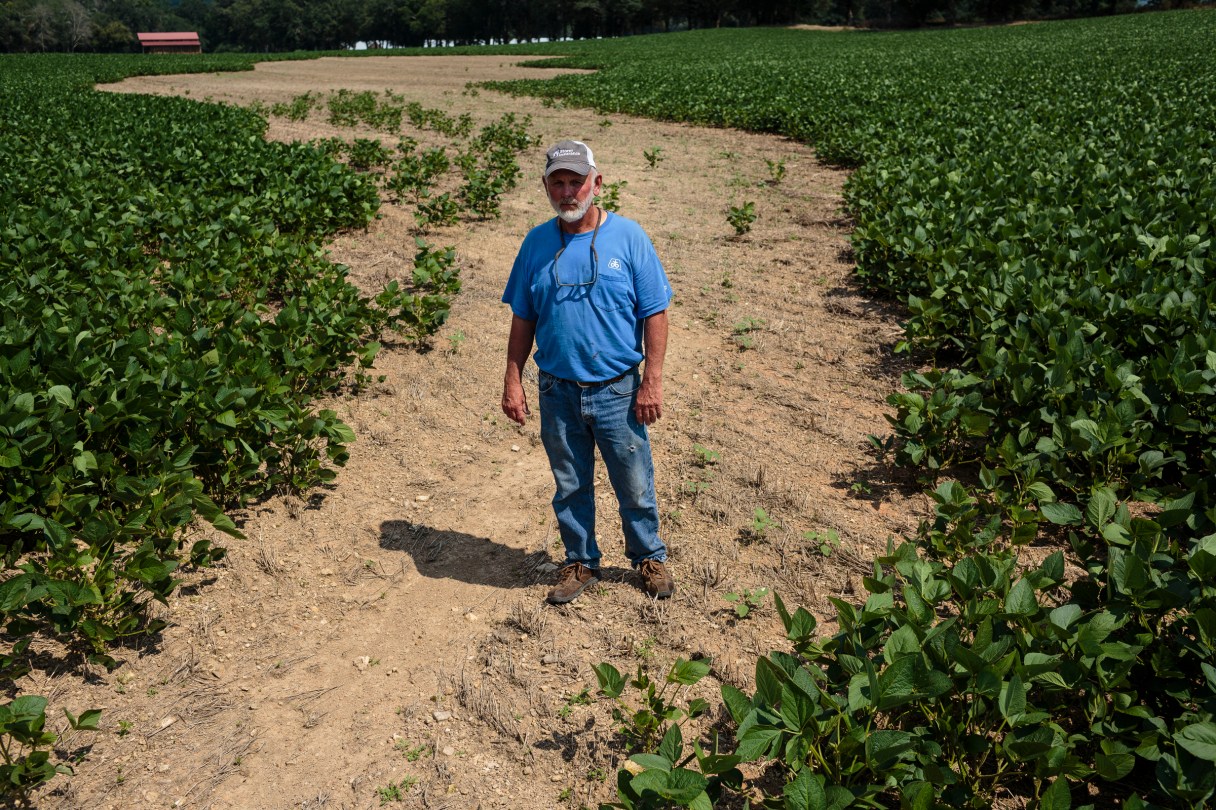
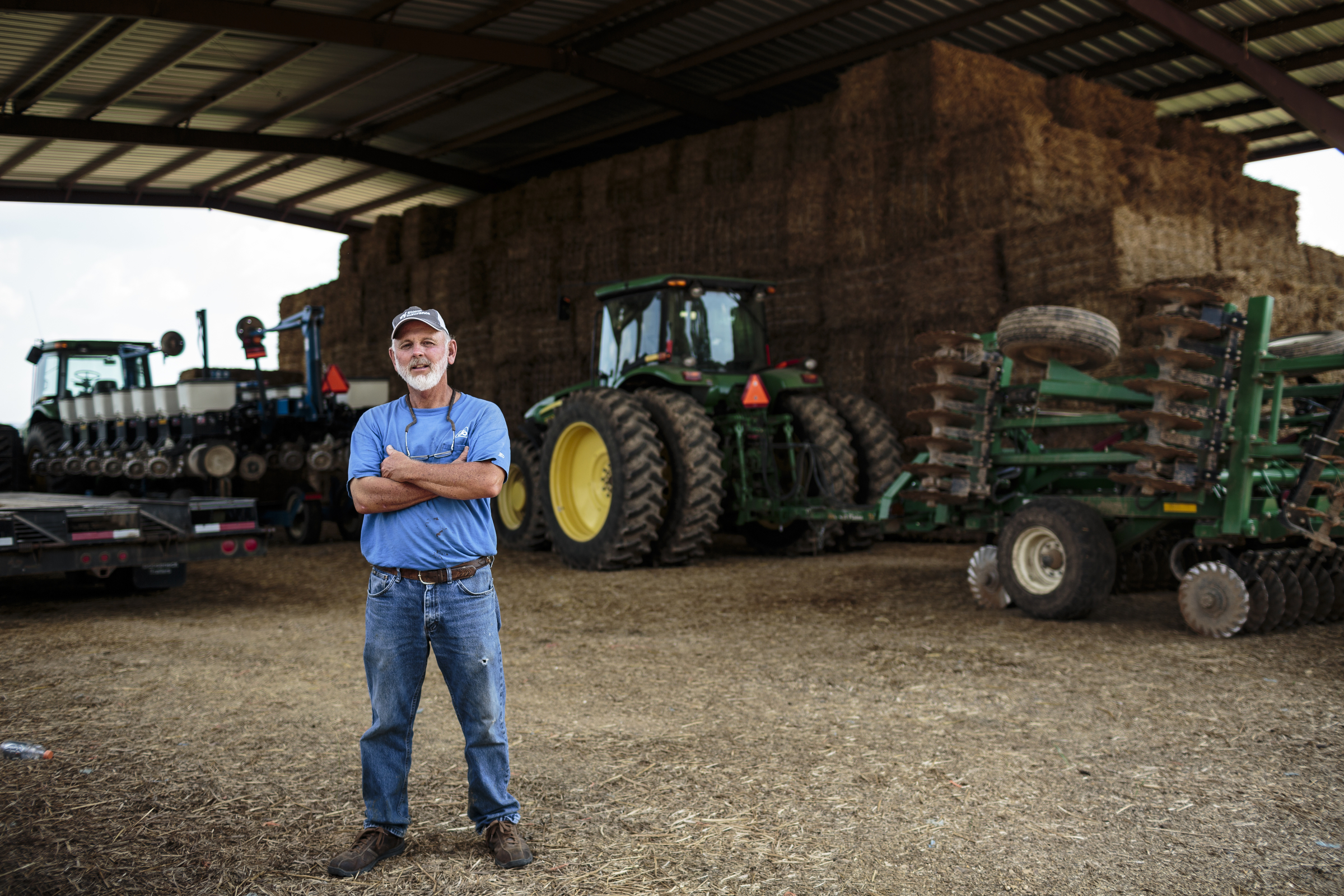
 Staff photo by Doug Strickland / Alan Scoggins stands near a stack of straw, which they alternate growing with soybeans, on the Scoggins family farm on Friday, July 21, 2017, in LaFayette, Ga. Last year, the farm’s yield was badly impacted by an exceptionally dry summer, and this year’s wet weather has also effected the amount of soybeans they could plant.
In June, Sonny Scoggins saw something he would never have dreamed he’d see – catfish 3 feet long wiggling and flopping among his budding soybean plants.
A storm had passed through his Walker County farm near LaFayette, Ga. The rain was so heavy that a pond overflowed, sending water spilling shin-high streams through the row crops. Over a few days temperatures rose and the water evaporated. The catfish retreated. Then another heavy storm hit, and the whole thing happened again, Scoggins told Times Free Press reporter Tyler Jett.
But what’s most unfortunate is that he – and we – can count on it happening again, along with intermittent droughts like we saw in this region last year. Likewise, we can count on more deadly and devastating wildfires like the ones that scorched Gatlinburg and parts of Walden’s Ridge last summer and fall.
What we’re seeing is just the beginning of the local impacts coming from global warming – or in the more politically correct parlance: climate change. Or as our vacuous president and the Cabinet he surrounds himself with call it: a hoax.
About the same time that first big rain hit the Scoggins farm, Energy Secretary Rick Perry told CNBC he does not believe carbon dioxide emissions from human activity are the main driver of climate change. Rather than CO2, he thinks that “most likely the primary control knob is the ocean waters and this environment that we live in.”