
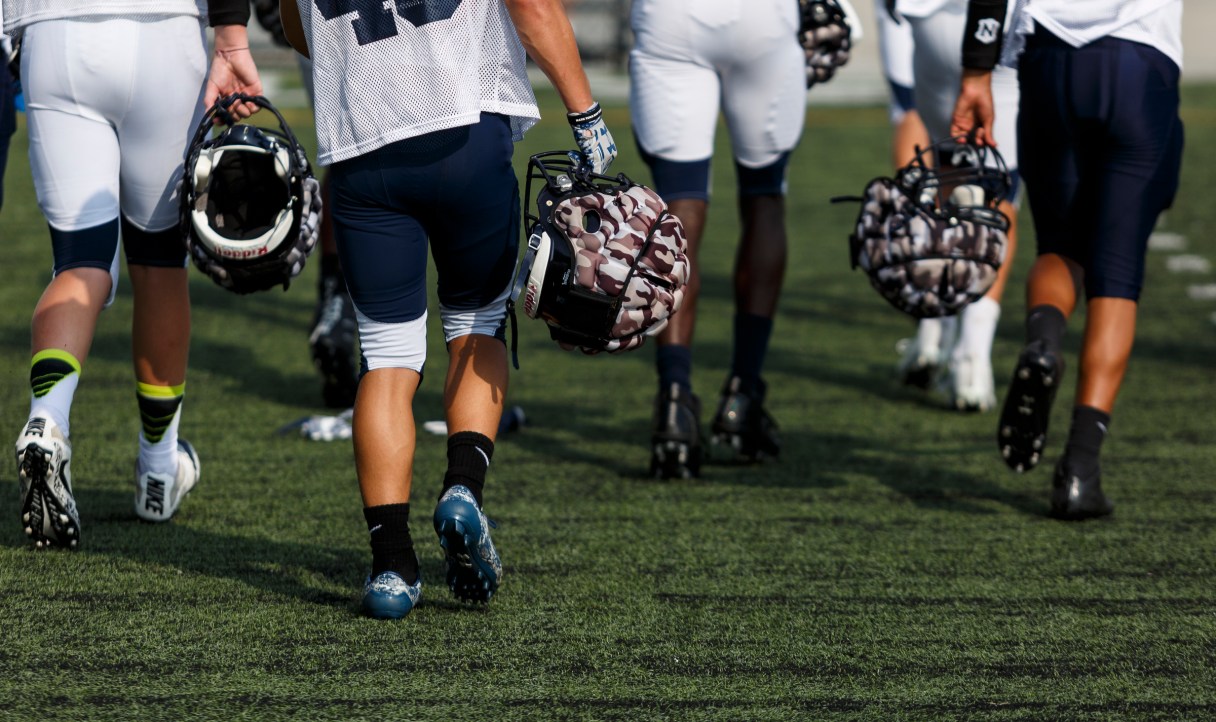
“If you really want to get rid of a lot of these helmet-to-helmet hits, take the face masks off.”
When McCallie School football coach Ralph Potter spoke those words a couple of years ago, he meant it as a joke. Sort of.
But it appeared to make at least a wee bit of sense. If guys knew they’d get their noses broken or teeth knocked out or worse – possibly far worse – whenever they collided with an opponent’s equally unprotected face, perhaps they’d start wrapping up their foes somewhere noticeably below the head and neck.
But then research surfaced regarding serious injuries in rugby, which has no headgear. According to an Auckland University of Technology study from 2011, a comparison of catastrophic incidents (i.e., paralysis or death) between rugby and other sports from 1975 through 2005 revealed rugby incidents worldwide showed 4.6 catastrophic injuries for every 100,000 players, while American football was responsible for 1.0 catastrophic incidents per 100,000 players.
So even with all the justifiable concern over helmet-to-helmet contact, wearing a helmet with a face mask is still using your head for what it was intended, which is to think and reason.