
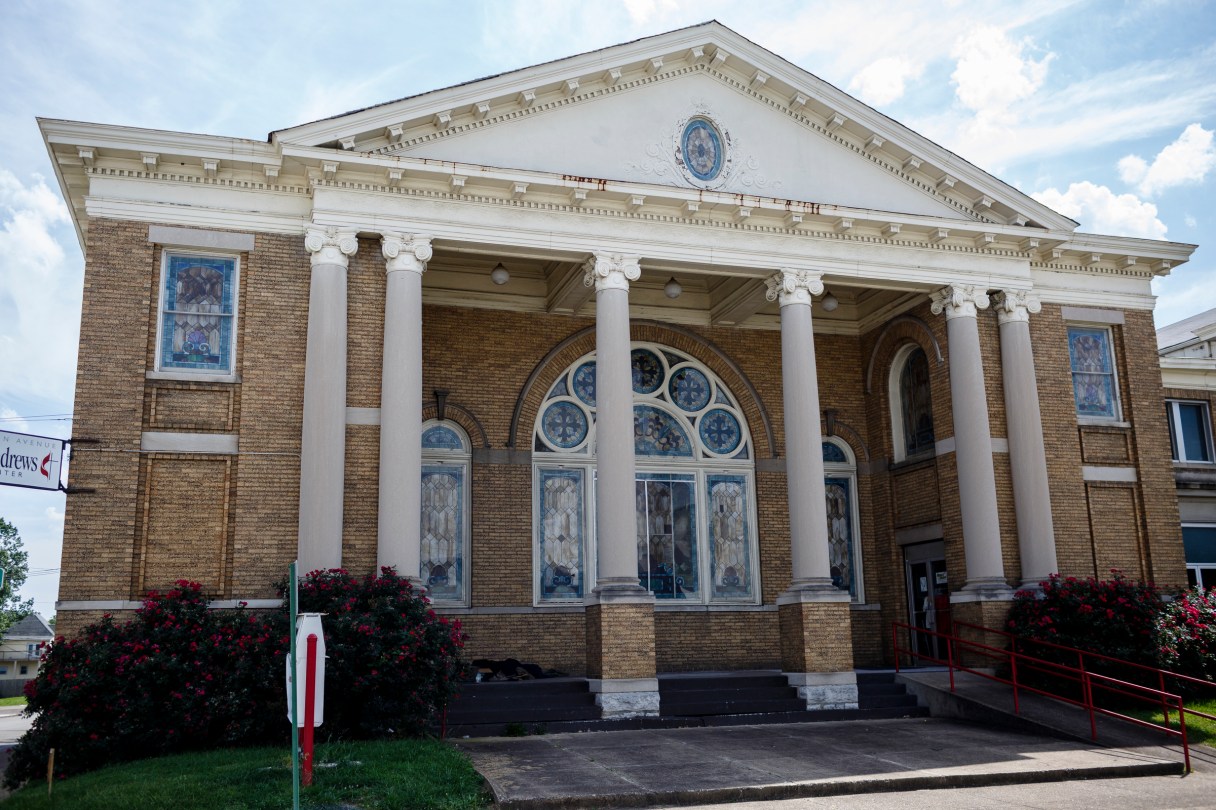
A Monday court order brought a Highland Park community center one step closer to evicting a pair of renters who are holed up in the basement and driving off business.
Ryan Holmes and Tyler Short, of the “Church of Urth,” have 10 days to appeal a judgment that awards possession of the Mercy Junction Justice and Peace Center to its elders and director. From there, Mercy Junction plans to file a writ on June 16 that would allow Hamilton County deputies to evict both men – and end a month-long saga that’s been pushing renters away from the community center.
“We definitely will not open until at least June 16,” Director Beth Foster said Monday, “and maybe even a few days after that as we figure out our situation.”
The center, which is owned by St. Andrews Center, rents about 30 spaces to artists, activists and other community organizations focused on social justice issues. Holmes and Short were granted a lease in December 2016 after pitching “Church of Urth,” an interfaith social justice ministry that emphasized happiness as the root of truth.
“We are a space that offers community space for artists, activists and people of faith,” said Kali Meister, a former director and one of six elders for the center. “And they came in as activists and people of faith. But there was just something about them.”