
Thursday, October 29, 2026Oct 29

This story is free to read.

The Latest: Senate panel heads back reauthorizing intel law

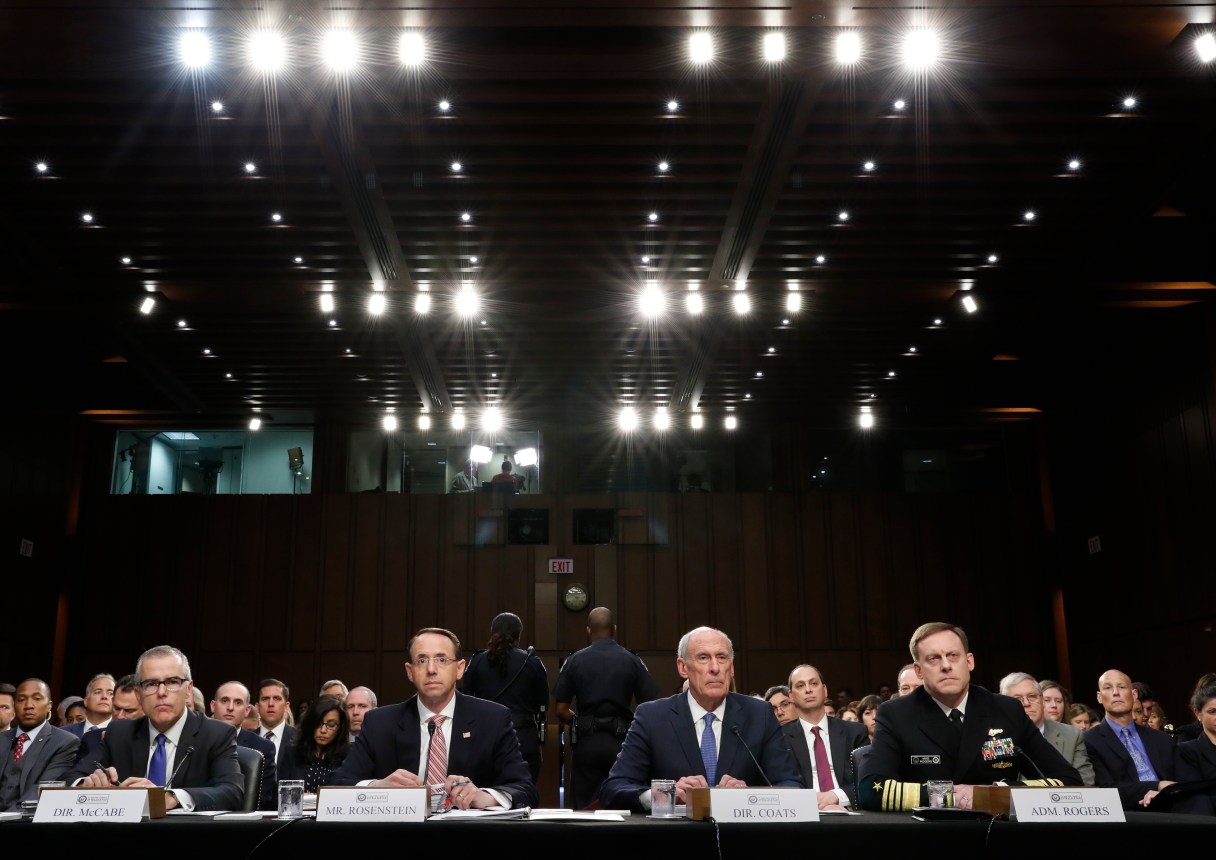
From left, Acting FBI Director Andrew McCabe, Deputy Attorney General Rod Rosenstein, National Intelligence Director Dan Coats, and National Security Agency Director Adm. Michael Rogers are seated during a Senate Intelligence Committee hearing about the Foreign Intelligence Surveillance Act, on Capitol Hill, Wednesday, June 7, 2017, in Washington. (AP Photo/Alex Brandon)
From left, Acting FBI Director Andrew McCabe, Deputy Attorney General Rod Rosenstein, National Intelligence Director Dan Coats, and National Security Agency Director Adm. Michael Rogers are seated during a Senate Intelligence Committee hearing about the Foreign Intelligence Surveillance Act, on Capitol Hill, Wednesday, June 7, 2017, in Washington. (AP Photo/Alex Brandon) From left, Acting FBI Director Andrew McCabe, Deputy Attorney General Rod Rosenstein, National Intelligence Director Dan Coats, and National Security Agency Director Adm. Michael Rogers are seated during a Senate Intelligence Committee hearing about the Foreign Intelligence Surveillance Act, on Capitol Hill, Wednesday, June 7, 2017, in Washington. (AP Photo/Alex Brandon)

WASHINGTON (AP) – The Latest on the Senate hearing on national security (all times local):

10:42 a.m.

The chairman of the Senate Intelligence committee is making a pitch for the reauthorization of a law governing the collection of foreign intelligence, saying it’s critical to monitoring militants, potential terror threats and is subject to multiple layers of oversight.

Sen. Richard Burr, R-N.C., says he understands that Americans’ communications often are swept up in the process, but that now is not a time to roll back the Foreign Intelligence Surveillance Act, which expires at the end of the year.

The panel’s ranking Democrat, Sen. Mark Warner of Virginia, also lauded the law. But he used the hearing to raise concerns about reports that President Donald Trump asked top intelligence and law enforcement authorities to “publicly downplay” the investigation into Russian activities and contacts with the Trump campaign during last year’s election.