
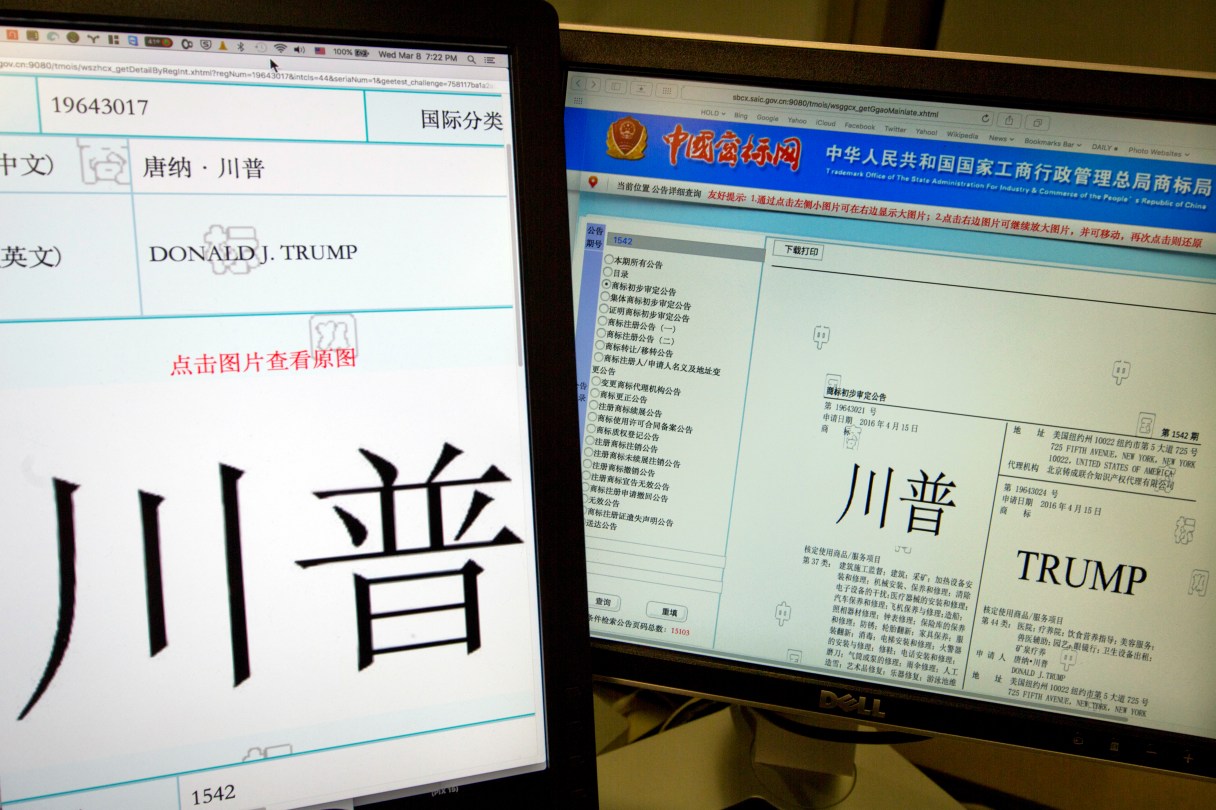
SHANGHAI (AP) – The Chinese government has granted preliminary approval for nine Donald Trump trademarks it had previously rejected, in whole or in part, The Associated Press found, a turn that is likely to fuel further allegations that Beijing may be giving the president’s family business special treatment.
Trump’s decision to retain ownership of his global branding empire has sparked criticism over perceived conflicts of interest and three lawsuits, including one filed Wednesday by nearly 200 Democrats in Congress, which allege violations of a constitutional prohibition against accepting gifts from foreign governments. Trademarks lie at the heart of these complaints because they are granted by foreign states and can be enormously valuable – whether they are intended as groundwork for future business activity or defensive measures against squatting to protect the value of the brand.
Publicly available records do not indicate why the nine applications were initially rejected, nor why the trademarks were then granted provisional approval eight to 15 weeks later.
“The speed with which these appeals were decided is mind-blowing,” said Matthew Dresden, an intellectual property attorney at Harris Bricken in Seattle. “I have never seen any decisions made that quickly. That suggests special treatment. But that’s just procedural. Substantively, it’s impossible to say whether any of this is unusual.”
China’s Trademark Office did not respond to requests for comment Wednesday.