
Friday, November 13, 2026Nov 13

The Latest: Iran top diplomat: US ban targets ‘grandmothers’

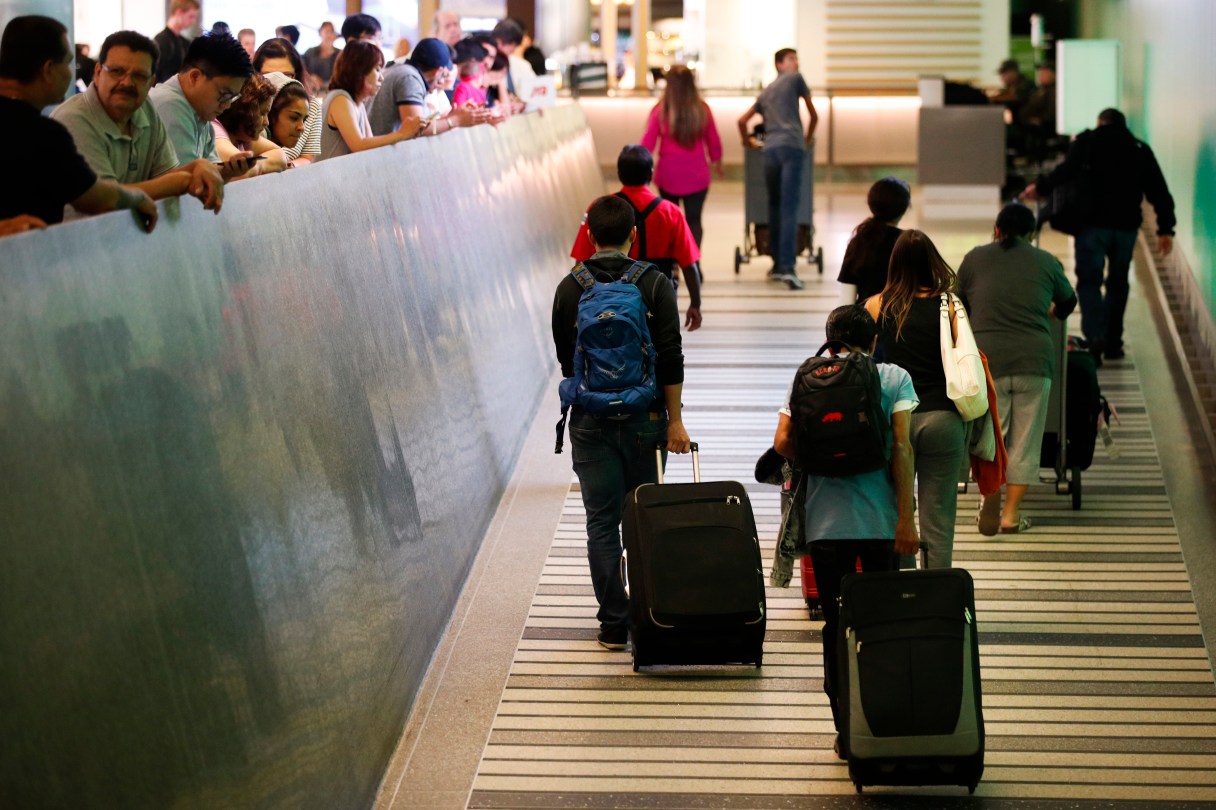
Travelers make their way up the arrival ramp at the Tom Bradley International Terminal at the Los Angeles International Airport Thursday, June 29, 2017, in Los Angeles. After months of wrangling, tighter restrictions on travel to the U.S. from six mostly Muslim nations take effect Thursday evening after the Supreme Court gave its go-ahead for a limited version of President Donald Trump's plans for a ban. (AP Photo/Jae C. Hong)
Travelers make their way up the arrival ramp at the Tom Bradley International Terminal at the Los Angeles International Airport Thursday, June 29, 2017, in Los Angeles. After months of wrangling, tighter restrictions on travel to the U.S. from six mostly Muslim nations take effect Thursday evening after the Supreme Court gave its go-ahead for a limited version of President Donald Trump's plans for a ban. (AP Photo/Jae C. Hong) Travelers make their way up the arrival ramp at the Tom Bradley International Terminal at the Los Angeles International Airport Thursday, June 29, 2017, in Los Angeles. After months of wrangling, tighter restrictions on travel to the U.S. from six mostly Muslim nations take effect Thursday evening after the Supreme Court gave its go-ahead for a limited version of President Donald Trump's plans for a ban. (AP Photo/Jae C. Hong)

WASHINGTON (AP) – The Latest on the Trump administration’s revived travel ban for visitors from six mostly Muslim countries (all times local):

5:55 a.m.

Iran’s foreign minister has denounced the partial reinstatement of President Donald Trump’s travel ban as a “truly shameful exhibition of blind hostility to all Iranians” – and a measure that will prevent Iranian grandmothers from seeing their grandchildren in America.

Friday’s remarks by Mohammad Javad Zarif came after the Trump administration set criteria for visa applicants from the six Muslim-majority nations and all refugees that require a “close” family or business tie to the United States.

The guidelines sent to U.S. embassies and consulates initially said applicants must prove a relationship with a parent, spouse, child, adult son or daughter, son-in-law, daughter-in-law or sibling in the U.S. Later, the State Department and the Homeland Security Department added “fiancé” to that definition of “close familial relationship” – but not grandparents or grandchildren.