
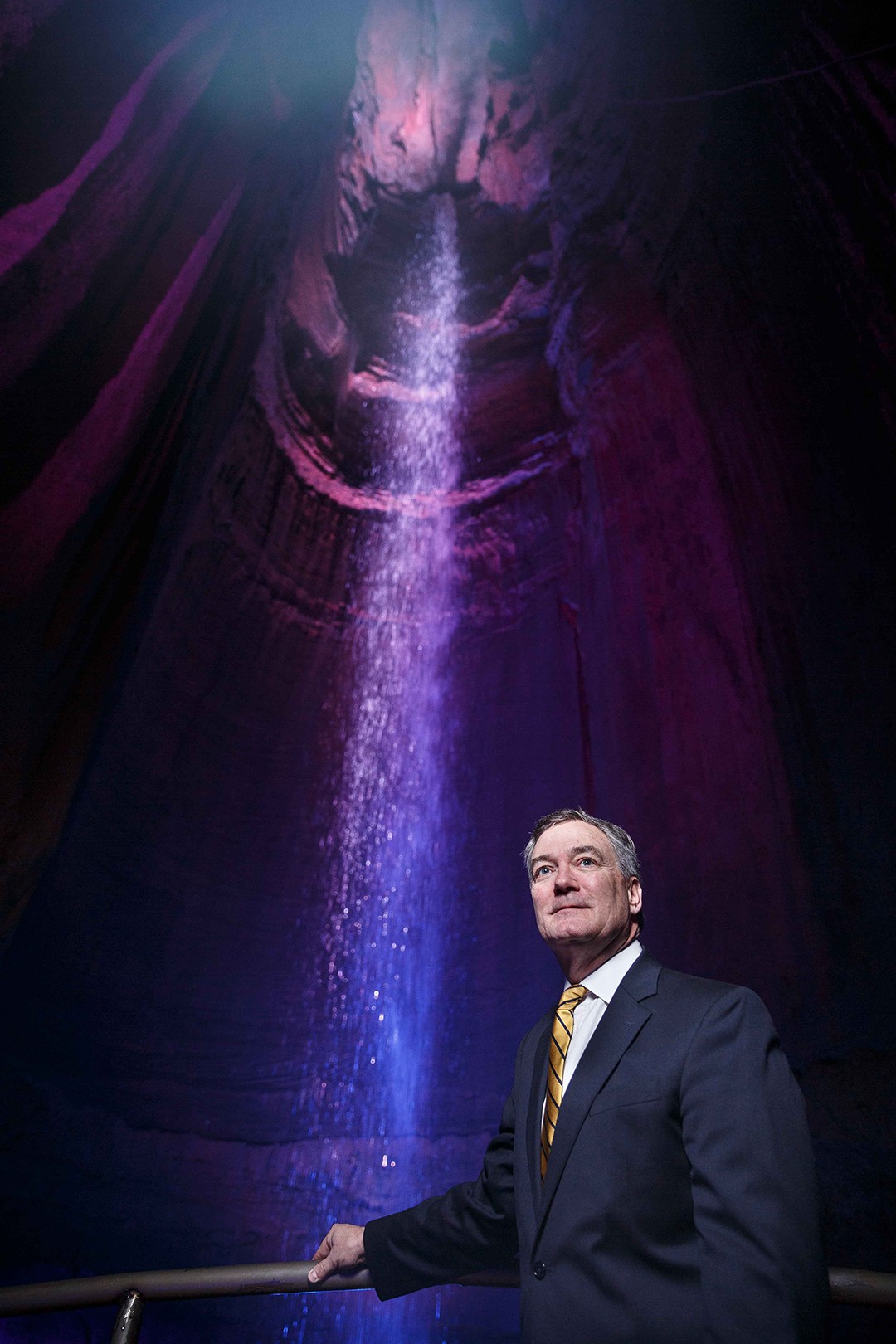
About Ruby Falls
– Location: On 13 acres along Scenic Highway on the side of Lookout Mountain- What: A 145-foot high waterfall located 1,120 feet beneath the mountain- Owner: John T. Steiner Family Trust- President: Hugh Morrow- Staff: 44 full-time employees, up to 200 employees in the summer- History: In 1905 the natural entrance to Lookout Mountain Cave was closed during the construction of a railway tunnel. In the 1920s a chemist and cave enthusiast named Leo Lambert tried to re-open the cave and discovered an underground waterfall in 1928. In 1930, Ruby Falls began hosting visitors.- Why the name?: Lambert named the falls after his wife, Ruby.
Beneath Lookout Mountain, the walking path that leads to Ruby Falls is much the same as it has been since the original developers of the underground attraction carved out the walkway in 1929.
But 1,120 feet above the waterfall on the side of Lookout Mountain, a new entrance-way, eating area, retail shop and parking lot is beginning to take shape. The upgrades fulfill the plans Hugh Morrow began developing for Ruby Falls a decade ago when he took over as president of the 88-year-old attraction after the death of owner Jack Steiner in 2007.
Morrow, a former sales vice president of the Dalton floorcovering maker Tandus, was hired as president by the Steiner family trust in February 2007. Morrow has been eager ever since to improve the ticketing process and waiting areas for visitors to the falls.
On busy summertime weekends, Ruby Falls often reaches its capacity for taking tours down the 26-story elevator into the cave and along the 2,200-foot walkway back to the underground fall.
Over the next decade, the owners of one of Chattanooga’s biggest tourist attractions plan to invest more than $20 million to upgrade the facility and more than double the building space on the side of Lookout Mountain leading up to the 100-year anniversary of its discovery in 2028. The upgrade will allow Ruby Falls to go to timed ticketing so that guests will know when their tour group will descent into the cave to visit the 145-foot waterfall deep in the mountain.
PGAV Destinations, a tourism design and consulting firm, helped develop the 12,000-square-foot expansion, visitors mall and parking improvements.
“The flow of visitors coming into Ruby Falls will be much better and there will be more opportunities for people to relax, shop and enjoy themselves while they are waiting to go into the cave,” says Mike Konzen, principal and chair of PGAV Destinations. “This is still a very authentic and unique experience, unlike any other. But the folks at Ruby Falls have done a great job to keep up with technology and the changes in the way tourists get and share information.”
Morrow insists the improvements won’t alter the natural and historic appeal of the waterfall and its unique rock formation created over the past 200 years. The changes also won’t alter the signature stone tower at Ruby Falls. But the improvements will add more retail and restaurant space and more outdoors seating, dining and waiting facilities.
The capital improvement project is the biggest in Ruby Falls’ history and had to be pushed back when the Great Recession hit the economy in 2009 and curtailed tourism traffic and visits to Lookout Mountain.
As the economy and visitation has improved over the past five years, Morrow has already begun to invest in new features to Ruby Falls to diversify its appeal and make the attraction more environmentally sustainable. On the 13-acre site of Ruby Falls, which is surrounded by National Park Service and Lookout Mountain conservancy, a zip line was added in 2010 offering “an adventure above the rest” with view overlooking Chattanooga.
To make the attraction more environmentally friendly and to upgrade the sound and lighting in the cave, Ruby Falls has also added solar panels, installed energy-efficient lights, and included Wi-Fi service and a new sound system in the cave.
The solar panels were installed in 2009 using a Tennessee clean energy grant to cut the carbon footprint of the attraction by 1.4 million pounds of carbon dioxide a year, or as much energy as what is consumed by 58 normal homes or 1.6 million miles of travel. Energy efficient LED and compact fluorescent lights installed in the cave have cut lighting costs in half, and recycling bins and low-flow toilets have lessened wastes from Ruby Falls. In 2016, Ruby Falls was the first U.S. business to earn a Sustainable Leadership Award from the travel industry group Green Globe, which seeks to promote sustainable business practices at hotels and attractions around the world.
Ruby Falls also has done more in recent years to promote special occasions and holidays. The Haunted Cave program offered during the weekends leading up to Halloween has been named one of the top 10 haunted houses in the nation by Rand McNally and last year attracted more than 20,000 visitors. Ruby Falls also is doing more to attract visits during the Christmas holidays, although Ruby Falls attracts only a fraction of those drawn to Rock City’s enchanted lights every Christmas.
“History is to be embraced, but it’s also to be enhanced,” Morrow says.