
Monday, November 16, 2026Nov 16

New travel ban eases some legal questions, ignores others

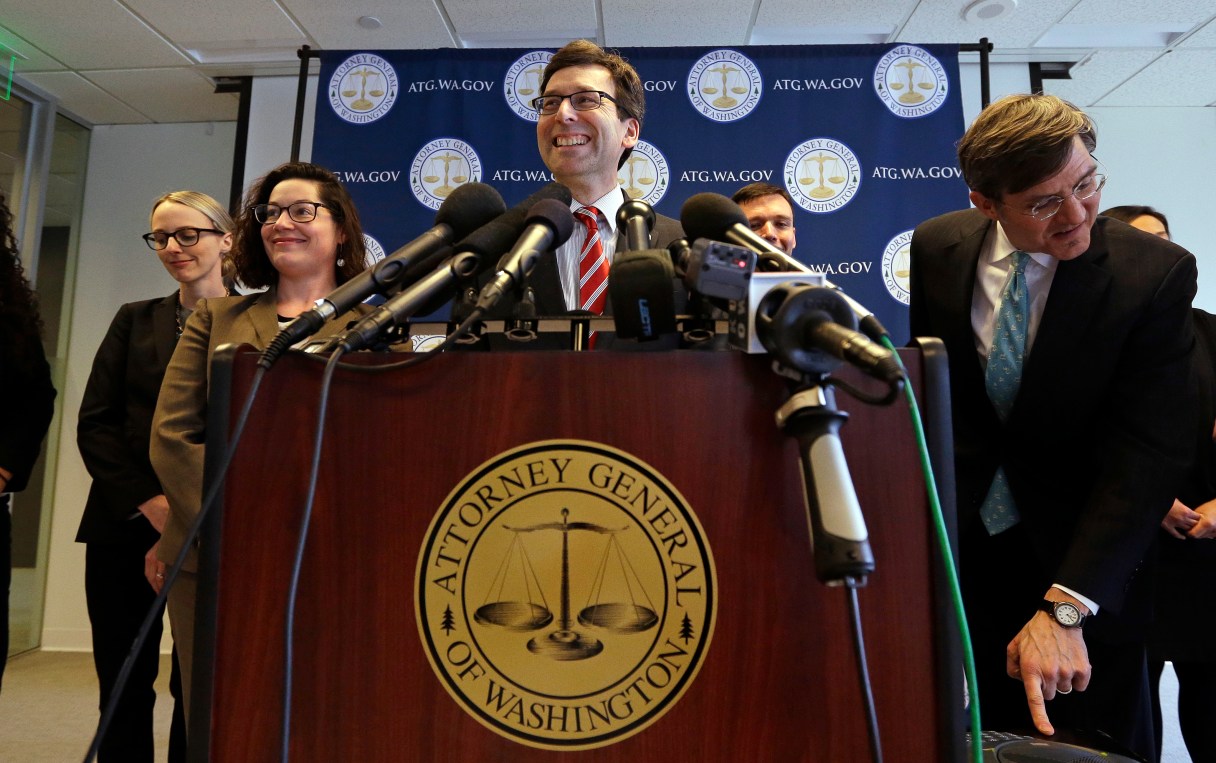
Washington State Attorney General Bob Ferguson smiles during a news conference about President Trump's new executive order Monday, March 6, 2017, in Seattle. Trump signed an executive order Monday ordering new travel restrictions for residents of six Muslim-majority countries as well as a temporary ban on refugees from around the world, retooling a directive issued five weeks ago that stoked chaos at airports and drew international condemnation and a rebuke in the federal courts. The new ban, which takes effect March 16, halts travel for 90 days for residents of Iran, Libya, Somalia, Sudan, Syria and Yemen. (AP Photo/Elaine Thompson)

WASHINGTON (AP) – President Donald Trump’s revised travel ban eases some of the legal questions surrounding the previous order, but critics said it does not answer all of them, including accusations that the measure is a thinly veiled attempt to discriminate against Muslims.

Opponents promised to challenge the president again in court.

The new, narrower ban announced Monday temporarily bars new visas for citizens of six predominantly Muslim countries – one fewer than the original ban, with Iraq removed from the list. It also suspends the entire U.S. refugee program.

But the measure applies only to refugees who are not already on their way to the United States and people seeking new visas. It also removes language that gave priority to religious minorities. Critics said the language was designed to help Christians get into the U.S. and exclude Muslims.

The changes will make the new order tougher to fight in court, but they “will not quell litigation or concerns,” Stephen Yale-Loehr, an immigration law professor at Cornell University Law School, said in a written statement.