
Friday, November 13, 2026Nov 13

AP FACT CHECK: What about Trump’s vow on health coverage?

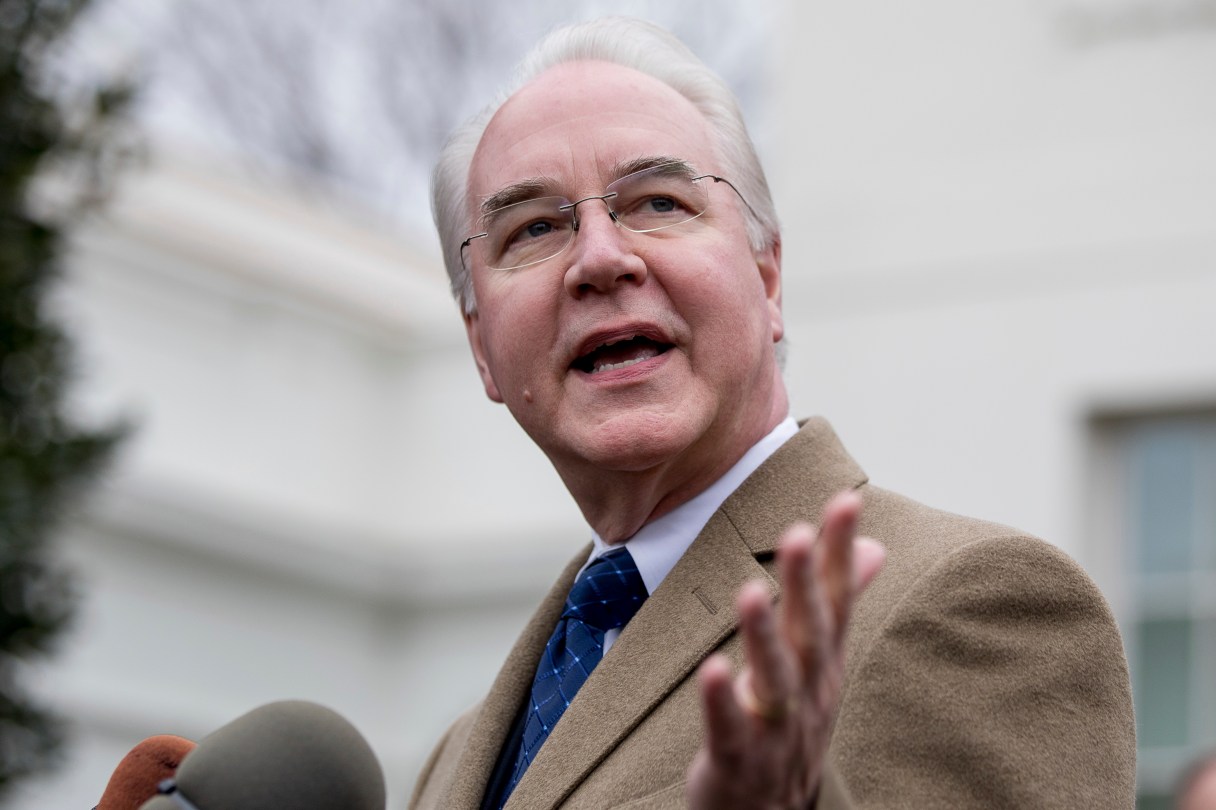
Health and Human Services Secretary Tom Price speaks outside the West Wing of the White House in Washington, Monday, March 13, 2017, after Congress' nonpartisan budget analysts reported that 14 million people would lose coverage next year under the House bill dismantling former President Barack Obama's health care law. (AP Photo/Andrew Harnik)
Health and Human Services Secretary Tom Price speaks outside the West Wing of the White House in Washington, Monday, March 13, 2017, after Congress' nonpartisan budget analysts reported that 14 million people would lose coverage next year under the House bill dismantling former President Barack Obama's health care law. (AP Photo/Andrew Harnik) Health and Human Services Secretary Tom Price speaks outside the West Wing of the White House in Washington, Monday, March 13, 2017, after Congress' nonpartisan budget analysts reported that 14 million people would lose coverage next year under the House bill dismantling former President Barack Obama's health care law. (AP Photo/Andrew Harnik)

WASHINGTON (AP) – President Donald Trump told Americans he’d do it all on health care: “insurance for everybody,” better coverage and lower consumer costs. By the reckoning of nonpartisan budget analysts at Congress, that’s not what will happen if the Republican bill he’s backing becomes law.

A look at how statements by Trump and his team compare with estimates of the Congressional Budget Office:

TRUMP: “We’re going to have insurance for everybody. There was a philosophy in some circles that if you can’t pay for it, you don’t get it. That’s not going to happen with us.” – To The Washington Post, Jan. 15.

CBO: It estimates the bill would leave 14 million fewer people insured in the first year, 24 million fewer by 2026. One reason: higher premiums. As well, the requirement to obtain insurance would be gone. And Medicaid would change, with states pulling back on expanding eligibility for the program and with spending per enrollee capped.

___