
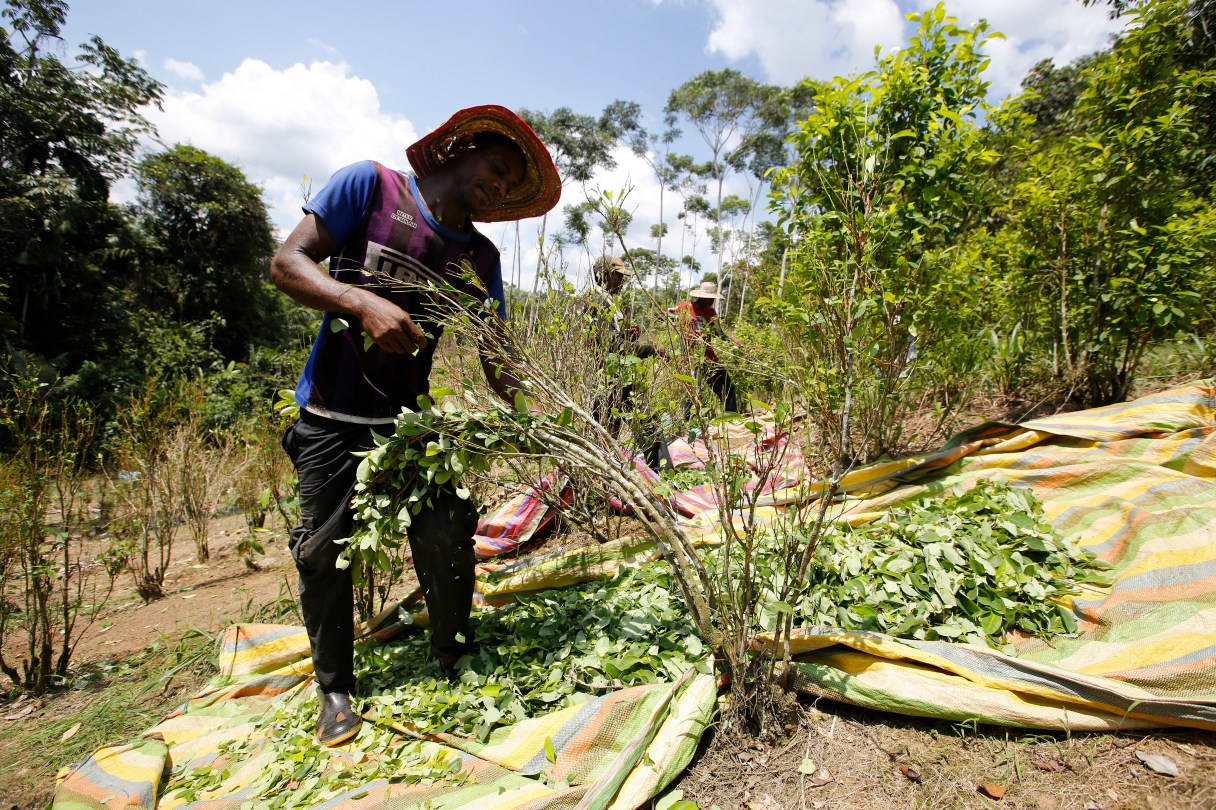
PUERTO BELLO, Colombia (AP) – Coca production in Colombia has surged to levels unseen in two decades of U.S. eradication efforts, according to a White House report released Tuesday.
Cultivation of the plant used to make cocaine rose 18 percent last year from 2015, with officials in the Andean nation estimating 188,000 hectares (465,000 acres) of Colombian land now contained coca crops.
The skyrocketing coca production comes as Colombia begins implementing a peace accord that calls on the country’s biggest rebel movement to renounce drug trafficking and work with the government to replace coca plants with alternative crops.
But U.S. officials contend the agreement has also provided a perverse incentive for farmers to grow coca, knowing they would later be awarded subsidies if they agreed to renounce coca and grow products like potatoes and fruit instead. Cocaine production began increasing in 2013 and has steadily risen every year since, in part also due to a decision to end aerial fumigations in 2014 over health concerns.
“We have been fumigating these illegal fields for 20 years and we have not achieved great results,” said Rafael Pardo, the Colombian government’s top post-conflict strategist.