
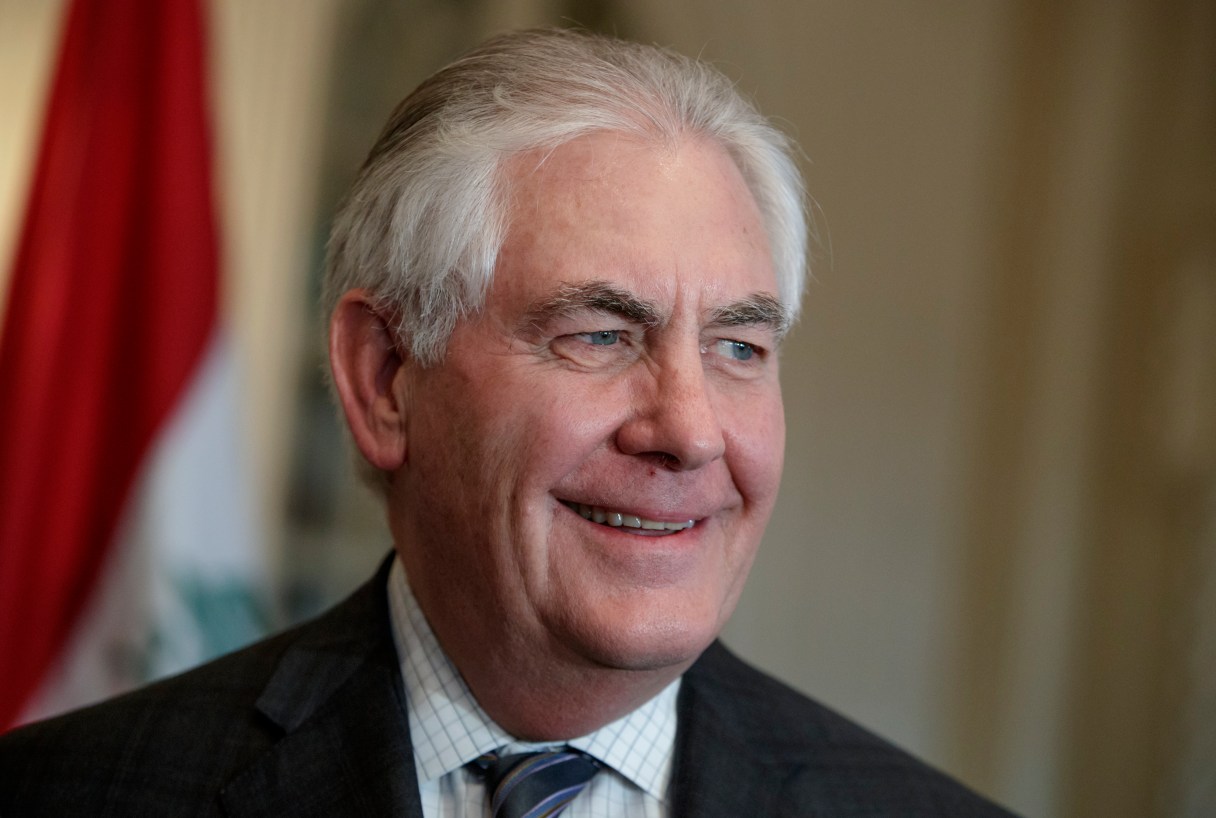
TOKYO – On his first trip to Asia as top U.S. diplomat, Rex Tillerson wants to forge cooperation with Japan, South Korea and China against the nuclear threat from North Korea and demonstrate “America First” does not mean a U.S. diplomatic retreat from the volatile region.
Tillerson will find shared anxiety at the North’s saber-rattling but less agreement about how to deal with it, and unresolved questions about how the United States and China, the world’s two largest economies, can manage growing differences.
Japan and South Korea, which host American troops and are already within range of North Korean missiles, support U.S. efforts to increase diplomatic and economic pressure on Pyongyang. The three navies were also conducting missile defense information-sharing drills Wednesday in seas east of the divided Korean Peninsula and north of Japan to promote interoperability, the U.S. Navy’s 7th Fleet said.
But China remains conflicted about how to treat its traditional ally for fear of triggering its collapse.
Adding to the combustible mix of military tension and the region’s historic rivalries is another factor – uncertainty about U.S. foreign policy under the Trump administration.