
Sunday, November 15, 2026Nov 15

How do you lift 6,800-ton ferry from seafloor? Delicately

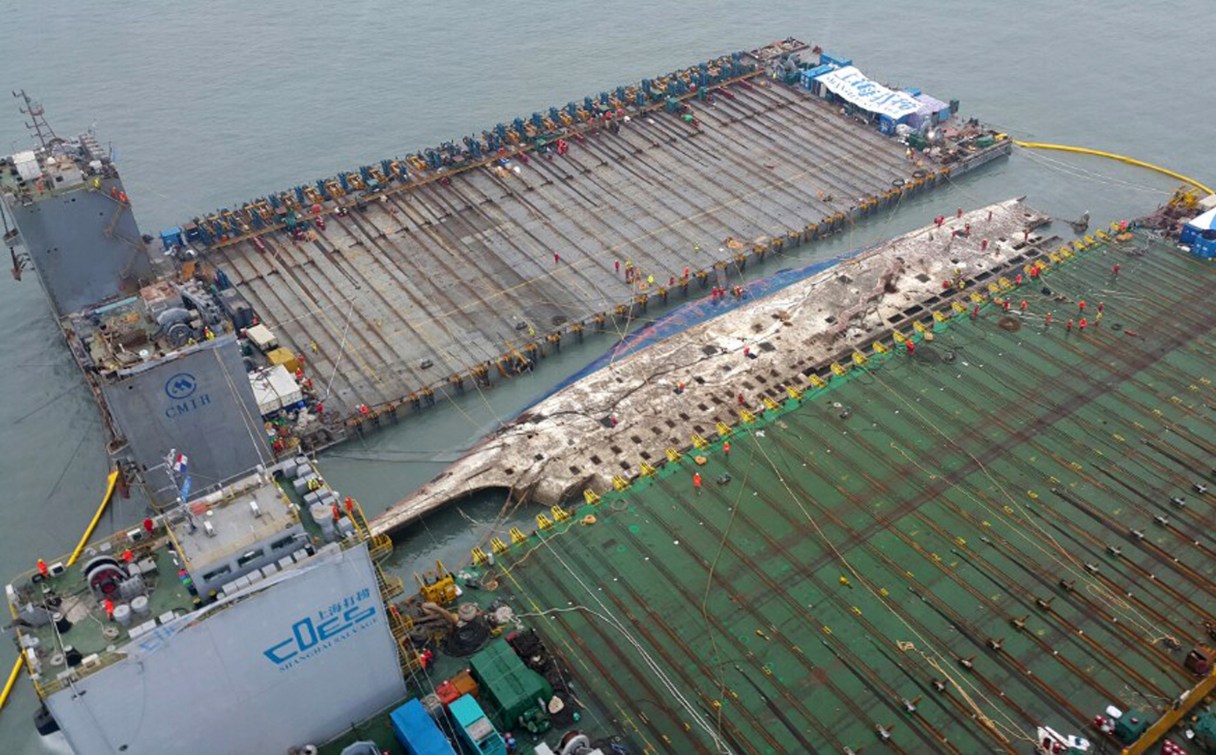
In this photo provided by West Regional Headquarters Korea Coast Guard, workers prepare to lift the sunken Sewol ferry, center, in waters off Jindo, South Korea, Thursday, March 23, 2017. A 6,800-ton South Korean ferry emerged from the water on Thursday, nearly three years after it capsized and sank into violent seas off the country's southwestern coast, an emotional moment for the country that continues to search for closure to one of its deadliest disasters ever. (West Regional Headquarters Korea Coast Guard via AP)

SEOUL, South Korea (AP) – How do you lift a corroded, 6,800-ton ferry lying more than 40 meters (130 feet) undersea, keeping it in one piece? It’s a massive, delicate operation.

Salvaging the Sewol ferry which sank off South Korea’s coast in April 2014 began Wednesday, and by Thursday morning, some parts of the ship emerged above the surface and were visible on live TV footage. But fully retrieving the ship and moving it to port will still take two weeks. An overview of the salvaging process for the Sewol:

___

THE SITE

The ferry sank in the Maenggol Channel off the southwestern coast. Maenggol means “fierce bones” and the waterway is notorious for dangerous currents. The initial searches when the ferry sank almost three years ago were hampered by strong currents and low visibility in the water, and two divers died while working on the search operations. The salvaging was started this week because of favorable weather conditions.