
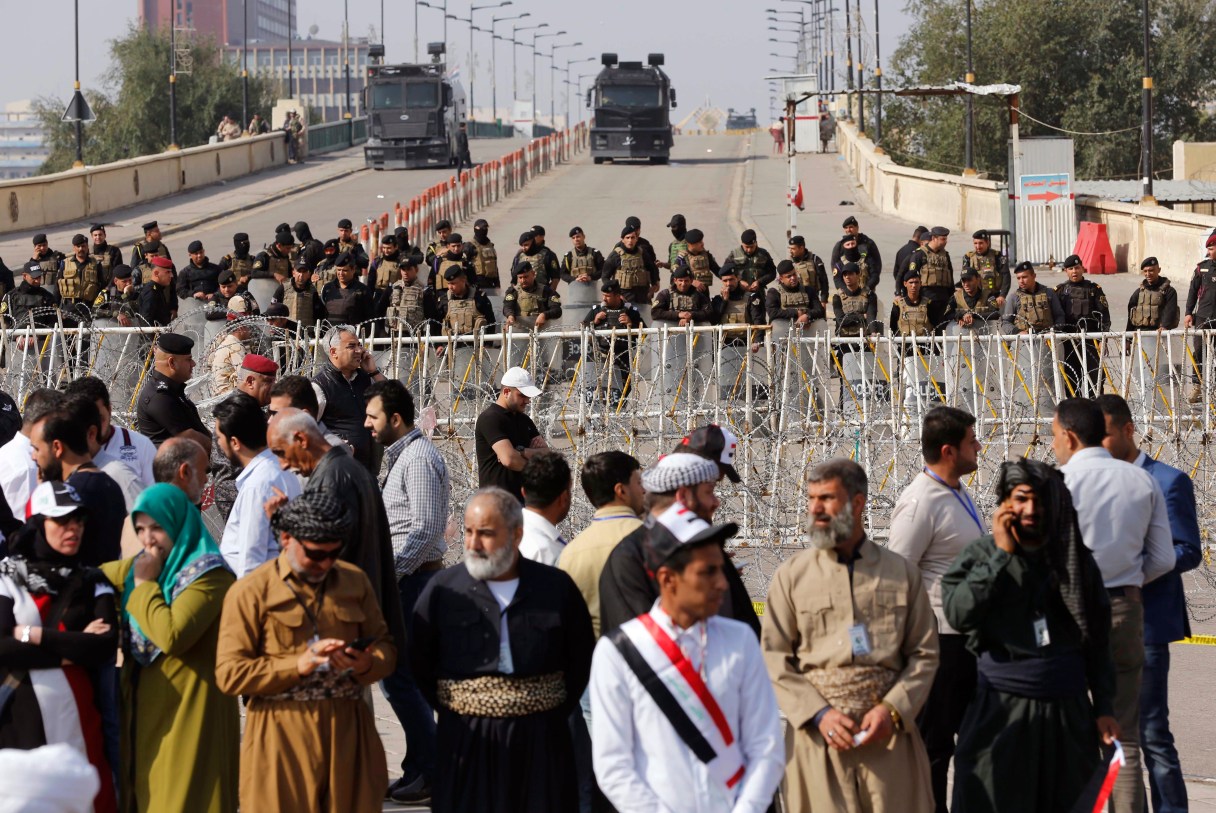
BAGHDAD (AP) – An influential Iraqi Shiite cleric addressed thousands of anti-government protesters who filled the streets of downtown Baghdad on Friday, threatening to boycott the country’s upcoming provincial elections if the committee overseeing the vote is not overhauled.
Muqtada al-Sadr’s remarks reflect persistent political power struggles in Baghdad even as Iraqi forces backed by the U.S.-led international coalition battle the Islamic State group in Mosul in a weeks-long campaign to rout the extremists from the western half of the city.
Al-Sadr has repeatedly accused the committee – along with all tiers of Iraq’s government – of being riddled with corruption. He called for the rally in Baghdad just days before asking his followers to “stand in the face of … corruption and tyranny,” according to a statement from his office.
Iraqis who love their country and hate corruption, regardless of ideology, support what al-Sadr called the “reform revolution.”
Nationwide protests demanding reform first erupted after IS overran nearly a third of Iraq in the summer of 2014, plunging the country into a deep political and security crisis. As the battle against IS stalled and an economic crisis deepened, a wave of largely civic and secular protests mobilized millions across Iraq in the summer of 2015.