
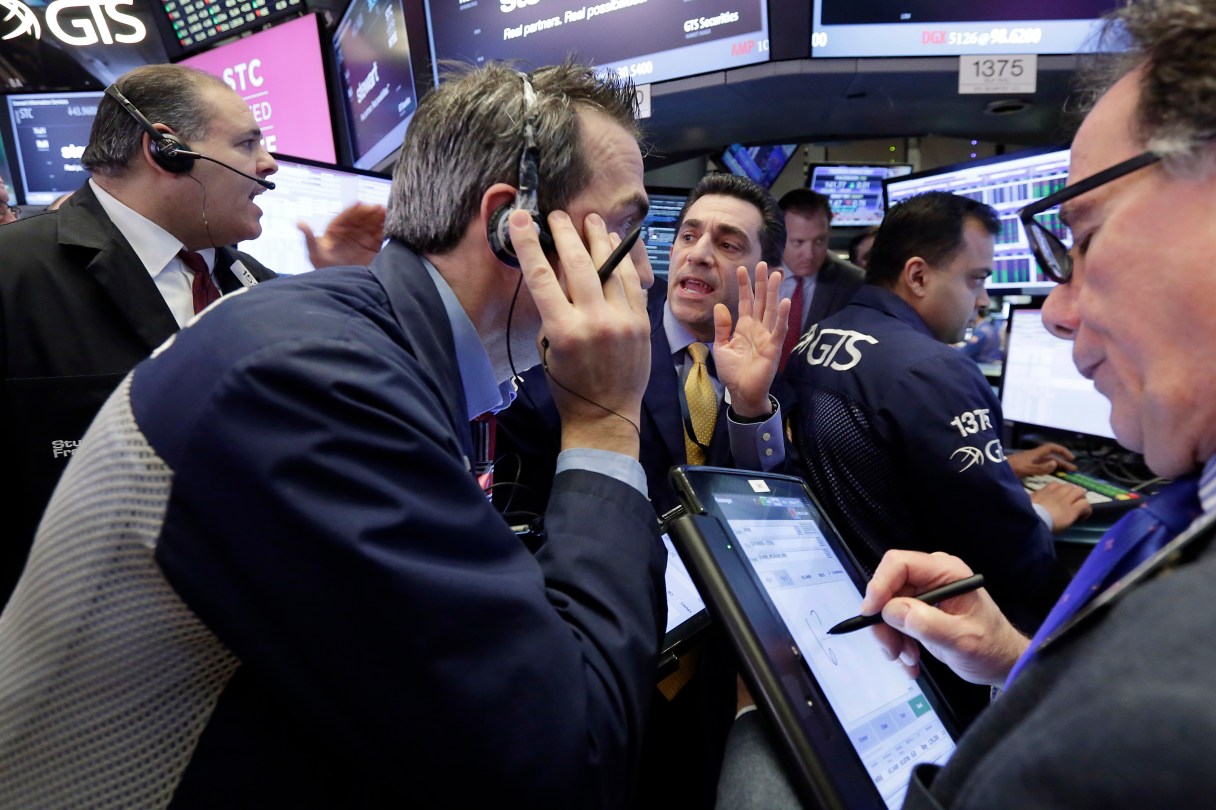
HONG KONG (AP) – Asian stocks are drifting lower on Thursday after a lackluster performance on Wall Street.
KEEPING SCORE: Tokyo’s benchmark Nikkei 225 index dipped 0.3 percent to 19,167.86 and South Korea’s Kospi slipped 0.3 percent to 2,161.05. Hong Kong’s Hang Seng shed 0.2 percent to 24,334.45 and the Shanghai Composite index lost 0.9 percent to 3,211.60. Australia’s S&P/ASX 200 rose 0.2 percent to 5,887.80.
SAMSUNG: Shares of the South Korean electronics giant rose after it unveiled its first major smartphone since the embarrassing recall of its fire-prone Note 7. The Galaxy S8 comes in two sizes but doesn’t have more battery capacity, giving it more breathing room.
TOSHIBA FILING: The embattled Japanese company’s shares jumped more than 3 percent after it said its U.S. nuclear unit Westinghouse Electric is filing for bankruptcy protection. The Chapter 11 petition is an important step for Toshiba as it fights to stop hemorrhaging losses at the ailing nuclear business, which has been hit with rising costs because of safety concerns and regulations, and rising anti-nuclear sentiment in some countries.
US ECONOMY: In the latest encouraging sign for the U.S. economy, a report by a real estate group said more people signed contracts to buy U.S. homes last month. The pending home sales index climbed 5.5 percent in February to its second highest point since 2006. Optimism that hoping Congress and the White House will be able to enact President tax cuts and other business-friendly policy proposals has kept markets buoyant. But some of that optimism has dimmed recently weeks after Trump’s plan to revamp healthcare failed to win enough votes.
WALL STREET: Major U.S. benchmarks finished little changed. The Dow Jones industrial average fell 0.2 percent to close at 20,659.32. The S&P 500 index added 0.1 percent to 2,361.13. The Nasdaq composite index gained 0.4 percent to 5,897.55.
ENERGY: A rally in oil prices petered out. Benchmark U.S. crude oil futures edged 2 cents lower to $49.49 a barrel in electronic trading on the New York Mercantile Exchange. The contract rose $1.14, or 2.4 percent, to close at $49.51 a barrel on Wednesday. Brent crude, used to price international oils, slipped 12 cents to $52.42 a barrel in London.
CURRENCIES: The dollar rose to 111.34 yen from 111.04 yen. The euro fell to $1.0747 from $1.0767.