
RALEIGH, N.C. (AP) – Basketball-mad North Carolina is bracing for what could be another costly hit from its “bathroom bill” as the NCAA selects four years of championship sites for a variety of sports.
College athletics’ governing body said that it is deciding this week on locations for tournaments through the spring of 2022 and that it won’t award any to North Carolina if the law known as House Bill 2 is on the books.
The stakes are high: The Associated Press calculated that North Carolina made $71.4 million from 28 neutral-site NCAA events in the five academic years ending last spring. A potentially more lucrative slate of events may be at stake in this latest round of decisions.
Amid the pressure, Republican legislative leaders and Democratic Gov. Roy Cooper announced an agreement late Wednesday to roll back HB2 in a compromise that could be put to a vote as early as Thursday.
But the plan ran into immediate resistance from gay and transgender rights activists, who said it still denies them protection from discrimination, and it was not immediately clear whether the compromise would satisfy the NCAA.
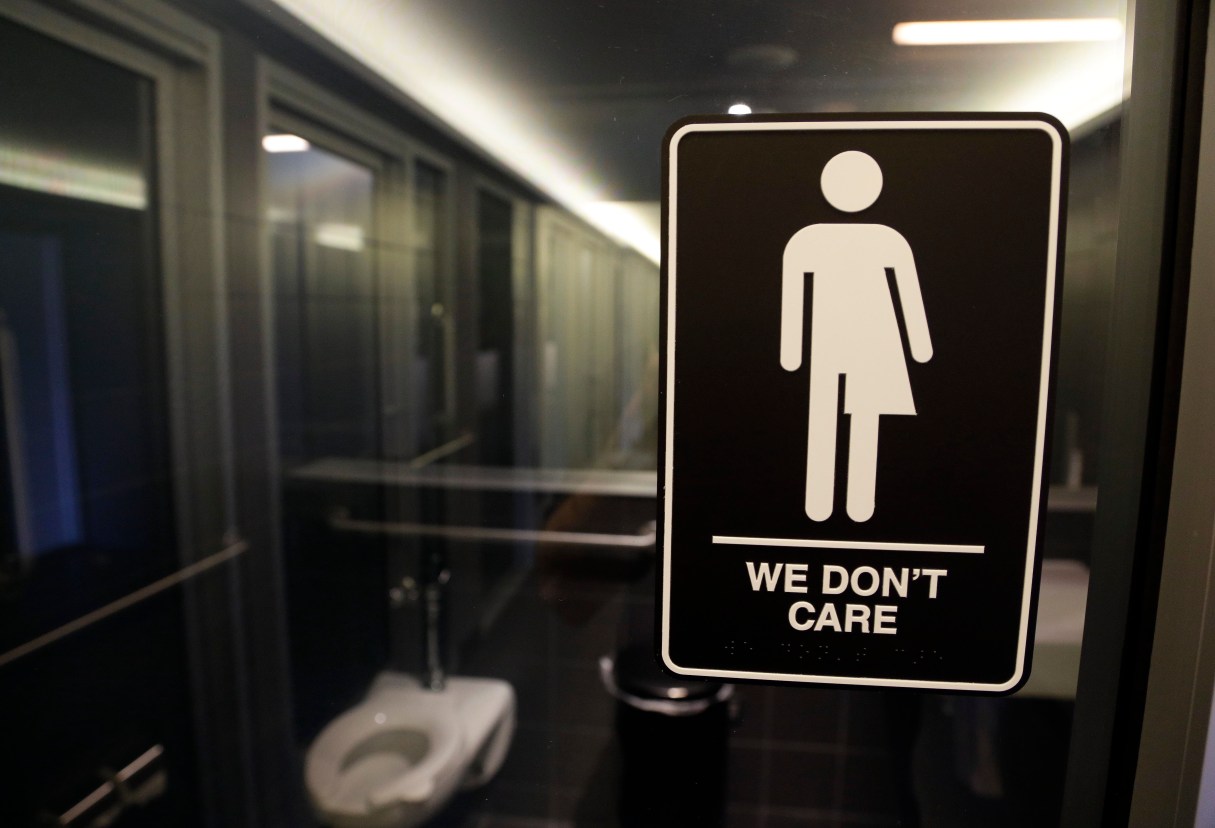
The law requires transgender people to use public bathrooms that correspond to the sex on their birth certificates. It also excludes gender identity and sexual orientation from statewide antidiscrimination protections.
In addition to sporting events being withdrawn in reaction to the law, businesses have shelved projects and entertainers such as Bruce Springsteen have canceled shows. An AP analysis this week found that HB2 already will cost the state more than $3.76 billion in lost business over a dozen years.
Cities including Raleigh and Greensboro have submitted 133 bids to host NCAA championship events in such sports as golf, swimming and basketball through the 2021-22 academic year, with a potential economic impact of about $250 million, according to the North Carolina Sports Association.
The NCAA has already pulled seven championship events in baseball, soccer, lacrosse and other sports from North Carolina for the current academic year because of HB2. Also in jeopardy are events for the upcoming school year, including March 2018 NCAA men’s basketball tournament games, awarded to Charlotte during a previous round of selections.
Dollars aside, the NCAA sanctions are especially painful for North Carolina, where love of college basketball is part of the state’s very identity and where schools like Duke and the University of North Carolina are perennial powerhouses.
“No state loves its college sports more than North Carolina. It’s part of our culture, our fabric and our history,” Scott Dupree, executive director of the Greater Raleigh Sports Alliance, wrote in a February plea to lawmakers. “But sadly, at this moment, the NCAA championships that our citizens love so much are in jeopardy, on the brink of being lost for the long term.”
The NCAA’s stance on HB2 doesn’t affect teams that earn the right to host postseason games on their home turf. That’s why Duke hosted NCAA women’s basketball tournament games in Durham this month.
As an example of what’s at stake, the Greensboro area – a frequent host nicknamed “Tournament Town” – has submitted 55 bids through 2022 that could bring in more than $100 million to the area, according to the Greensboro Convention & Visitors Bureau. Eight events over the five academic years ending in 2015-16 had an economic impact on the Greensboro area of more than $33 million, the bureau said.
“I think the people in Raleigh are playing politics with a reputation that North Carolina worked decades to earn, and they’re blowing it,” said John Cohen, a Greensboro businessman who has held season tickets to North Carolina basketball for years.
Cohen, who was student manager under legendary UNC coach Dean Smith in the late 1970s, said he is disappointed that GOP and Democratic leaders haven’t found a compromise to save the state’s college sports events. His Tar Heels would have played in Greensboro this month if the NCAA tournament site hadn’t been moved to South Carolina because of HB2.
“This isn’t a question about who’s right,” Cohen said. “This is a question about what’s best for our state. Let’s move on.”
___
Follow Drew at www.twitter.com/jonldrew and Dalesio at www.twitter.com/emerydalesio