
Friday, November 13, 2026Nov 13

5 new truffle species identified in New Hampshire

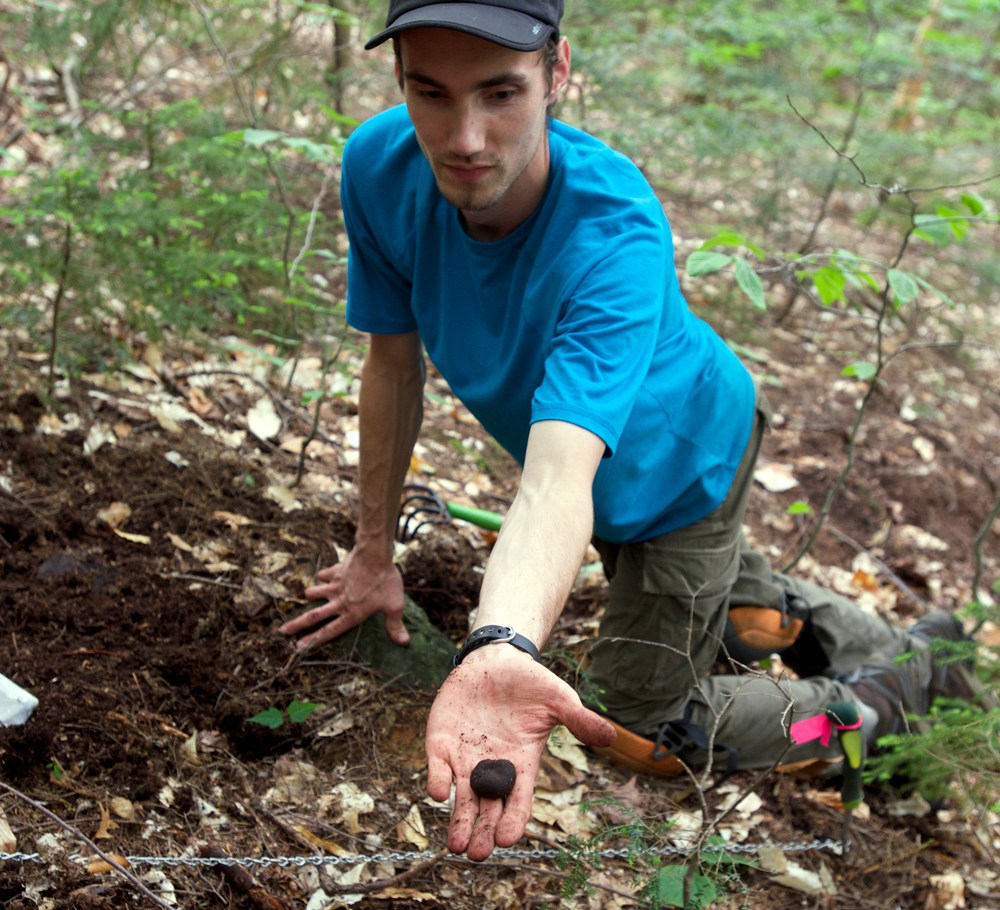
In this 2014 photo provided by the University of New Hampshire, doctoral student Ryan Stephens finds a truffle in the Bartlett Experimental Forest in the White Mountain National Forest in New Hampshire.  Researchers at the New Hampshire Agricultural Experiment Station at UNH identified and described five new truffle species that while not the type prized by the culinary world, are important to forest health.  (University of New Hampshire via AP)
In this 2014 photo provided by the University of New Hampshire, doctoral student Ryan Stephens finds a truffle in the Bartlett Experimental Forest in the White Mountain National Forest in New Hampshire. Researchers at the New Hampshire Agricultural Experiment Station at UNH identified and described five new truffle species that while not the type prized by the culinary world, are important to forest health. (University of New Hampshire via AP) In this 2014 photo provided by the University of New Hampshire, doctoral student Ryan Stephens finds a truffle in the Bartlett Experimental Forest in the White Mountain National Forest in New Hampshire. Researchers at the New Hampshire Agricultural Experiment Station at UNH identified and described five new truffle species that while not the type prized by the culinary world, are important to forest health. (University of New Hampshire via AP)

CONCORD, N.H. (AP) – Researchers at the University of New Hampshire have identified five new types of truffles.

And while they aren’t the kind you’d want to sprinkle over pasta, scientists say they could contain important information about the health of New England’s forests. Two of the species have only been found in New Hampshire.

Doctoral student Ryan Stephens found the new species in the White Mountain National Forest. And while they haven’t been formally identified and named, one of them is now called E. oreoides because its coloring is reminiscent of an Oreo cookie.

Truffles are the fruit of underground fungi, which many trees depend upon for growth. Researchers say the discovery helps explain the complex relationship of a region where truffle diversity has been poorly documented.