
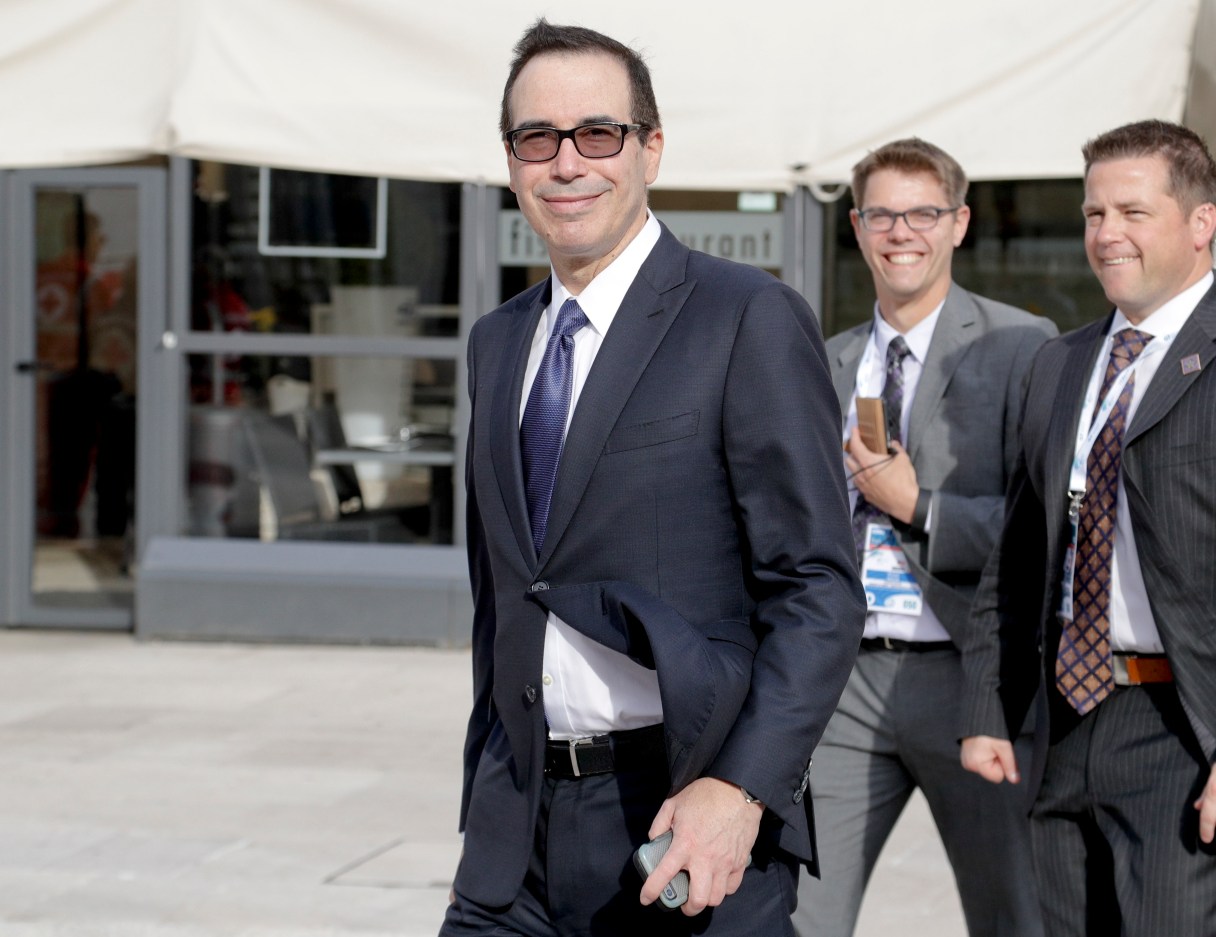
BARI, Italy (AP) – Top finance officials from seven advanced economies have gathered to hear more about U.S. President Donald Trump’s economic policies on taxation and trade as well as to look for ways to promote growth, combat terrorist financing and stop tax avoidance by major corporations.
The meeting of the Group or 7 finance ministers in the southern Italian seaside town of Bari is to kick off Friday with a discussion of how to make economic growth benefit more people. U.S. Treasury Secretary Steven Mnuchin is due to explain Trump’s plans to cut business taxes and regulation, and explain the president’s push for what he considers more balanced trading relationships.
The group is gathering with the global economy showing steady growth. There are concerns that the economy has not reached the levels seen before the global financial crisis, and that labor productivity continues to lag. Increasing output per worker is a key to growth, and economists say it may be held back by businesses’ reluctance to invest in plants and equipment due to lingering fear from the Great Recession, as well as uncertainty about new regulations.
In theory, corporate tax cuts and deregulation along the lines proposed by Trump could address some of those problems in the world’s largest economy. But the details, and to what extent those policies will be implemented, remain unclear.
During his presidential campaign, Trump repeatedly charged that past administrations had failed to take a tough stand on enforcing trade agreements and this failure had cost millions of good-paying factory jobs and resulted in an enormous U.S. trade deficit. Since taking office, his administration has issued a report that names two G-7 countries, Germany and Japan, for special monitoring because of their large trade surpluses with the U.S. and has sparked a trade battle with Canada, another G-7 country, by imposing higher tariffs on imports of Canadian softwood lumber.