
Monday, November 9, 2026Nov 9

This story is free to read.

US, Turkey spar over Erdogan visit violence, Kurdish support

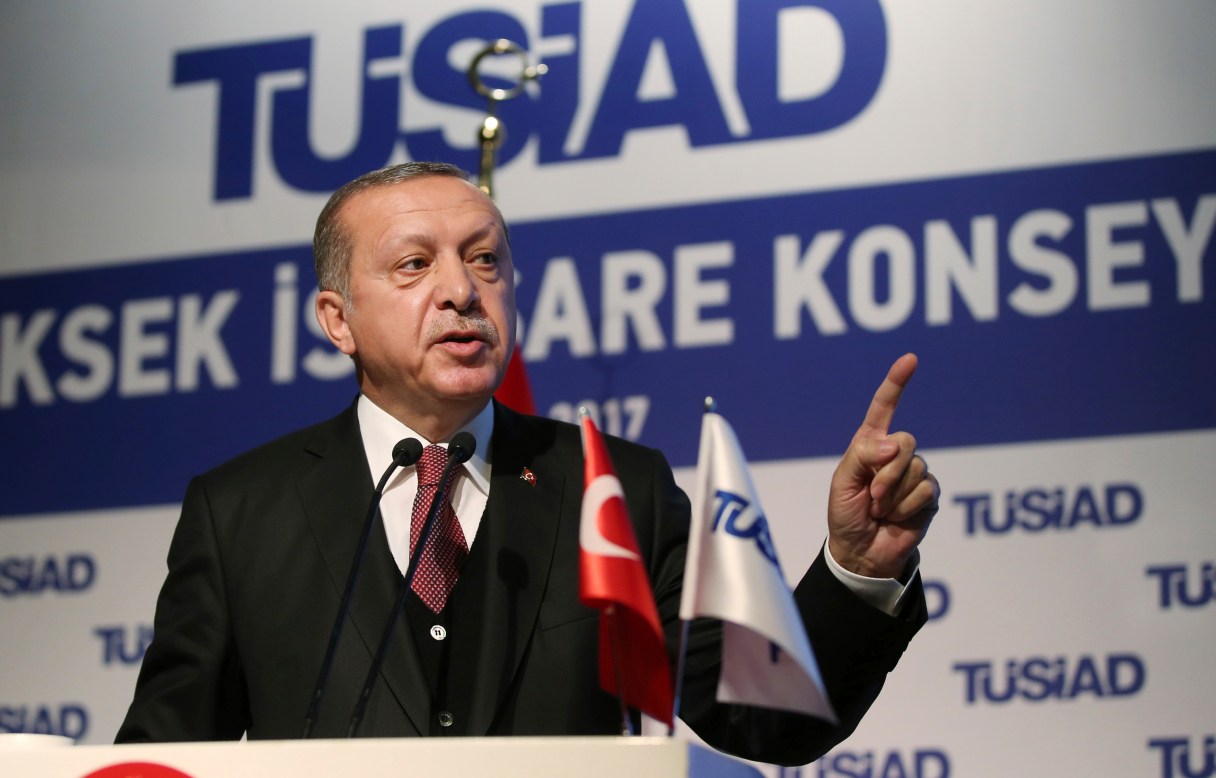
Turkey's President Recep Tayyip Erdogan addresses a business meeting in Istanbul, Thursday, May 18, 2017. Turkey has told the United States it will not join in any military operations that include Kurdish fighters in Syria, Erdogan said Thursday, while vowing to strike the U.S.-backed Kurds if they threaten Turkey's security.(Presidency Press Service, Pool photo via AP)
Turkey's President Recep Tayyip Erdogan addresses a business meeting in Istanbul, Thursday, May 18, 2017. Turkey has told the United States it will not join in any military operations that include Kurdish fighters in Syria, Erdogan said Thursday, while vowing to strike the U.S.-backed Kurds if they threaten Turkey's security.(Presidency Press Service, Pool photo via AP) Turkey's President Recep Tayyip Erdogan addresses a business meeting in Istanbul, Thursday, May 18, 2017. Turkey has told the United States it will not join in any military operations that include Kurdish fighters in Syria, Erdogan said Thursday, while vowing to strike the U.S.-backed Kurds if they threaten Turkey's security.(Presidency Press Service, Pool photo via AP)

WASHINGTON (AP) – The Trump administration is facing growing calls to respond forcefully to violence on American soil by Turkish presidential guards who were detained but then set free.

The unseemly incident is adding to U.S.-Turkish tensions that are compounded by a growing spat over U.S. policy in Syria.

The U.S. says it summoned Turkey’s ambassador to the State Department. That’s where the No. 2-ranked U.S. diplomat raised concerns about conduct by President Recep Tayyip Erdogan’s security detail, seen on video violently breaking up a protest earlier this week.

The Trump administration concedes that it released two members of Erdogan’s detail after holding them briefly after the incident outside the Turkish ambassador’s residence. They were released under a globally recognized custom under which nations don’t arrest members of a visiting president’s delegation.