
BEL AIR, Md. (AP) – As Cpl. Kevin Phillips pulled up to investigate a suspected opioid overdose, paramedics were already at the Maryland home giving a man a life-saving dose of the overdose reversal drug Narcan. Drugs were easy to find: a package of heroin on the railing leading to a basement; another batch on a shelf above a nightstand.
The deputy already had put on gloves and grabbed evidence baggies, his usual routine for canvassing a house. He swept the first package from the railing into a bag and sealed it; then a torn Crayola crayon box went from the nightstand into a bag of its own. Inside that basement nightstand: even more bags, but nothing that looked like drugs.
Then – moments after the man being treated by paramedics came to – the overdose hit.
“My face felt like it was burning. I felt extremely light-headed. I felt like I was getting dizzy,” he said. “I stood there for two seconds and thought, ‘Oh my God, I didn’t just get exposed to something.’ I just kept thinking about the carfentanil.”
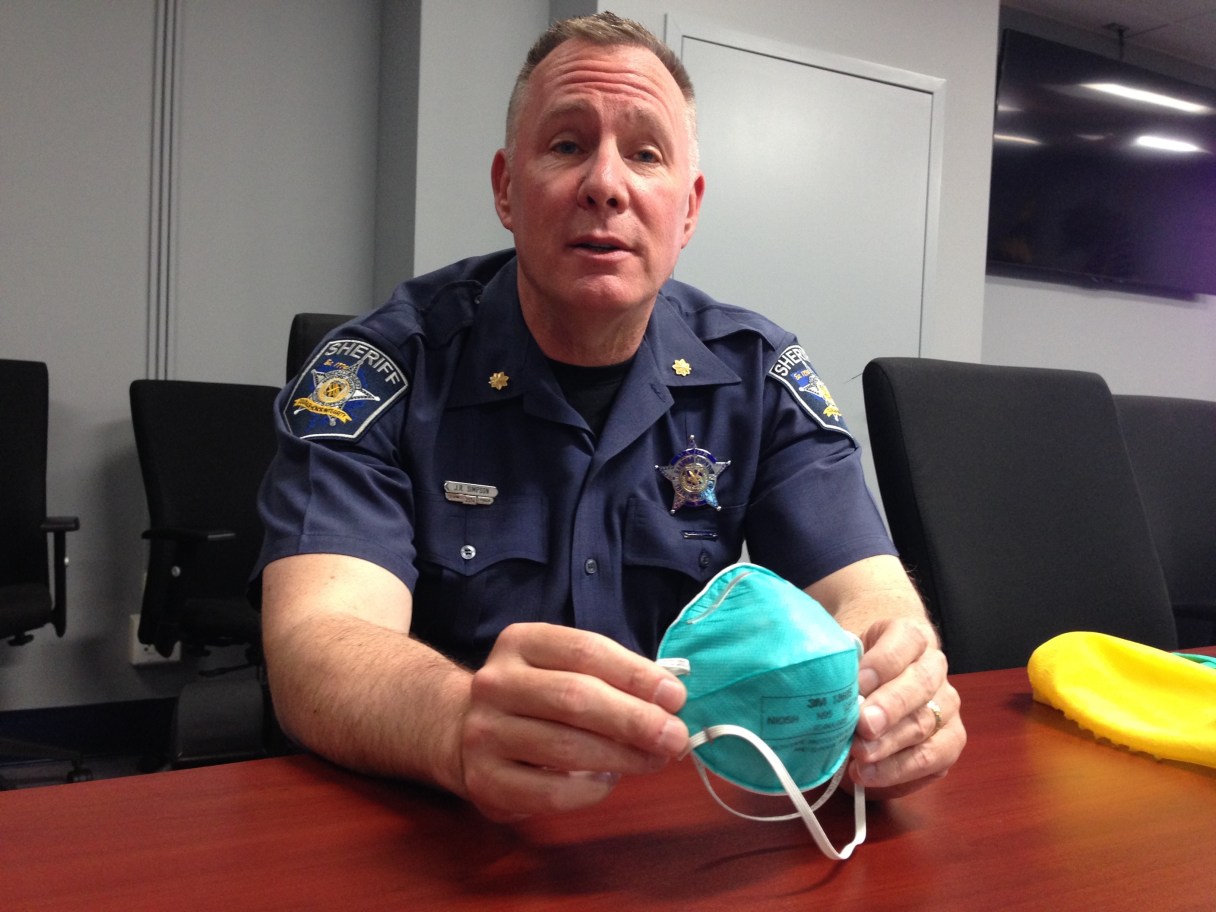
Carfentanil came to mind because just hours earlier, Phillips’ boss, Harford County Sheriff Jeffrey Gahler, sent an email to deputies saying the synthetic opioid so powerful that it’s used to tranquilize elephants had, for the first time ever, showed up in a toxicology report from a fatal overdose in the county. The sheriff had urged everyone to use extra caution when responding to drug scenes.