

With the Obama administration now more than four months in the rearview mirror, it’s easy for the average person to forget how drastically some of the former administration’s laws and regulations changed things.
Business and labor haven’t forgotten, though.
The Obama administration’s National Labor Relations Board (NLRB), according to a report by the Coalition for a Democratic Workplace and Littler’s Workplace Policy Institute, overturned a collective 4,559 years of established law through 91 cases and comprehensive new election rules. Indeed, many of the precedents and rules had survived through previous Republican and Democratic administrations.
That made the previous administration’s NLRB, according to the report, the most partisan board in history.
“In each case where the Obama Board changed the law,” it said, “the resulting new law became more favorable to labor interests than it did under previous Board rulings – frequently at the expense of promoting stable bargaining and economic growth and without regard for balancing the interests of business, labor and employees under the [National Labor Relations] Act.”
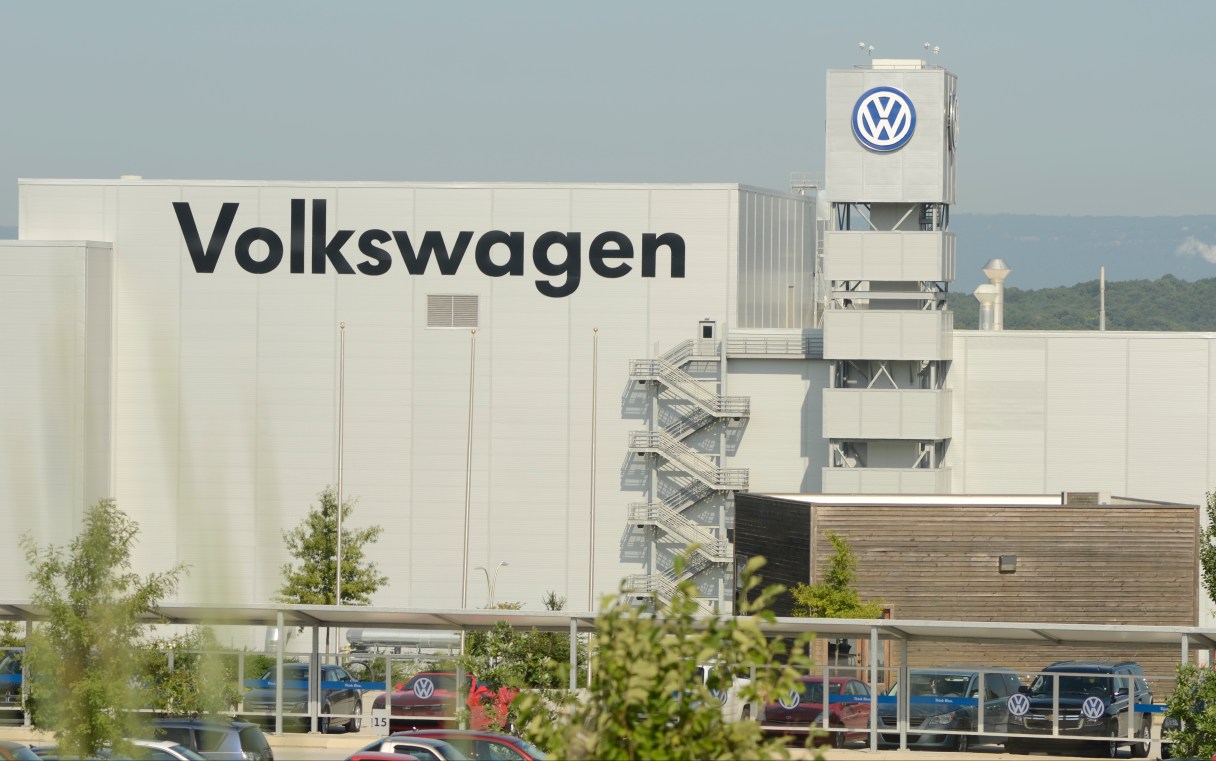
One of those board rulings – in a case known as Specialty Healthcare, which involved certified assistants at a nursing home – allowed for the formation of micro-unions. And one of the places where one of those micro-unions ultimately was created was Chattanooga’s Volkswagen plant, which, as a unit in February 2014, had voted down representation by the United Auto Workers (UAW) 712-626.
With micro-unions, though, labor now is permitted to organize small groups of employees – who allegedly have a similar “community of interest” – into bargaining units to help influence operations and elections in the plant.
“Thus,” the United States Chamber of Commerce concluded in a recent report, “these micro-units mean that unions can use [the ruling in} Specialty Healthcare to gain a foothold at a business even if a majority of workers do not support unionization.”
That certainly applies to VW, where UAW hoped it might gain a foothold and expand union representation to more auto companies across the South, where management and workers repeatedly have said they do not want a labor union.
The overall plant having rebuffed the union, UAW attempted to organize 152 maintenance workers (though the plant did not have a specific maintenance department), a little more than 10 percent of workers who had voted in the election, into a bargaining unit. That unit voted 108-44 in 2015 for representation, representation VW objected to because it said the organization created “a fictional department,” fractured the workforce and did “not take into account the overwhelming community of interest shared between our maintenance and production employees.”
Not surprisingly, an NLRB regional director and then the full Obama NLRB found for the union. The decision now has been appealed to the U.S. Court of Appeals for the District of Columbia, which has yet to rule.
In the meantime, Tennessee Sens. Lamar Alexander and Bob Corker have signed on as co-sponsors of a bill that would reverse the NLRB’s decision allowing micro-unions.
The Representation Fairness Restoration Act is sponsored by Sen. Johnny Isakson, R-Ga.. Just filed last Thursday, it already has nine other sponsors, including Sen. David Perdue, R-Ga.
Alexander said the original micro-unions ruling “makes it harder and more expensive for employers to manage their workplace and do business – all for the sake of boosting organized labor.”
That, of course, had been the Obama administration’s desire in the first place. Unions have long helped bankroll Democratic campaigns, but union membership has fallen from 23 percent of the workforce in 1980 to less than 11 percent today. What better way to attempt to increase membership, the administration felt, than by micro-unions.
As with many decisions by the previous administration, the resulting decision made it more difficult for business, which meant fewer jobs would be created and fewer people would be hired. And that was Corker’s reason for supporting the bill.
“As a former businessman,” he said in a news release, “I understand how difficult is can be for employers to create good-paying jobs when the government oversteps, and I’m pleased to join my colleagues in this effort to reverse a disruptive action that fragments the workplace.”
Whether the bill goes anywhere, and we hope it will, the Trump administration will get the opportunity to remake the National Labor Relations Board during his term so it returns to the independent federal government agency it is supposed to be and not an ideological branch of one political party.