
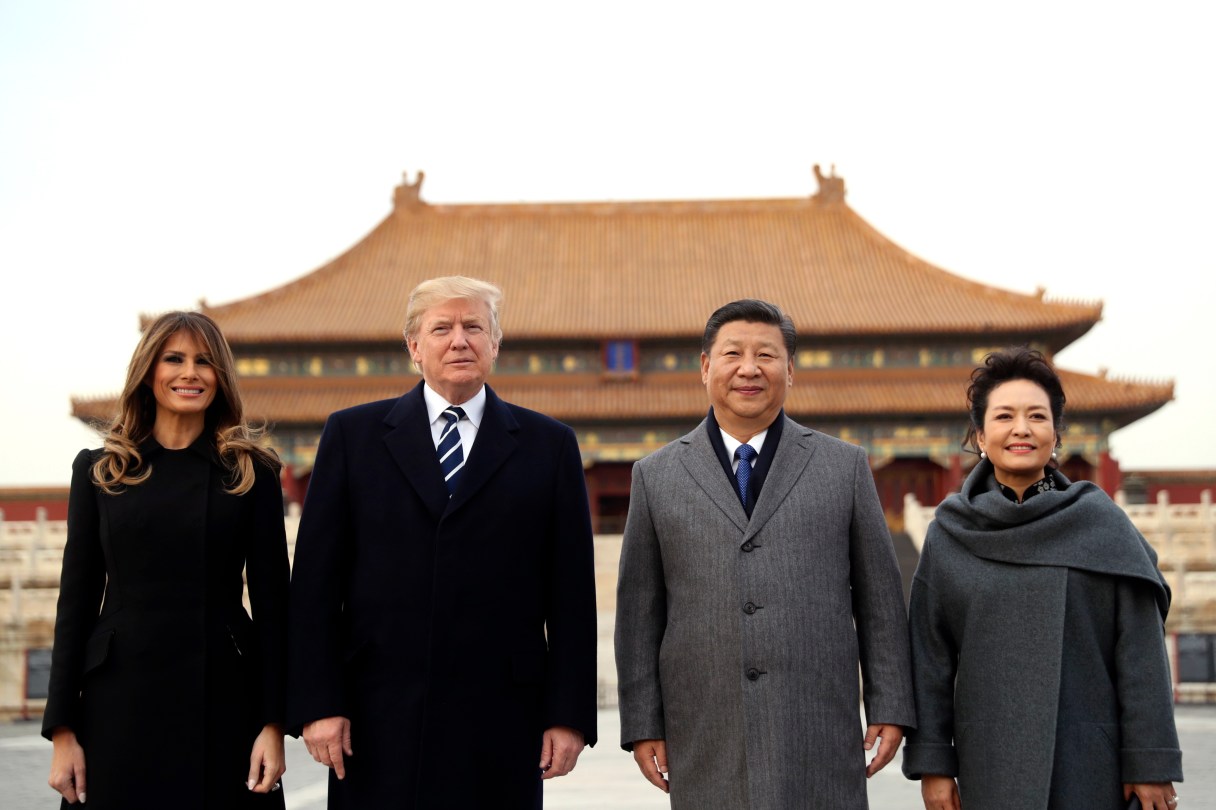
BEIJING (AP) – When Chinese leader Xi Jinping said last month that “no country can afford to retreat into self-isolation,” he might as well have been talking about Donald Trump as the U.S. president makes his first official visit to Southeast Asia.
As Trump steers his administration’s focus inward, China has stepped into what many see as a U.S.-sized void left behind in the region, boosting cooperation on infrastructure, security and trade, flooding eager countries with tourists and offering itself up as a model for developing nations with sometimes dodgy rights records.
China’s rise in influence, and the perceived decline of the United States by some in the region, is all the more extraordinary because Beijing has often been seen as an arrogant bully in Southeast Asia, where it is mired in disputes over competing claims in the South China Sea.
Throughout the region, countries have looked at Xi and Trump and found more stability and reassurance from the Chinese president, said Richard Heydarian, a Manila-based Asia specialist and author.
“America is clearly on a downward trajectory in terms of its influence in the region,” Heydarian said. “Donald Trump comes in and he sounds even more protectionist than China. So you have a strange, in fact surreal, situation whereby China is now presenting itself as the guardian of the global economic order.”