
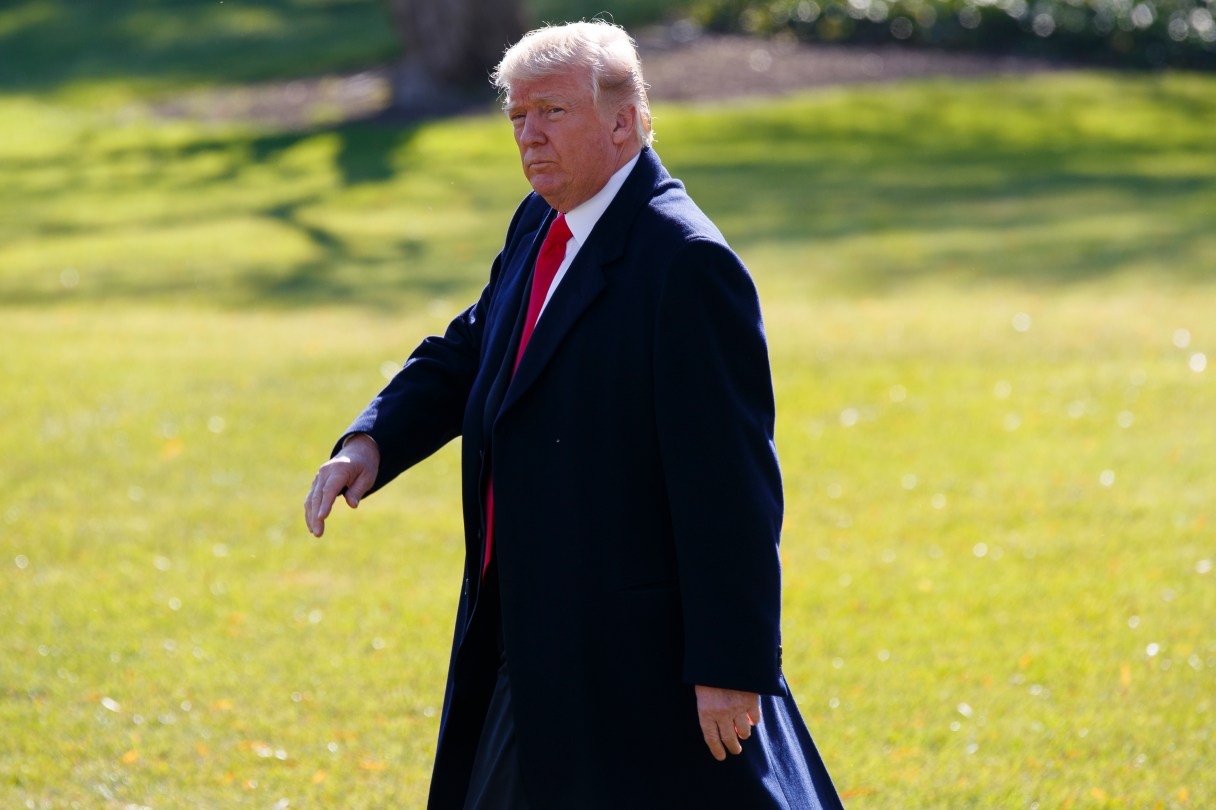
WASHINGTON (AP) – Stoking the same anti-Islam sentiments he fanned on the campaign trail, President Donald Trump on Wednesday retweeted a string of inflammatory videos from a fringe British political group purporting to show violence being committed by Muslims.
The tweets drew a sharp condemnation from British Prime Minister Theresa May’s office, which said it was “wrong for the president to have done this.” May spokesman James Slack said the far-right Britain First group seeks to divide through its use of “hateful narratives which peddle lies and stoke tensions.”
Brushing off the criticism in an evening tweet, Trump said May instead of focusing on him should “focus on the destructive Radical Islamic Terrorism that is taking place within the United Kingdom.”
Trump had turned away from taxes, North Korea and other issues facing his administration to share the three videos tweeted by Jayda Fransen, deputy leader of the British group. It was not clear what drew him to the videos, though one had been shared by conservative commentator Ann Coulter the day before.
White House spokeswoman Sarah Huckabee Sanders said Trump was simply promoting border security and suggested that verifying the content was not a top concern.