
Monday, November 16, 2026Nov 16

Pakistan ex PM fails to appear in court, son-in-law arrested

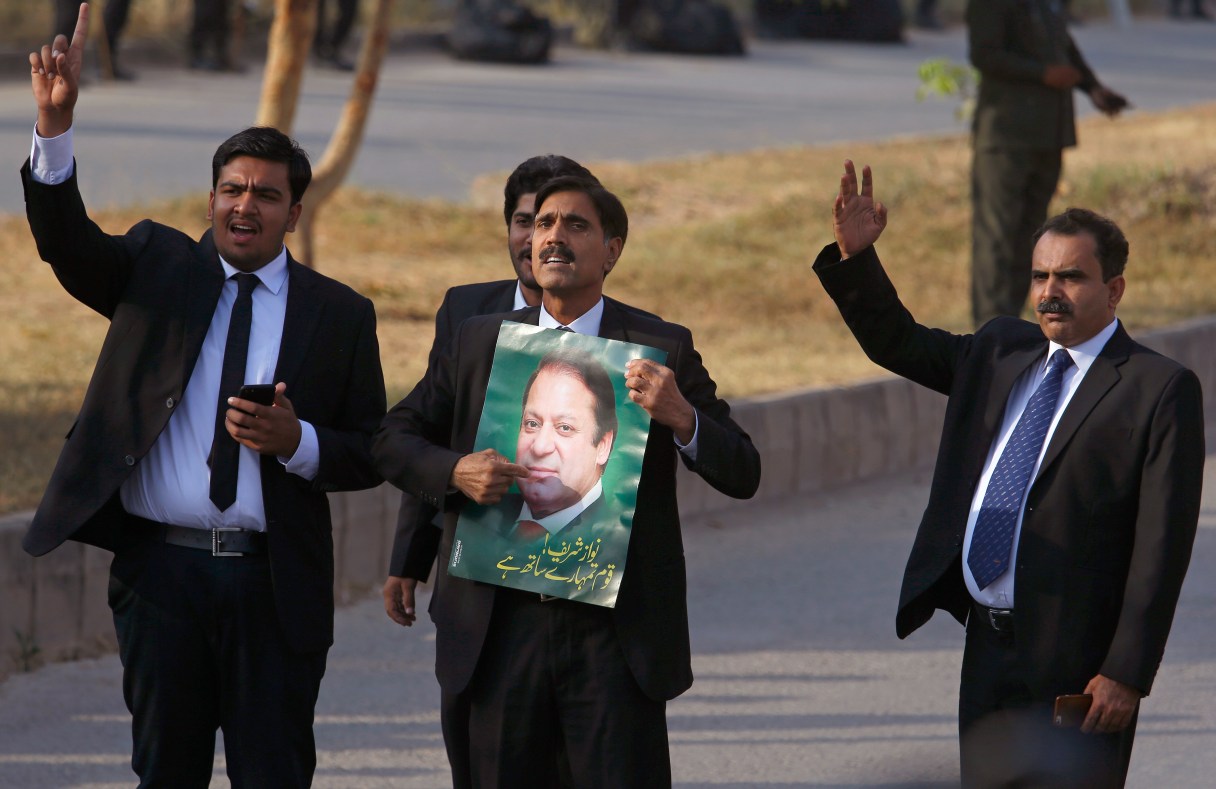
A lawyer holds the portrait of former Prime Minister Nawaz Sharif while he with other chant slogans to support Sharif, outside at an accountability court in Islamabad, Pakistan, Monday, Oct. 9, 2017. Pakistan's anti-corruption authorities early Monday arrested the son-in-law of Sharif in connection with corruption cases pending against him. The development came hours before Sadfar and his wife Maryam Nawaz were to appear before an anti-graft tribunal. (AP Photo/Anjum Naveed)

ISLAMABAD (AP) – Pakistan’s former Prime Minister Nawaz Sharif failed to appear on Monday before an anti-graft tribunal where he was to be indicted on corruption charges along with several family members and co-defendants in the case.

Meanwhile, authorities arrested Sharif’s son-in-law, also a co-defendant in the case. The son-in-law, Mohammad Safdar was taken into custody at the Islamabad airport after he and his wife, Maryam Nawaz, arrived from London, said Cabinet minister Talal Chaudhry.

Amid tight security, police later brought Safdar before the anti-graft tribunal, called Accountability Court, where he appeared alongside his wife.

The corruption charges against Sharif, his two sons, daughter and son-in-law stem from an investigation into documents leaked from a Panama law firm that showed the Sharifs had undisclosed assets abroad.

Chaudhry, the Cabinet minister, told reporters that Safdar and his wife had returned to Pakistan “to appear before the court as they believe in the rule of law.”