
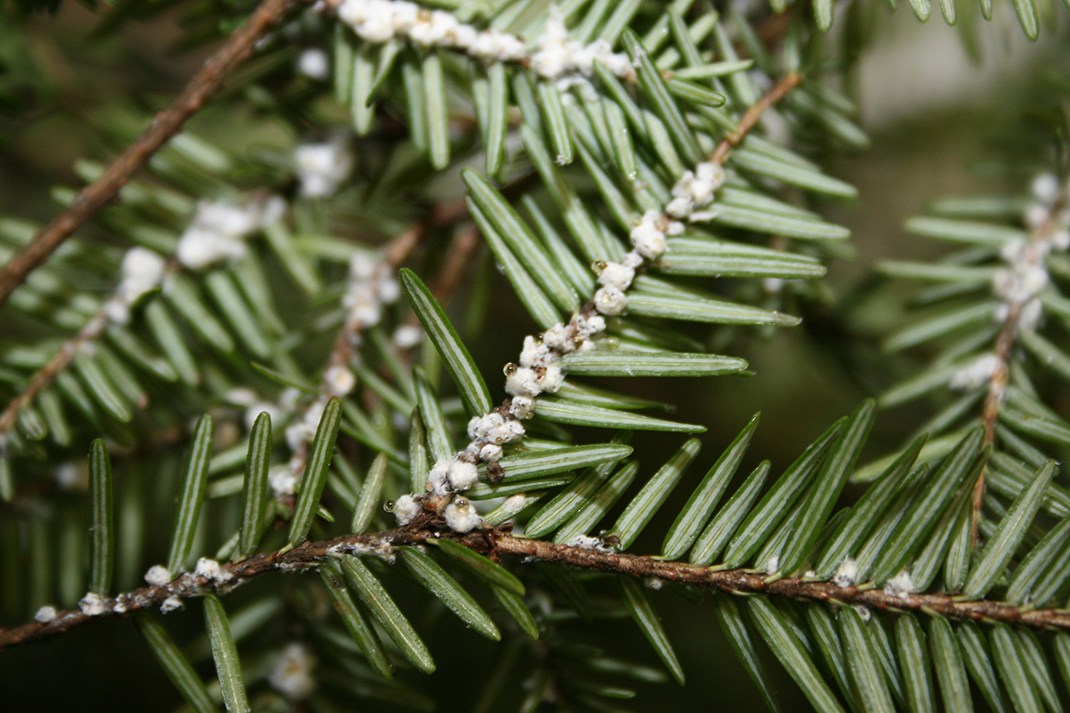
Along the Delaware Water Gap, deep in the heart of New Jersey, there stands a line of hemlock trees that hold a significance beyond their regular role in the surrounding ecosystem: They’re the last grandstand against the scourge of the woolly adelgid, a pest which has decimated populations of the evergreen tree across the eastern United States.
By now you’ve probably heard of the woolly adelgid, or Adelges tsugae. It has gained recognition across the U.S. since it made its way from East Asia and began sucking the sap from the eastern hemlock (Tsuga canadensis), one of the most common trees in the Great Smoky Mountains. Though the creature was accidentally introduced in America in the early to mid-1900s, it wasn’t until the early 2000s that the tiny insects began to deeply impact Tennessee populations of the keystone tree species, which plays a vital role in both providing habitat for other animals and cooling stream waters.
Scary headlines followed, like The New Yorker’s “A Death in the Forest: Can the trees of the Great Smoky Mountains be saved?” The National Park Service says that “without successful intervention, the hemlock woolly adelgid is likely to kill most of the hemlock trees in the park.”
There are over 800 acres of old-growth hemlock trees in the Smokies – some over 500 years old – plus another 90,000 acres with forests of younger hemlocks, according to the NPS.
Now for the part you may not have heard: In November 2014, Signal Mountain residents took action to protect their own hemlocks with the introduction of Laricobius nigrinus, a type of predator beetle which feeds on the adelgid. It was hoped this would slow the adelgid’s spread, though the level to which this treatment method succeeds depends on the beetles’ ability to reproduce and grow in numbers substantial enough to handle the adelgid infestation.