
Sunday, November 1, 2026Nov 1

This story is free to read.

Climate change deepens Portugal’s drought problems

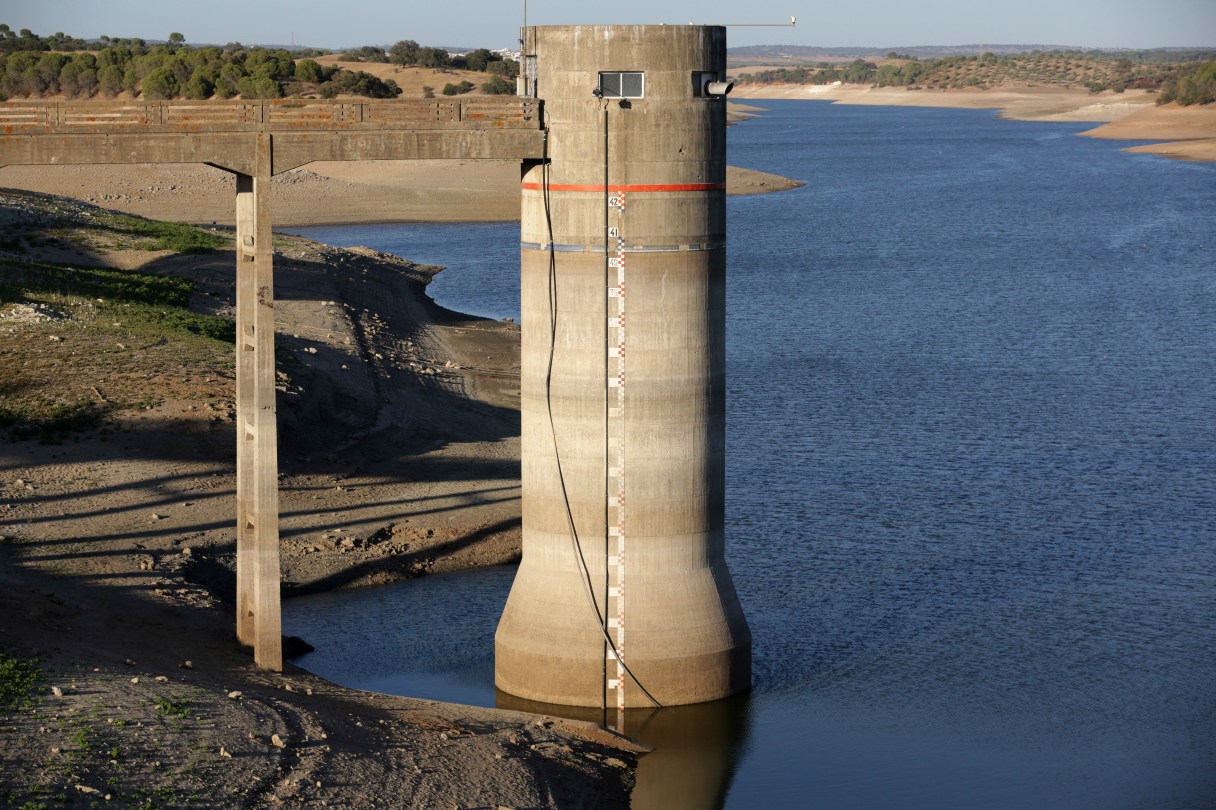
In this picture taken Sept. 4 2017, a tower stands nearly completely out of the water of the dam of the Vale do Gaio reservoir, near the village of Torrao, southern Portugal. A drought is tightening its grip on wide areas of Portugal. More than 80 percent of the country is officially classified as enduring "severe" or "extreme" drought conditions that are among the worst in more than 20 years. (AP Photo/Armando Franca)
In this picture taken Sept. 4 2017, a tower stands nearly completely out of the water of the dam of the Vale do Gaio reservoir, near the village of Torrao, southern Portugal. A drought is tightening its grip on wide areas of Portugal. More than 80 percent of the country is officially classified as enduring "severe" or "extreme" drought conditions that are among the worst in more than 20 years. (AP Photo/Armando Franca) In this picture taken Sept. 4 2017, a tower stands nearly completely out of the water of the dam of the Vale do Gaio reservoir, near the village of Torrao, southern Portugal. A drought is tightening its grip on wide areas of Portugal. More than 80 percent of the country is officially classified as enduring "severe" or "extreme" drought conditions that are among the worst in more than 20 years. (AP Photo/Armando Franca)

SANTA SUSANA, Portugal (AP) – Portugal’s Pego do Altar reservoir looks like disused quarry now, its bare, exposed slopes rising up steeply on each side as it holds barely 11 percent of the water it was designed for.

While parts of the United States and the Caribbean are drowning in water amid ferocious hurricanes, a drought is tightening its grip on wide areas of Portugal. More than 80 percent of the country is officially classified as enduring “severe” or “extreme” drought – conditions among the country’s worst in more than 20 years.

Portuguese Environment Secretary Carlos Martins tells The Associated Press the situation “has gotten worse with climate change.”